
Customs Foils Wildlife Trafficking Attempt, Intercepts Live Pangolins in Kano–Jigawa Corridor
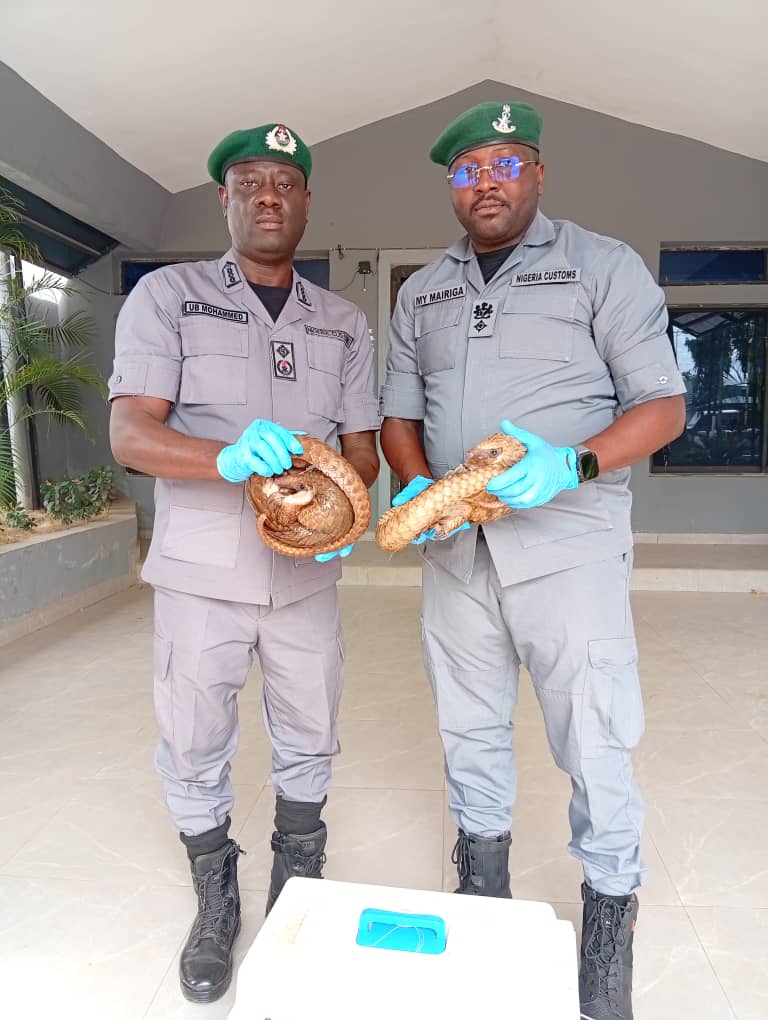
The Nigeria Customs Service (NCS), Federal Operations Unit (FOU) Zone ‘B’, has intensified its clampdown on wildlife trafficking with the interception of two live pangolins along the Kano–Jigawa axis, in a development that underscores growing enforcement against the illegal trade in endangered species.
The seizure, which occurred on 12 March 2026 at about 10:00 hours, followed a routine stop-and-search operation by operatives of the Unit. Acting on intelligence and part of a broader proactive enforcement sweep, officers flagged down a suspicious vehicle conveying the protected animals.
The operation, officials say, aligns with Nigeria’s obligations under the Convention on International Trade in Endangered Species of Wild Fauna and Flora (CITES), which strictly regulates and, in many cases, prohibits trade in species threatened with extinction.
Following the interception, the pangolins were carefully secured in appropriate cages and transported to the FOU Zone ‘B’ headquarters in Kaduna for further examination and safekeeping.
Preliminary physical assessment revealed that each of the animals weighed approximately 15 kilogrammes, indicating they were mature specimens—often targeted by traffickers due to the high demand for their scales and meat in illicit international markets.
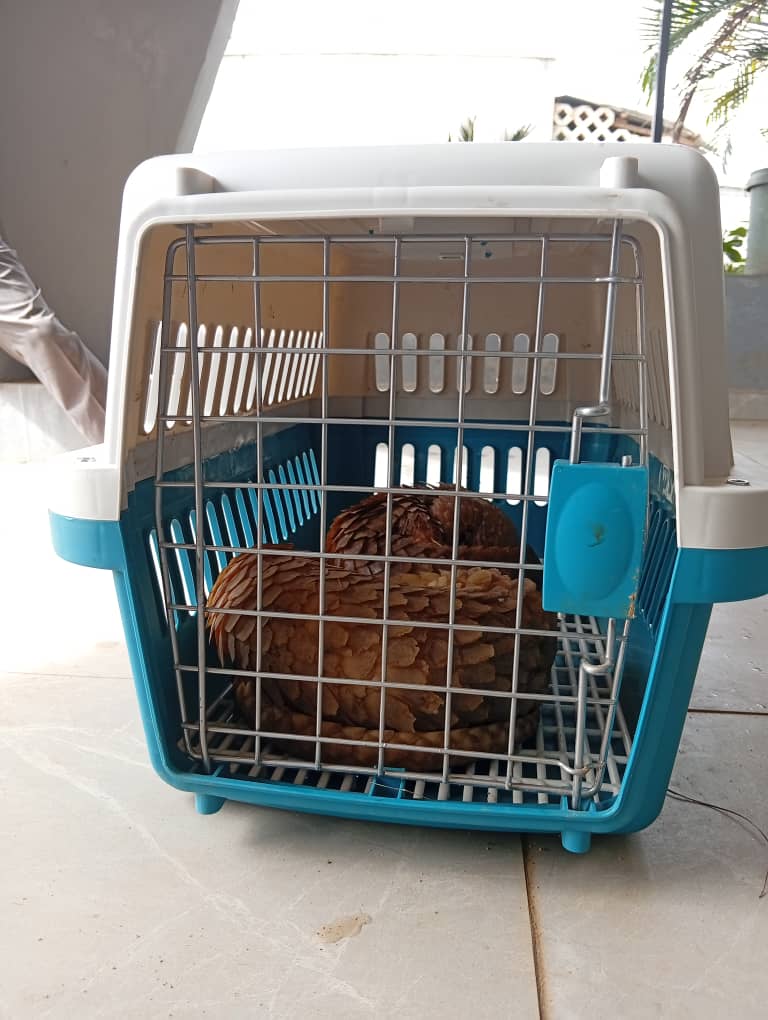
Comptroller Aminu Sule, who heads the Unit, has since ordered a comprehensive investigation to unravel the network behind the smuggling attempt. Authorities are working to determine both the origin of the animals and their intended destination, amid suspicions of cross-border trafficking syndicates operating within the region.
Speaking on the development, Sule issued a stern warning to wildlife traffickers, declaring that the Zone would not serve as a safe passage for illegal activities. “This seizure sends a clear message that Zone ‘B’ will not be a transit point for wildlife traffickers,” he stated, reaffirming the Unit’s resolve to dismantle criminal networks exploiting Nigeria’s biodiversity.
Pangolins, widely regarded as the most trafficked mammals in the world, remain under severe threat due to persistent poaching and illegal trade. Conservationists have repeatedly raised concerns over dwindling populations, with enforcement agencies now stepping up efforts to curb the menace.
The interception highlights the Nigeria Customs Service’s sustained commitment to enforcing environmental regulations and international treaties, as well as safeguarding the nation’s rich biodiversity from exploitation.