
Emirates Group Posts Record AED24.4bn Profit, Retains Position as World’s Most Profitable Airline
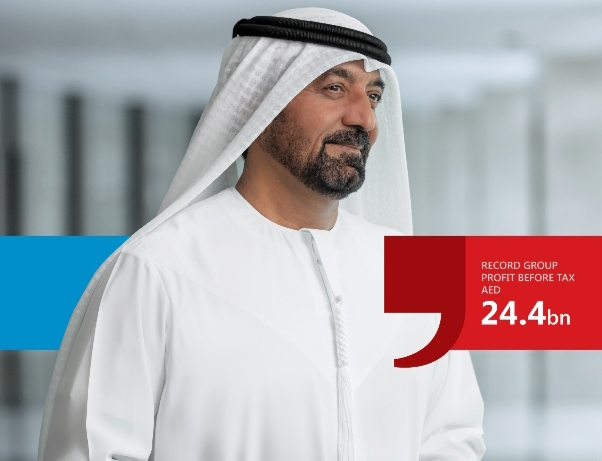
The Emirates Group has announced record-breaking financial results for the 2025-26 fiscal year, posting a historic profit before tax of AED24.4 billion (US$6.6 billion) despite major disruptions to aviation operations in the Gulf region towards the close of the reporting period.
The Group also recorded unprecedented revenue of AED150.5 billion (US$41 billion) and cash assets of AED59.6 billion (US$16.2 billion), underlining the strength of its global operations and resilience amid geopolitical and operational challenges.
Chairman and Chief Executive of Emirates Airline and Group, Sheikh Ahmed bin Saeed Al Maktoum, described the results as a reflection of the organisation’s enduring business strategy and operational agility.
According to him, the Group maintained strong momentum for most of the financial year before military activity in the Gulf region significantly disrupted global commercial aviation in late February.
“These outstanding results, despite significant challenges in the last month of our financial year, reaffirm the strength and resilience of the Emirates Group’s business model, which is rooted in safety, excellence, innovation, people and partnerships,” Sheikh Ahmed said.
He explained that for the first 11 months of the financial year, demand for Emirates’ services remained robust, driving revenue growth and healthy operating margins.
“For the first 11 months of 2025-26, the picture across the Group was very positive. Strong demand for our products and services was driving revenue, and we were achieving healthy margins thanks to our sustained investments in product, people, technology and brand. Month after month, we were surpassing our targets,” he added.
The Emirates Group boss disclosed that military activity on February 28 severely disrupted air traffic across the Gulf region, including operations within the United Arab Emirates.
He said Emirates and dnata swiftly mobilised resources to protect customers, employees and assets while ensuring continuity of operations.
“The Emirates Group has navigated crises and disruptions before. Each time, we placed our focus on our customers and our people, and each time, we have bounced back stronger,” he stated.
Sheikh Ahmed praised the Group’s workforce for demonstrating resilience and professionalism during the difficult period, noting that employees played a critical role in maintaining service standards and operational flexibility.
In line with its long-term growth strategy, the Group invested AED17.9 billion (US$4.9 billion) during the year in aircraft, facilities, equipment and advanced technologies aimed at expanding capacity and improving customer experience.
The Group’s workforce also expanded by eight per cent to 130,919 employees worldwide as Emirates and dnata intensified recruitment efforts to support growing operations and future expansion plans.
The number of UAE nationals employed by the Group surpassed 4,000, reflecting what the company described as the success of its talent development and retention initiatives.
On fuel management, Sheikh Ahmed noted that Emirates remains well-hedged until the 2028-29 financial year and has secured supply arrangements necessary to sustain operations and restore pre-disruption growth levels.
“Our fundamentals are strong. The Emirates Group’s proven business model is unchanged. Dubai’s place at the nexus of global commerce, trade and travel flows is unchanged. Our ambition to be the best in the world, and to be of service to the world, is unchanged,” he said.
During the financial year, Emirates expanded its global network to 152 cities across 80 countries. The airline also strengthened strategic alliances, increasing its partnerships to 32 codeshare agreements and 117 interline partnerships, giving passengers access to more than 1,700 cities worldwide beyond its direct network.
At the 2025 Dubai Airshow, Emirates announced additional fleet investments worth US$41.4 billion at list prices, including orders for 65 more Boeing 777-9 aircraft and eight additional Airbus A350-900s.
As of March 31, Emirates’ order book stood at 367 aircraft, comprising 54 Airbus A350s, 270 Boeing 777X aircraft, 35 Boeing 787s and eight Boeing 777 freighters, with deliveries scheduled through 2038.
Operationally, Emirates carried 53.2 million passengers during the year, representing a one per cent decline compared to the previous year, while seat capacity also fell by one per cent.
The airline recorded a passenger seat factor of 78.4 per cent, slightly lower than the 78.9 per cent achieved previously. However, passenger yield increased by four per cent to 38.1 fils per Revenue Passenger Kilometre.
The airline also expanded its accessibility and inclusion initiatives by launching a new Accessible and Inclusive Travel Hub on its website to assist travellers with varying accessibility needs in planning their journeys.
Additionally, Emirates introduced onboard sensory products and fidget toys for children and adults and organised travel rehearsal programmes at airports globally to support children with autism and their families in reducing travel anxiety.
Emirates SkyCargo equally posted strong performance, transporting 2.4 million tonnes of cargo worldwide, representing a three per cent increase over the previous year.
The Group said it continued to use forward contracts to hedge against fluctuations in Brent crude oil prices and refining margins while employing long-term interest rate hedging strategies to reduce exposure to interest rate volatility.
Meanwhile, Emirates’ subsidiary, dnata, recorded a 12 per cent increase in total revenue to a record AED23.6 billion (US$6.4 billion), driven by rising flight operations and travel demand across key markets including Australia, Europe, the UAE, the United Kingdom and the United States.
The Emirates Airline Foundation also sustained its humanitarian and social impact programmes during the year, supporting 13 active projects globally focused on education, shelter, healthcare and food support for disadvantaged children.
The Foundation also provided more than 500 flight tickets for medical missions around the world.