
Delta Air Lines Defies Record Fuel Costs, Posts $1.4bn Q2 Profit
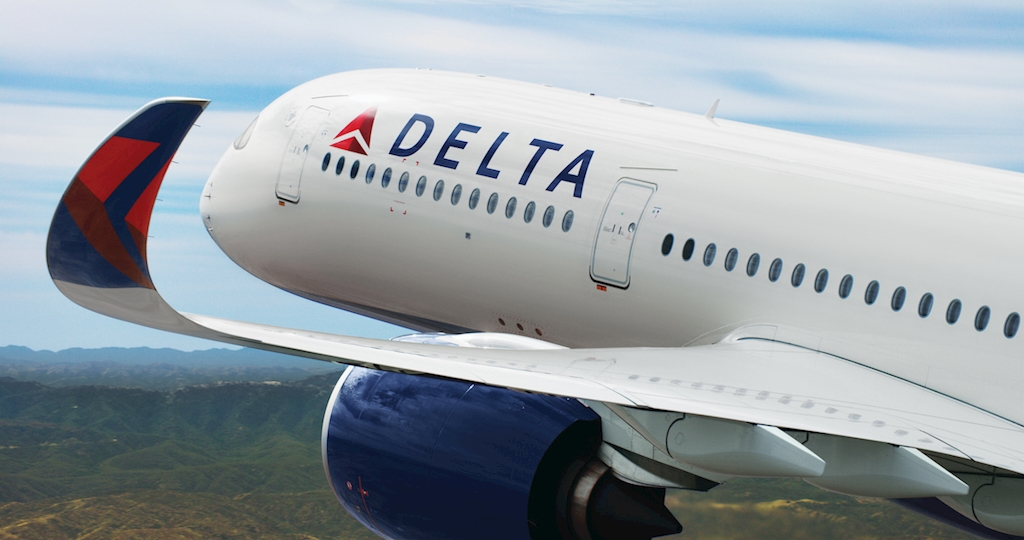
Delta Air Lines has recorded a $1.4 billion non-GAAP pre-tax profit for the second quarter of 2026, as strong passenger demand and growth across its premium, cargo and loyalty businesses helped the carrier withstand the highest quarterly fuel expense in its history.
The United States airline generated $19.8 billion in operating revenue during the June quarter, reinforcing its confidence in the resilience of its business model and outlook for the remainder of the year.
Delta’s Chief Executive Officer, Ed Bastian, said the financial performance reflected the strength of the airline’s brand, market position and diversified revenue base.
According to Bastian, Delta delivered the $1.4 billion pre-tax profit despite record fuel expenses, supported by broad demand strength and increasing customer preference for the airline’s products.
“Today, we reported our June quarter results, and it is clear that Delta’s brand and industry position are stronger than ever,” Bastian said.
“We delivered $1.4 billion in pre-tax profit while absorbing the highest quarterly fuel expense in our history, reflecting broad demand strength, growing brand preference and momentum across our diversified revenue base.”
He said the airline was executing its strategy from a position of strength and remained optimistic that the momentum recorded in the first half of the year would extend into the second half of 2026.
Delta has consequently maintained its full-year earnings outlook, projecting a 20 per cent increase in earnings despite a multi-billion-dollar fuel cost headwind.
The carrier said its ability to sustain profitability amid rising fuel costs demonstrated the durability of its business and strengthened its prospects for continued expansion in 2027.
In the June quarter, Delta’s non-GAAP operating revenue rose by 14 per cent year-on-year to $17.7 billion, adding more than $2 billion to revenue compared with the same period of the previous year.
Operating cash flow stood at $1.7 billion as strong demand was recorded across leisure, corporate and premium travel markets.
Premium revenue grew by 17 per cent compared with the corresponding period of 2025, driven by an increasing number of customers choosing the airline’s premium travel products.
Delta’s cargo business also recorded a 39 per cent increase in revenue, while loyalty and related revenue rose by 19 per cent on sustained engagement from SkyMiles members and commercial partners.
The airline’s remuneration from American Express increased by 16 per cent to $2.4 billion, following growth in new card acquisitions and cardholder spending.
Delta’s Chief Commercial Officer, Joe Esposito, said demand remained healthy across the airline’s customer segments and revenue streams.
He noted that the carrier’s revenue growth reflected broad demand strength and expressed confidence that the trend would continue through the September quarter and possibly into the final three months of 2026.
Beyond its financial performance, Delta continued to expand its premium products and invest in technology designed to simplify the travel experience.
The airline opened a second Delta One Lounge at Los Angeles International Airport and unveiled a next-generation Delta One Suite for its Airbus A350-1000 aircraft. Additional suites are also planned for its A330ceo fleet.
Delta said more than 95 per cent of its aircraft had been equipped with fast, free Wi-Fi for SkyMiles members, with full fleet coverage targeted before the end of the year.
It also expanded its Delta Sync partnerships, relaunched its partnership with Airbnb to create additional mileage-earning opportunities for SkyMiles members and continued the deployment of Delta Concierge.
The artificial intelligence-powered digital assistant, available through the Fly Delta app, is designed to provide personalised self-service and messaging support to travellers.
The airline’s focus on passenger experience earned it the position of No. 1 US airline in The Points Guy’s ranking for the eighth consecutive year.
On operational performance, Delta led US carriers in on-time arrivals and departures during the quarter and achieved its lowest domestic mishandled baggage rate on record.
Its proprietary Baggage AI technology was further deployed at the Atlanta hub, contributing to a reduction of more than 25 per cent in baggage handling issues compared with the previous year.
The airline also received 11 new aircraft, comprising Airbus A350-900s, A321neos and A220-300s, as it continued its fleet renewal and network expansion strategy.
International services were expanded with new routes to Hong Kong, Porto, Malta and Sardinia, while additional flights were introduced to Madrid, Nice, Rome and Barcelona.
Delta also increased salaries by four per cent for eligible employees worldwide and accrued nearly $500 million for its annual employee profit-sharing programme.
For the September quarter, the carrier projects earnings per share of between $2 and $2.50 and an operating margin of between 11 and 13 per cent.
Delta said it expected further improvement in non-fuel unit costs as capacity growth normalised, expressing confidence that strong demand, disciplined financial management and continued investments would sustain its performance throughout the remainder of 2026.