
NDLEA, UAE Anti-Drug Agency Sign MoU to Intensify Crackdown on Trafficking
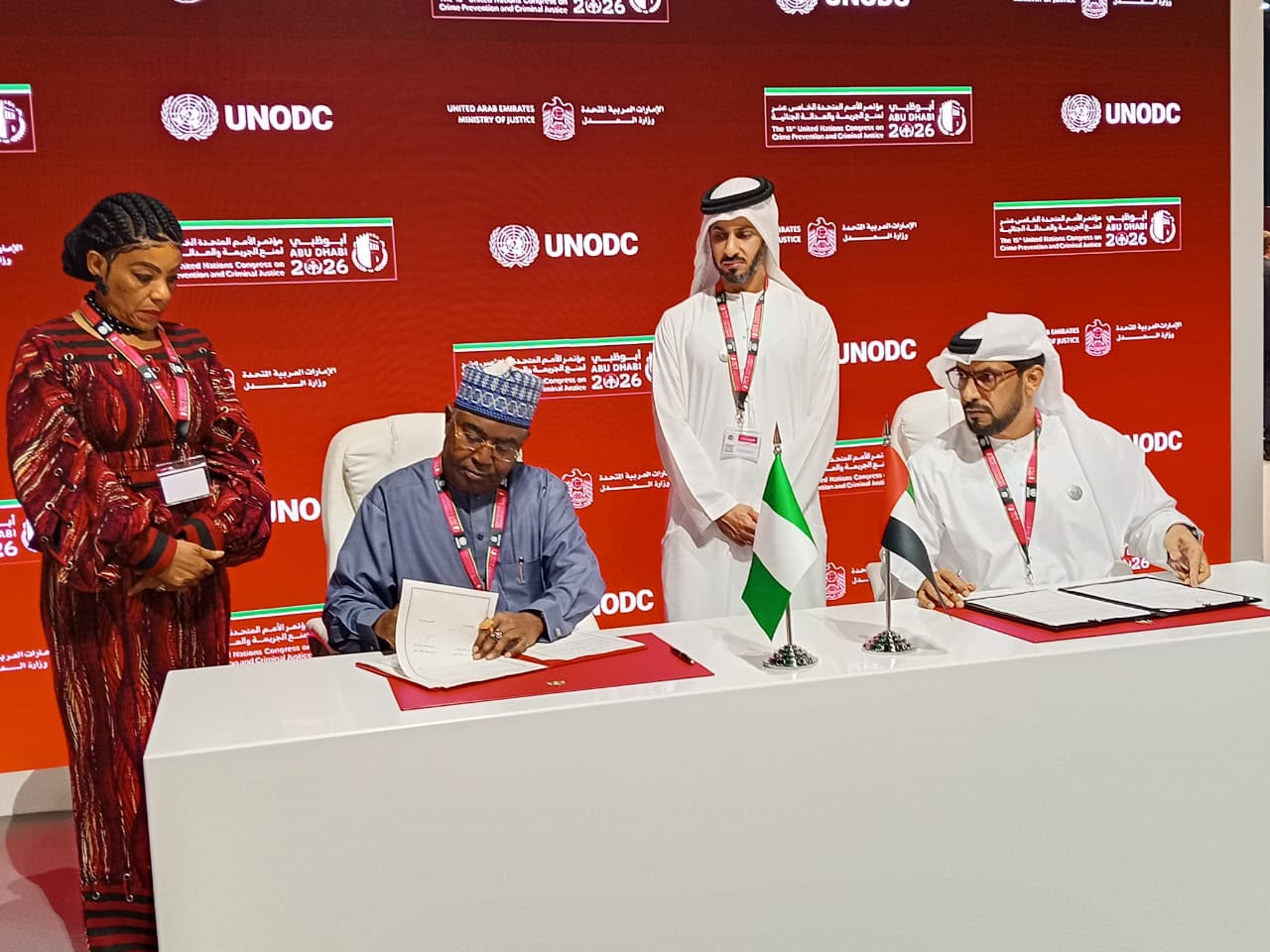
The National Drug Law Enforcement Agency (NDLEA) and the National Drug Enforcement Authority (NDEA) of the United Arab Emirates (UAE) have signed a Memorandum of Understanding (MoU) to strengthen intelligence-sharing and joint efforts against drug trafficking between Nigeria and the UAE.
The agreement, signed on Saturday, September 26, 2026, on the sidelines of the 15th United Nations Congress on Crime Prevention and Criminal Justice in Abu Dhabi, is expected to tighten enforcement along the Nigeria-UAE trafficking corridor.
Chairman/Chief Executive Officer of the NDLEA, Brig. Gen. Mohamed Buba Marwa (rtd), described the agreement as the culmination of years of engagement between the two agencies, saying it would provide a stronger framework for tackling drug trafficking networks operating between the two countries.
Marwa said the pact would deepen the exchange of intelligence, operational information and technical expertise, while also facilitating joint enforcement actions against traffickers exploiting the extensive trade and travel links between Nigeria and the UAE.
He disclosed that NDLEA operations between 2021 and 2026 had resulted in the interception of about 354.7 kilogrammes of illicit drugs destined for the UAE.
According to him, the seized substances included cocaine, cannabis, tramadol, rohypnol, ecstasy and khat, with the operations leading to the arrest and prosecution of 47 suspects.
Marwa said the seizures and arrests demonstrated the need for closer cooperation between the two countries, particularly as traffickers continued to exploit international travel and commercial routes to move illicit substances.
He said the new agreement would build on existing cooperation between the NDLEA and NDEA, including the exchange of liaison personnel and operational information.
The NDLEA chairman also disclosed that arrangements were being made for the UAE authorities to provide Nigerian travellers with a comprehensive list of prohibited items.
He said the initiative was intended to help travellers understand UAE restrictions and prevent inadvertent violations, particularly in cases involving substances or items that may attract enforcement action.
Marwa further highlighted the NDLEA’s wider anti-narcotics operations across Nigeria, saying the agency had arrested more than 91,000 suspects between January 2021 and July 2026.
Among those arrested, he said, were 243 individuals identified as drug barons.
During the same period, according to him, the agency seized more than 15.5 million kilogrammes of illicit drugs and precursor chemicals, while 16,469 convictions were secured.
He added that more than 53,000 drug users had received counselling, treatment and rehabilitation as part of the agency’s efforts to address drug abuse from both enforcement and public health perspectives.
Marwa also said the NDLEA’s War Against Drug Abuse (WADA) campaign had reached nearly 5.9 million Nigerians through advocacy programmes conducted in communities and schools.
The NDLEA chief said the agency’s enforcement and preventive efforts would continue to complement international cooperation, particularly as drug trafficking increasingly involved transnational networks.
On his part, Chairman of the NDEA, Sheikh Zayed bin Hamad Al Nahyan, reaffirmed the UAE’s commitment to working closely with Nigeria to disrupt trafficking networks operating across the two countries.
Al Nahyan said the strong trade, travel and people-to-people connections between Nigeria and the UAE created opportunities that could be exploited by criminal networks, making closer cooperation between the two anti-drug agencies necessary.
He described the MoU as a natural progression of an already productive relationship between the two authorities.
The agreement is expected to strengthen the flow of actionable intelligence between the agencies, improve coordination of enforcement operations and enhance efforts to identify and dismantle drug trafficking networks operating along the Nigeria-UAE route.
The two agencies expressed confidence that the partnership would result in more effective joint operations and improved coordination in tackling transnational drug trafficking.
They also linked the agreement to the broader international responsibility of countries to combat organised crime and illicit drug trafficking, in line with the objectives of the United Nations Office on Drugs and Crime (UNODC).