
Nigeria Customs Showcases Impact-Focused Reform Communication at WCO Capacity Building Session in Brussels
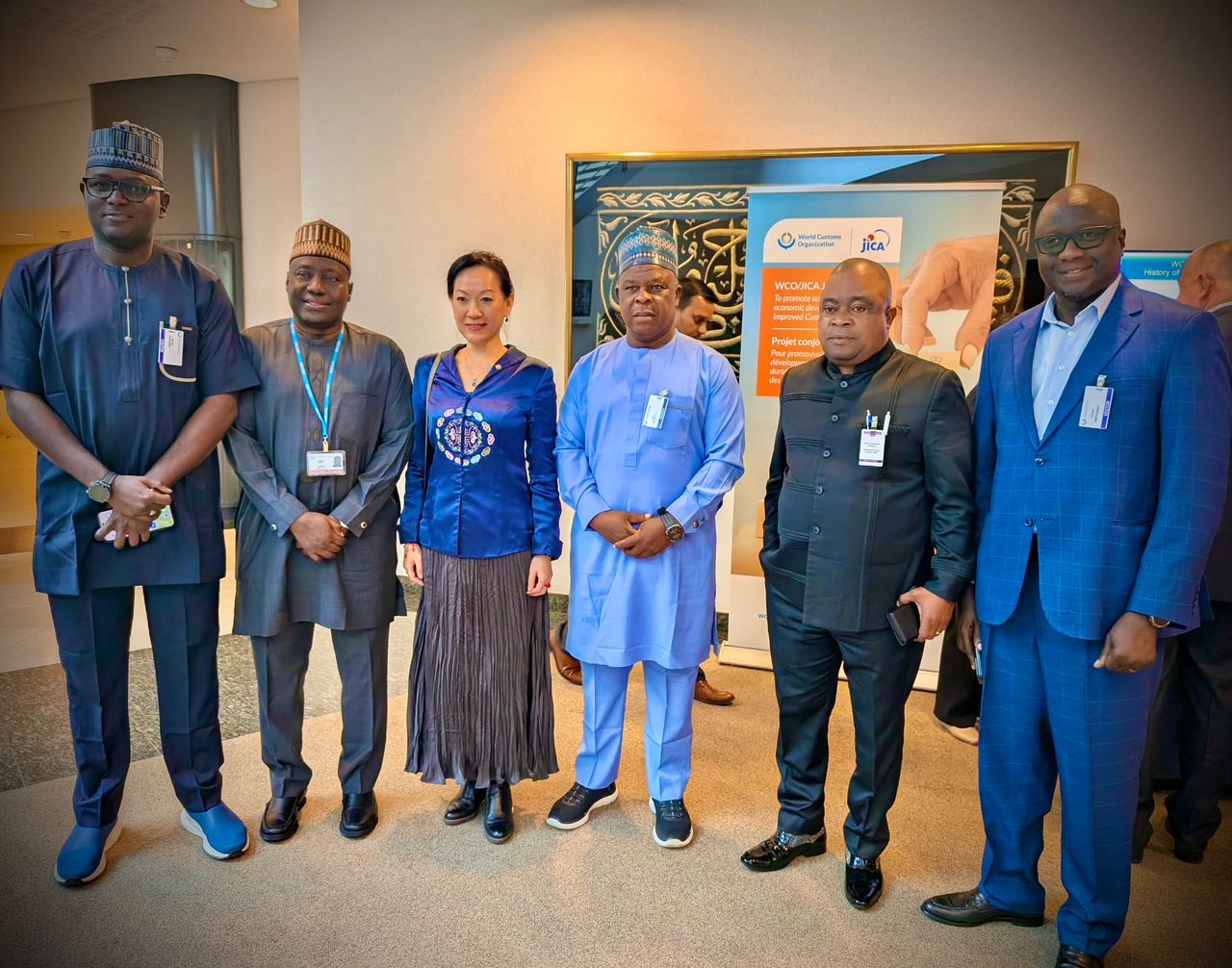
The Nigeria Customs Service (NCS) has presented its impact-driven reform communication model on the global stage at the 17th Session of the Capacity Building Committee of the World Customs Organization (WCO), held at the organisation’s headquarters in Brussels from 25 to 27 February 2026.
Addressing delegates from customs administrations across member countries, the National Public Relations Officer of the Service, Deputy Comptroller of Customs Abdullahi Maiwada, delivered a detailed presentation titled “Communicating the Results of Capacity-Building Initiatives More Effectively: Nigeria Customs Service Experience and Lessons Learned.”
Maiwada explained that under the leadership of the Comptroller-General of Customs, Adewale Adeniyi, MFR – who also serves as Chairperson of the WCO Council – the Service has deliberately shifted from routine activity-based reporting to evidence-based storytelling that highlights measurable reform outcomes.
According to him, the new framework ensures that reforms are not only implemented but clearly understood and trusted by stakeholders.
“The Service’s reform communication framework is structured around three core pillars: institutional capacity building, human resource development, and stakeholder capacity engagement,” Maiwada stated. “This ensures that reforms are not merely executed, but their impact is visible, measurable, and trusted.”
Using the Time Release Study (TRS) as a practical example, Maiwada demonstrated how the Service adopted transparent data presentation tools, including infographics, to analyse cargo clearance timelines. The findings showed that a significant proportion of clearance delays stemmed from systemic idle time rather than inspection procedures.
He noted that presenting such data openly helped shift the narrative.
“This approach moved the conversation from defensive explanations to performance benchmarking,” he said, adding that it strengthened shared accountability across the trade ecosystem.
Observers at the session noted that the Nigerian presentation underscored the growing importance of strategic communication in modern customs administration, particularly in an era where transparency and trust are central to reform sustainability.
Maiwada also highlighted significant gains under the Service’s Advance Ruling programme. He disclosed that 83 Advance Rulings were issued in 2025, while registered accounts increased from 60 in December 2024 to 173 in December 2025 – a 188.3 per cent rise in stakeholder participation.
The initiative, he revealed, contributed 2.9 per cent of total revenue from goods valued at N240.89 billion in 2025.
He emphasised that structured and consistent communication played a critical role in driving predictability and encouraging voluntary compliance among traders.
On the Authorised Economic Operator (AEO) Programme, the NCS reported that approximately 120 companies have now received full AEO certification.
In addition, 3,270 officers were trained nationwide as AEO Champions to sustain implementation and deepen engagement with the private sector.
Maiwada described the programme as a cornerstone of Customs–trade partnership, reinforcing compliance through trust-based collaboration.
He also referenced the deployment of the indigenous Unified Customs Management System, known as B’Odogwu, describing it as a milestone in the Service’s digital transformation journey. The platform, he noted, is supported by continuous stakeholder sensitisation and user engagement to ensure seamless adoption.
Another reform instrument highlighted was the Customs Integrity Perception Survey, described as a data-driven mechanism for monitoring accountability within the Service. Maiwada explained that integrity management has become measurable and subject to continuous assessment, thereby reinforcing public trust.
He urged WCO member administrations to integrate communication units at the conceptual stage of reform initiatives, humanise institutional processes, sustain engagement beyond isolated events, and strengthen peer learning among customs authorities globally.
At the conclusion of the session, Nigeria nominated LI Yan of China Customs for the position of Chair of the 18th Session of the WCO Capacity Building Committee. The nomination received unanimous support from delegates.
As China’s Customs Attaché to Brussels since 2020, LI Yan has overseen both multilateral and bilateral initiatives within the WCO framework, consistently promoting collaboration and innovation.
Her four terms as Vice Chair, election as Chair at the 16th Session, and re-election at the just concluded 17th Session were cited as evidence of her dedication and the Committee’s confidence in her leadership.
The Nigerian delegation’s active participation at the Brussels session further reinforced the country’s expanding role within the global customs community, particularly in advancing reform models anchored on transparency, measurable outcomes, and strategic communication.