

African Ministers Adopt Lomé Declaration to Fast-Track Affordable, Sustainable Air Transport Across Continent
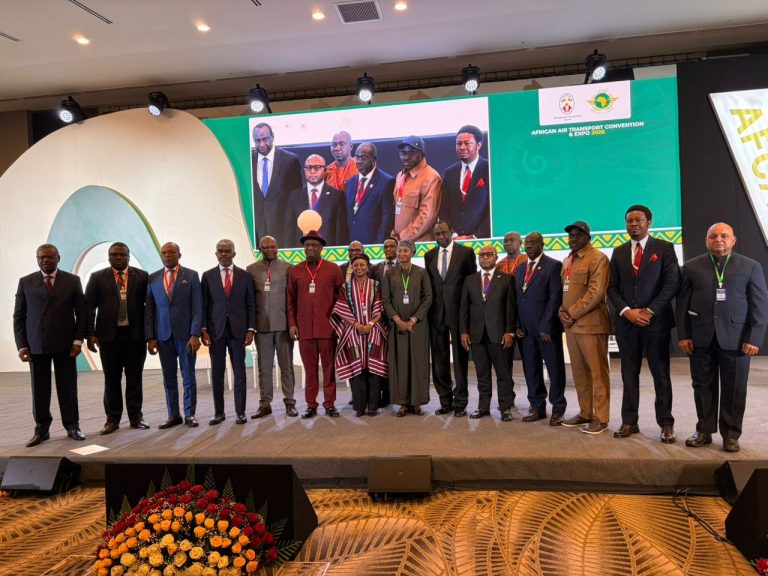
African ministers responsible for transport, tourism, trade and finance have adopted the Lomé Ministerial Declaration on Accelerating Accessible, Connected, Affordable and Sustainable Air Transport across Africa, reaffirming a renewed continental commitment to fully implement the Yamoussoukro Decision and the Single African Air Transport Market (SAATM).
The declaration was adopted on the second day of the maiden edition of the African Air Transport Convention and Expo 2026, organised by the African Civil Aviation Commission (AFCAC) and hosted in Lomé by the Government of the Republic of Togo under the patronage of President Faure Gnassingbé, the SAATM Champion President.
The event was organised in collaboration with the African Union Commission, the African Continental Free Trade Area (AfCFTA) Secretariat and AUDA-NEPAD.
Reading the declaration, AFCAC Secretary-General, Ms Adefunke Adeyemi, stressed the need to strengthen Africa’s institutional capacity to effectively drive the implementation of SAATM and the Yamoussoukro Decision.
According to her, the continent must be equipped with the necessary institutional structures to coordinate implementation efforts alongside stakeholders across the aviation ecosystem.
She explained that the declaration also seeks to address unresolved challenges relating to market access restrictions, high operational costs, transportation bottlenecks, regulatory deficiencies and financing constraints.
Adeyemi disclosed that the declaration revolves around seven key priority areas, namely accelerating SAATM implementation, reducing costs and improving connectivity, enhancing seamless mobility and infrastructure, promoting sustainability and innovation, strengthening safety and regulatory capacity, reinforcing AFCAC’s delivery mechanisms and advancing monitoring and partnerships.
Through the declaration, African ministers reaffirmed that air transport remains a strategic instrument for continental integration, trade, tourism, investment, industrialisation, regional value chains and people-to-people interaction.
They emphasised the urgent need to move beyond political commitments towards measurable actions capable of unlocking the full potential of Africa’s aviation sector.
The declaration reaffirmed the implementation of the Yamoussoukro Decision and SAATM as a major continental priority.
Ministers pledged to remove restrictive market barriers, liberalise air services, align bilateral agreements with SAATM principles and improve administrative procedures relating to airline designation and route approvals.
One of the major outcomes of the meeting was the launch of the AFCAC Solidarity Commitment 2026–2028, a resource mobilisation initiative aimed at strengthening AFCAC’s ability to support member states and accelerate the implementation of continental aviation priorities.
According to AFCAC, the initiative will provide transparent and accountable mechanisms for mobilising financial resources, technical assistance, capacity-building support, systems and project-based interventions.
The declaration also placed considerable emphasis on reducing the cost of air travel within Africa. Ministers acknowledged that excessive taxes, charges and administrative bottlenecks continue to increase fares and cargo costs, weaken route viability and hinder aviation’s contribution to economic growth.
To address these challenges, they endorsed the Continental Harmonised Policy Framework on Aviation Taxes, Charges and Fees, which seeks to establish transparent, predictable and growth-oriented approaches across the continent.
The ministers further committed themselves to coordinated actions involving transport, finance, tourism, trade and aviation authorities to rationalise taxes and charges while maintaining the sustainability of essential aviation services.
In support of the African Continental Free Trade Area, the ministers pledged to promote air cargo development and establish priority intra-African cargo corridors aligned with regional economic priorities and AfCFTA value chains.
The declaration also called for stronger collaboration among airports, airlines, cargo operators, regulators, development partners and financial institutions to improve route development, cargo infrastructure and connectivity to secondary cities.
On passenger facilitation, ministers committed to reforms aimed at improving visa openness, digital travel systems, border management and cargo clearance procedures to enhance the movement of people and goods across Africa.
Recognising the importance of infrastructure, the ministers underscored the need for modern, climate-resilient and commercially viable airports, air navigation systems and cargo facilities. They called for the preparation and financing of bankable aviation infrastructure projects across the continent.
The declaration further highlighted Africa’s commitment to sustainable aviation and climate resilience. Ministers pledged support for the development, financing and deployment of Sustainable Aviation Fuels and other lower-carbon energy solutions, while encouraging the establishment of supportive policies and financing mechanisms.
In the area of technology and manpower development, the ministers committed to promoting digital transformation, innovation partnerships and capacity-building programmes.
Special attention, they said, would be given to nurturing the next generation of aviation professionals, while increasing the participation of women and youths in the sector.
They also reaffirmed that the liberalisation and expansion of African air transport must be underpinned by strong safety standards, regulatory oversight, consumer protection and fair competition.
To ensure effective implementation, the declaration tasked AFCAC, in collaboration with the African Union Commission, AfCFTA Secretariat, AUDA-NEPAD, regional economic communities and member states, with preparing a post-Lomé implementation roadmap outlining priority actions, timelines and resource requirements.
The ministers equally called on development finance institutions, private investors, airlines, airports, training institutions and technology providers to support the implementation process.
Expressing appreciation to the Government and people of Togo for hosting the convention, the ministers commended President Faure Gnassingbé for his leadership and commitment towards advancing African aviation.
They also praised AFCAC, the African Union Commission, AfCFTA Secretariat, AUDA-NEPAD, the United Nations Economic Commission for Africa (UNECA), regional economic communities and industry stakeholders for contributing to the success of the convention.
Nigeria’s Minister of Aviation and Aerospace Development, Festus Keyamo, who endorsed the declaration, said its contents faithfully reflected the collective intentions and deliberations of African ministers.
“The intent, spirit and letters of the declarations reflect the intentions and deliberations so far and what we all have committed to do as ministers,” Keyamo stated.
Ministers of aviation and transport from Togo, Liberia, Ghana, Namibia, Eswatini, Zimbabwe and Equatorial Guinea also endorsed the declaration and pledged their full support towards its implementation, signalling a renewed drive to transform air transport into a catalyst for Africa’s economic integration and development.