
Starmer Announces Resignation as Labour Leader, Sets Stage for Contest to Choose New UK Prime Minister
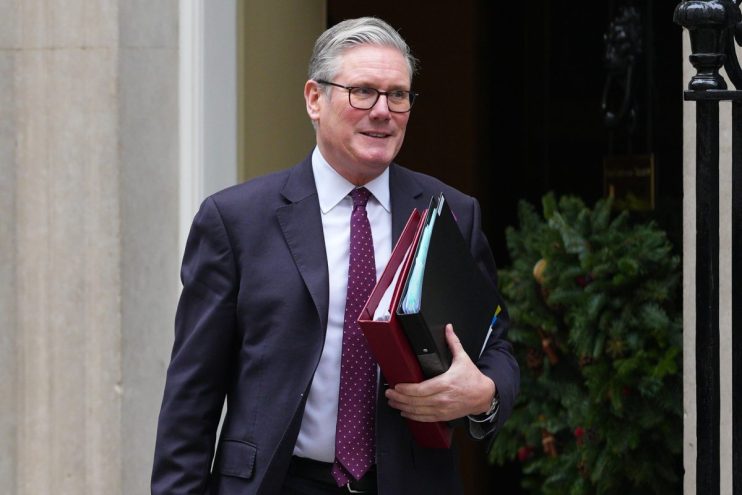
British Prime Minister Sir Keir Starmer has announced that he will step down as leader of the Labour Party, triggering a leadership contest that will determine the United Kingdom’s next prime minister.
Speaking outside 10 Downing Street, Sir Keir said he had concluded that he was no longer the right person to lead Labour into the next general election and had formally informed King Charles III of his decision.
According to a BBC report, the outgoing Labour leader disclosed that he had asked the party’s governing body to establish a timetable for the leadership race, with nominations scheduled to open on July 9 and close before Parliament begins its summer recess on July 16.
Sir Keir stated that he would remain prime minister until the process is completed and pledged to ensure a smooth transfer of power. He expressed confidence that a successor would be in place before Parliament reconvenes in September.
“I will do everything I can to ensure an orderly transition,” he said, adding that he would give his successor his “full and unequivocal support”.
The 63-year-old politician, who became Labour leader in April 2020 and led the party to victory in the July 2024 general election, said his successor would inherit “a Britain that is far stronger and fairer than the one I inherited two years ago”.
His departure will usher in Britain’s seventh prime minister since the political upheavals that followed the 2016 Brexit referendum.
Accompanied by his wife, Victoria, Sir Keir became visibly emotional as he delivered his farewell remarks before supporters, Cabinet colleagues and Downing Street staff.
Reflecting on life after office, he said he intended to devote more time to his family.
“When I leave the biggest job in the country, I shall spend more time on the most important job: being the best husband I can to my fantastic wife Vic, who has been a rock by my side through good times and bad; and being the best dad I can to my beautiful children, who are my pride and my joy,” he said.
Reports indicated that Sir Keir spent the weekend at Chequers, the prime minister’s official country residence in Buckinghamshire, considering his future amid growing pressure from within the Labour Party.
Calls for a clear succession timetable intensified following Andy Burnham’s victory in the Makerfield by-election last week. The former Mayor of Greater Manchester is widely regarded as the frontrunner to replace Sir Keir after securing an emphatic victory over his Reform UK opponent.
Burnham is expected to take up his seat in Parliament on Monday, while former Health Secretary Wes Streeting has already signalled his intention to enter the leadership race.
Discontent over Sir Keir’s leadership had been mounting even before Labour’s disappointing electoral performances in England, Wales and Scotland in May. Critics within the party questioned several policy reversals made within a month, as well as decisions surrounding the operation of Downing Street.
Particular controversy surrounded Sir Keir’s appointment of Lord Peter Mandelson as Britain’s ambassador to the United States.
Questions over the appointment intensified after fresh revelations emerged regarding the extent of Mandelson’s relationship with the late convicted sex offender Jeffrey Epstein.
Despite announcing his resignation, Sir Keir used his speech to defend his record in office, pointing to reforms in employment rights, immigration and efforts to tackle child poverty.
He also highlighted the transformation of Labour since taking over what he described as a party that had been “politically, financially and morally bankrupt”.
“The hard work of change was with a singular purpose – not power for power’s sake but to change Britain for the better, to build a fairer country with dignity and respect, where everyone is seen, everyone is valued, wealth and opportunity for all, not just the privileged few,” he said.
Meanwhile, Conservative Party leader Kemi Badenoch launched a scathing attack on Sir Keir’s premiership, describing him as a “terrible prime minister”.
In a post on X, Badenoch criticised Labour’s economic and welfare policies, including the increase in employer National Insurance contributions and what she characterised as the government’s failure to pursue meaningful welfare reforms.
“But the problem isn’t just Starmer,” she wrote. “Labour MPs only want higher taxes to hand out more benefits, as the welfare secretary has pointed out. These are Labour’s choices and their values, regardless of who is running the party.”
Sir Keir’s resignation marks the end of a six-year tenure as Labour leader and opens a new chapter in British politics as contenders prepare to battle for control of the governing party and the future direction of the country.