
Spiro Secures Fresh $55 Million Chinese Investment as Funding Reaches $270 Million
African electric mobility company Spiro has received a further $55 million equity investment from Chinese venture capital firm NewTrails Capital, taking its latest fundraising exercise to $270 million and providing a major boost to the company’s drive to expand clean transportation solutions across Africa.
The new investment comes just weeks after Spiro announced that it had raised $215 million from a group of European and African investors, a transaction regarded as one of the largest capital injections into Africa’s electric mobility industry.
With the additional funding, the company has further strengthened its financial position as it seeks to accelerate the deployment of electric motorcycles and battery-swapping infrastructure across the continent.
In a statement announcing the investment, Spiro said the latest funding reflects growing international confidence in the future of electric mobility in Africa and recognises the progress the company has made in building a sustainable transport ecosystem.
According to the company, the investment is not merely a financial milestone but an endorsement of its long-term vision to transform transportation through cleaner energy solutions.
It noted that electric mobility, once viewed as an ambitious concept, is increasingly becoming an integral part of Africa’s transport landscape.
Spiro also highlighted the strategic value of its partnership with NewTrails Capital, saying the Chinese investment firm would help strengthen its access to global supply chains and advanced green technologies needed to support Africa’s energy transition.
The company expressed optimism about the opportunities ahead, noting that the collaboration would enhance its capacity to scale operations and meet rising demand for environmentally friendly transport alternatives across African markets.
The latest funding follows another significant corporate development for Spiro, which recently appointed Anant Badjatya as its Group Chief Executive Officer.
Badjatya previously headed India’s Indofast Energy, where he oversaw the development of a battery-swapping network comprising more than 1,800 stations. His appointment is expected to support Spiro’s expansion strategy by drawing on his experience in one of the world’s most developed battery-swapping markets.
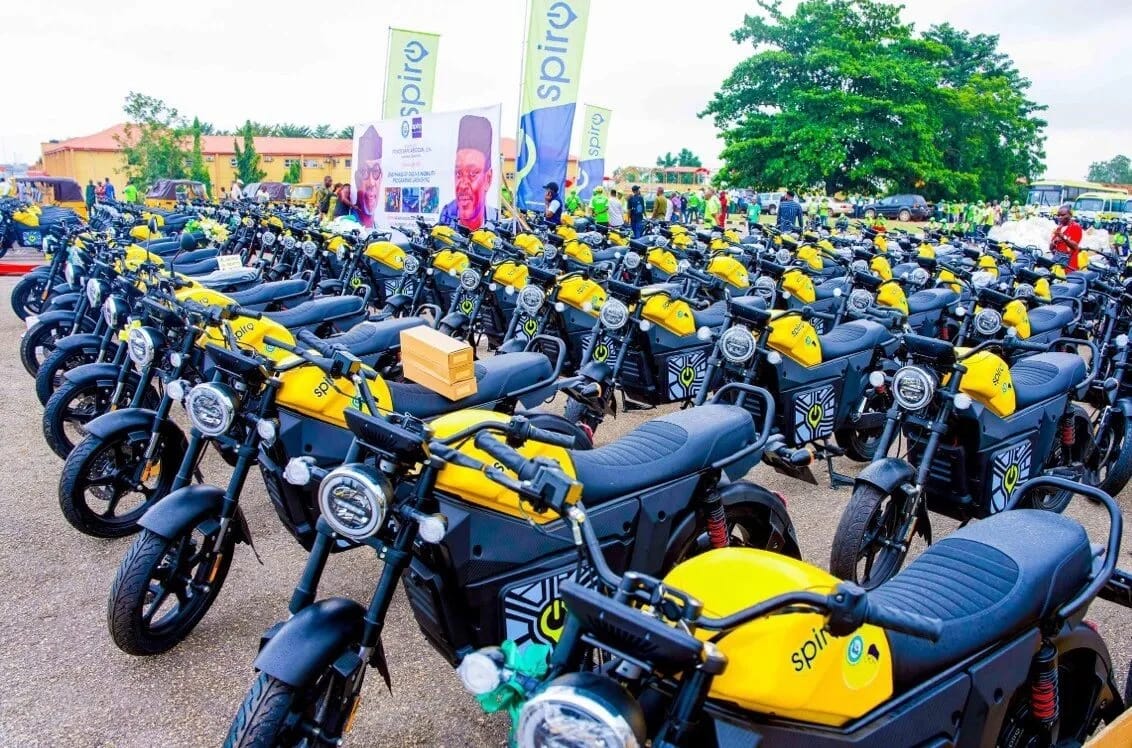
Spiro has rapidly emerged as one of Africa’s leading electric mobility companies. It currently operates more than 100,000 electric motorcycles supported by about 2,500 battery-swapping stations, giving riders quick access to fully charged batteries without lengthy charging times.
The company has also invested heavily in local manufacturing and sustainability initiatives. It operates production facilities in Kenya, Rwanda and Uganda, while its battery recycling plant in Nigeria is designed to promote responsible waste management and support the circular economy within the electric vehicle industry.
Industry observers believe the partnership with NewTrails Capital offers benefits beyond fresh capital. As China remains the world’s leading producer of electric vehicle batteries and components, the collaboration is expected to improve Spiro’s access to critical technologies, manufacturing expertise and supply chains required to support its continued expansion across Africa.
The latest investment builds on Spiro’s strong fundraising record. In October 2025, the company secured $100 million in funding led by the Fund for Export Development in Africa (FEDA), one of the largest investments ever recorded in Africa’s electric two-wheeler sector.
That financing supported Spiro’s ambition to deploy more than 100,000 electric vehicles and significantly expand its operations throughout the continent.
With total funding in its latest round now standing at $270 million, Spiro is expected to intensify its investment in electric vehicles, battery-swapping infrastructure and manufacturing capacity, further advancing the adoption of sustainable mobility solutions across Africa while contributing to the continent’s transition to cleaner and more resilient transport systems.