

Apapa Customs Records Historic N323bn Revenue in July, Credits Reforms and Forex Stability

The Nigeria Customs Service (NCS), Apapa Area Command, has recorded a historic monthly revenue collection of ₦323 billion in July 2026, the highest figure ever achieved by the Command.
The landmark performance represents another major revenue milestone under the leadership of the Customs Area Controller (CAC), Comptroller Emmanuel Oshoba, who had previously led the Command to a record N304 billion collection in October 2025.
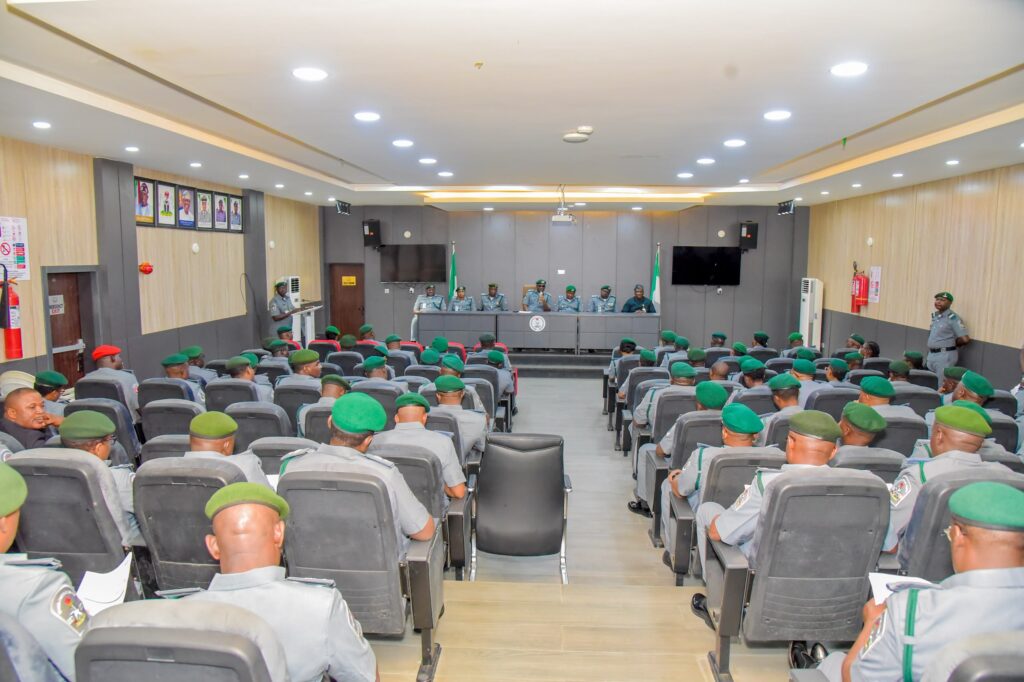
Oshoba disclosed the latest revenue figure during the Command’s monthly meeting with Deputy Comptrollers in charge of terminals and Unit Heads on Tuesday, 11 August 2026.
He attributed the record performance to a combination of government policy support, operational reforms, improved compliance by stakeholders and enhanced enforcement by officers and men of the Command.
The CAC particularly commended the Comptroller-General of Customs, Bashir Adewale Adeniyi, MFR, PhD, and the management team of the NCS for their commitment to modernising the Service.
According to him, the reforms introduced by the current Customs management have streamlined operations, improved efficiency and provided clearer direction for officers and stakeholders.
“We recognise and acknowledge the CGC’s devotion and dedication to the modernisation project of the Nigerian Customs Service. The management team has introduced several innovations that have streamlined our activities and given us clear direction,” Oshoba said.
He identified the improved performance of the B’Odogwu digital customs platform as one of the reforms contributing to the Command’s improved results.
Oshoba acknowledged that the system had encountered challenges at its earlier stages but said subsequent improvements had enhanced its performance and enabled it to deliver stronger operational outcomes.
He also highlighted the One-Stop Shop (OSS) initiative, saying it had helped to accelerate cargo clearance and delivery while creating a more predictable trading environment for importers and other stakeholders.
The CAC further identified the Authorised Economic Operator (AEO) programme as another initiative positively affecting the Command’s revenue profile.
He disclosed that more than 200 beneficiaries were currently participating in the AEO framework, which provides compliant businesses with simplified customs procedures and other trade facilitation benefits.
According to him, the initiative has contributed to improved compliance and supported the Command’s revenue growth.
Oshoba also credited intelligence-driven enforcement operations with strengthening compliance and protecting government revenue.
He said officers and men of the Command had intensified interventions against false declarations and other forms of non-compliance, while ensuring that customs valuation principles were properly applied.
The CAC stressed that revenue collection must not be separated from effective enforcement and trade facilitation, urging personnel to identify the additional value they contribute through interventions within their respective areas of responsibility.
“In your Area of Responsibility, you must ask yourself, apart from the normal revenue generated by your Unit, what is your own contribution in terms of intervention? What have I added?” he asked.
He also attributed part of the improved performance to the business environment created by the administration of President Bola Ahmed Tinubu, particularly what he described as relative stability in the foreign exchange market.
Oshoba said greater predictability in the forex market had enabled businesses to plan more effectively, make informed decisions and conduct international trade with increased confidence.
The Customs Area Controller stressed that the Service’s revenue objectives must be pursued alongside trade facilitation and ease of doing business.
He described the current operating environment as more predictable and conducive to business growth, while directing officers to resolve disputes promptly and follow due processes whenever consignments require further scrutiny.
Where additional examination is required, he instructed officers to ensure proper documentation and make use of the Post Clearance Audit (PCA) process.
He said the approach would help prevent unnecessary delays while ensuring that the interests of the government and legitimate businesses were adequately protected.
Oshoba also placed strong emphasis on stakeholder relations, urging Customs personnel to deal with importers, agents and other stakeholders with professionalism, respect and empathy.
“When you interact with stakeholders, let them leave your office with hope rather than despair. As a leader, do not allow anyone who comes to you to depart feeling hopeless or depressed. Give people hope,” he said.
He acknowledged the cooperation of stakeholders and sister government agencies, saying their support had contributed to improved compliance and greater orderliness within the business environment.
The CAC urged officers to sustain the trust being developed with stakeholders by maintaining professionalism, transparency and collaboration.
Oshoba further charged personnel to uphold discipline and transparency, work intelligently and remain abreast of developments in the Service’s digital processes.
He encouraged officers to consult more experienced colleagues whenever necessary, stressing that continuous learning was essential in an increasingly technology-driven customs environment.
He described effective leadership as a collective responsibility and called on Staff Officers to support Deputy Comptrollers in maintaining discipline and creating a healthy working environment.
Such an environment, he said, should be built around compassion, empathy, teamwork and genuine concern for the welfare of subordinates.
The CAC also directed the Command to maintain heightened security consciousness, strengthen supervision, intensify in-house training and ensure strict adherence to approved customs procedures.
He charged all units to sustain the momentum achieved so far, improve professional development and remain focused on productivity and efficient service delivery.
While commending officers and compliant stakeholders for the record revenue performance, Oshoba cautioned personnel against becoming complacent.
He described the N323 billion collection as a stepping stone towards achieving further breakthroughs before the end of 2026, urging officers to build on the achievement and continue supporting the NCS’s broader modernisation and revenue objectives.