
Keyamo: Nigeria’s 91.45% ICAO score must drive higher aviation standards

The Minister of Aviation and Aerospace Development, Festus Keyamo, has said Nigeria’s record 91.45 per cent Effective Implementation score in the 2026 International Civil Aviation Organisation (ICAO) Coordinated Validation Mission should serve as a new benchmark for the country rather than a reason to relax ongoing aviation reforms.
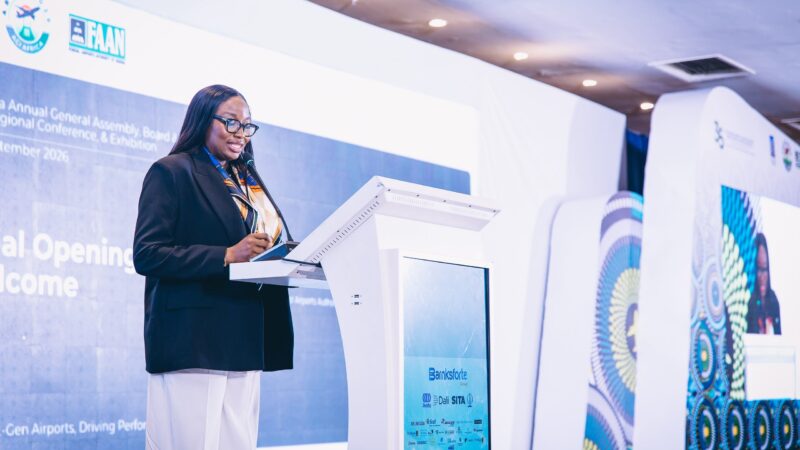
Keyamo stated this on Tuesday in Abuja while declaring open the 35th Airports Council International (ACI) Africa Annual General Assembly, 76th Board and Committee Meetings, Regional Conference and Exhibition.
The event, which brought together airport Chief Executives, aviation regulators, investors, development partners and industry leaders from across Africa and beyond, is being held under the theme, “Next-Gen Airports: Driving Performance and Resilience.”
The minister said the ICAO result, which he described as Nigeria’s highest-ever score, demonstrated the impact of sustained reforms and cooperation among aviation institutions.
He, however, stressed that the achievement should not be treated as the end of the country’s reform journey.
“This achievement demonstrates that sustained reform, professional commitment and institutional collaboration can deliver measurable results. Let me be clear, however, that 91.45 per cent is not our destination. It is our new baseline. We must continue to raise the bar,” he said.
According to Keyamo, the theme of the ACI Africa conference was particularly appropriate because the continent’s aviation industry was entering a period of increased passenger traffic driven by population growth, urbanisation, tourism, trade and the expansion of the middle class.
He said the challenge before African countries was not simply to accommodate growth, but to translate it into sustainable airport performance.
Keyamo said next-generation airports must combine safety, efficiency, financial sustainability, technological advancement, environmental responsibility and resilience.
“The airport of the future cannot simply be a larger terminal building. A next-generation airport must be safe, efficient, financially sustainable, technologically enabled, environmentally responsible and capable of adapting to disruption,” he said.
The minister noted that the aviation sector had experienced significant disruptions in recent years arising from pandemics, geopolitical tensions, economic shocks, climate events, cyber threats and infrastructure failures.
He therefore called for resilience to be incorporated into airport infrastructure, systems, business models and institutional arrangements from the outset.
He urged African airports to embrace digital transformation, smarter infrastructure, data-driven decision-making and innovative commercial models, while maintaining the human element of air transport.
“The passenger must remain our ultimate measure of success. A smart airport must also be a welcoming airport,” Keyamo said.
He said airports were no longer merely facilities where aircraft landed and took off, but had evolved into economic ecosystems supporting tourism, logistics, trade, employment, investment and technology.
In Nigeria, he said the Federal Government, under President Bola Ahmed Tinubu’s Renewed Hope Agenda, was pursuing reforms aimed at strengthening aviation safety, infrastructure, investment, connectivity and the sector’s wider contribution to the economy.
He pointed to the rehabilitation and expansion of Terminal 1 at the Murtala Muhammed International Airport, Lagos, as one of the major projects aimed at transforming the country’s principal international gateway.
Keyamo said the project was about more than upgrading physical infrastructure, arguing that airports played an important role in shaping a visitor’s first impression of a country.
“An airport is a country’s front door. When a visitor arrives, the airport is often the first physical expression of the nation that visitor encounters. We therefore want our airports to communicate efficiency, dignity, hospitality and confidence,” he said.
The minister also disclosed that the government was promoting greater private-sector participation in airport infrastructure and services, while maintaining the safety, security, service and public-interest standards required in the industry.
He said efforts were also being directed towards developing Maintenance, Repair and Overhaul (MRO) capacity, aircraft leasing, cargo infrastructure and other components of the aviation value chain.
“Our ambition is straightforward: Nigeria should not merely consume aviation services. We must increasingly produce aviation value. And we believe Africa should do the same,” he said.
Keyamo identified intra-African connectivity as another major issue requiring collective attention, arguing that air travel between African cities should become easier and more commercially sustainable.
He said the continent needed stronger connectivity, viable airports, appropriate regulatory frameworks and closer cooperation among governments, airlines and airport operators.
The minister described the Single African Air Transport Market (SAATM) as an important framework for achieving stronger connectivity, while noting that the African Continental Free Trade Area had created an economic space that aviation must help to connect.
“When African airports connect Africa more effectively, Africa becomes smaller, and opportunity becomes larger,” he said.
On passenger experience, Keyamo said emerging technologies such as biometrics, artificial intelligence, automation and data analytics should be deployed primarily to make air travel safer, faster and more convenient.
“Technology is only meaningful when it makes a person’s journey safer, easier, faster and more dignified. We must therefore build smart airports with human hearts,” he said.
He commended ACI Africa President, Fabrice Grondin, Secretary General, Ali Tounsi, and the organisation’s Board and Committees for their leadership and contribution to the development of African airports.
Keyamo also acknowledged the role of the Managing Director/Chief Executive of the Federal Airports Authority of Nigeria (FAAN), Olubunmi Kuku, who serves as Vice-President of ACI Africa.
He urged delegates to use the conference to develop practical solutions to the challenges facing the continent’s airport industry.
“Let Abuja 2026 be remembered not simply for the speeches delivered or meetings held, but for the partnerships created, investments initiated, ideas implemented and commitments fulfilled,” he said.
“Let discussions at this conference become policies. Let partnerships become projects. Let innovation become everyday practice. And let resilience become a design principle for every airport we build or transform.”
Keyamo said Africa possessed the population, market, geography, tourism assets and entrepreneurial energy required to build a stronger aviation industry, but needed appropriate infrastructure, policies, connectivity and institutional capacity to translate those advantages into sustainable economic value.
He reaffirmed Nigeria’s commitment to working with African governments, ACI Africa, ACI World, airport operators, airlines, regulators, investors and development partners to build a safer, competitive, sustainable, innovative and resilient aviation sector.
“When our airports perform better, our economies perform better. When our airports become more resilient, our nations become more resilient. And when African airports connect Africa, Africa moves forward together,” Keyamo said.