
NiMet, TomorrowNow Partner to Strengthen Climate Advisories for Nigerian Farmers
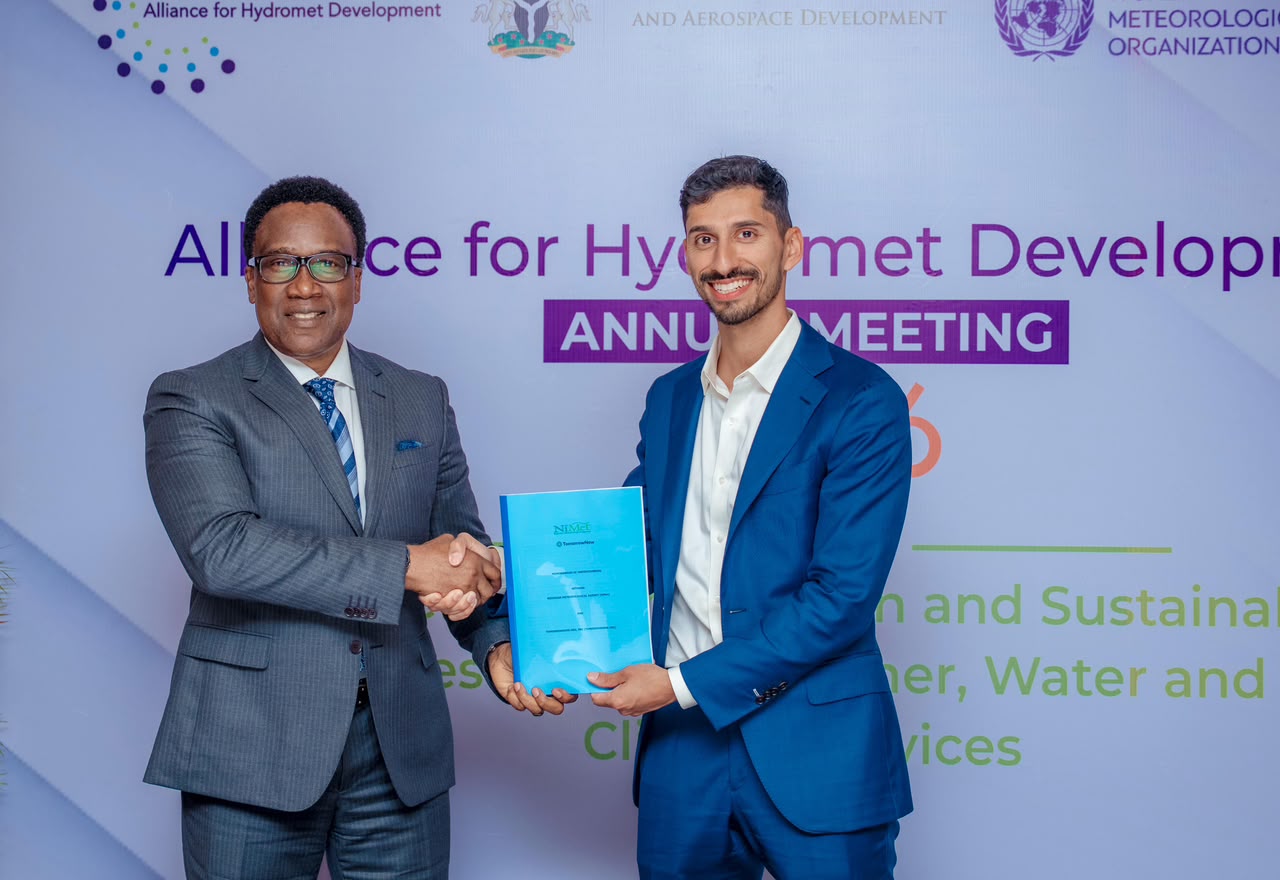
The Nigerian Meteorological Agency (NiMet) and TomorrowNow have entered into a partnership to strengthen the delivery of weather and climate advisories to farmers across Nigeria, in a move aimed at improving agricultural planning, decision-making and resilience to climate-related challenges.
The collaboration was highlighted during a side event on the third day of the Alliance for Hydromet Development Annual Meeting in Lagos, where representatives of both organisations underscored the importance of providing farmers with timely, reliable and actionable climate information.
The partnership is expected to improve farmers’ access to weather forecasts and climate advisories that can guide decisions across the agricultural value chain, including planting, crop management, harvesting and livestock production.
Speaking at the event, NiMet’s Director-General and Chief Executive Officer, Prof. Charles Anosike, emphasised the need to standardise climate information provided to stakeholders across the agricultural value chain.
Anosike said consistent and reliable climate information was essential to ensuring that farmers and other agricultural stakeholders could interpret and apply weather and climate advisories effectively.
He stressed that the agreement between NiMet and TomorrowNow must be results-based, with its success measured by the practical benefits it delivers to farmers.
According to him, the partnership should go beyond the production and dissemination of climate information to ensure that the information reaches its intended users in a format that supports informed decisions and improves agricultural outcomes.
His position reflects the need to bridge the gap between the availability of meteorological information and its practical application by farmers, particularly those whose livelihoods depend heavily on weather conditions.
For farmers, timely weather forecasts can help determine appropriate planting periods, guide irrigation decisions, reduce exposure to extreme weather events and minimise potential losses associated with unfavourable climatic conditions.
Similarly, livestock producers can benefit from climate advisories that support decisions on animal management, water availability and the preparation for weather-related risks.
In his remarks, TomorrowNow Chief Executive Officer, Brian Miranda, assured NiMet’s leadership of the organisation’s commitment to delivering climate advisory services at scale to support Nigeria’s agriculture and livestock sectors.
Miranda said the organisation was committed to working with NiMet to expand access to climate information that could help farmers and livestock producers make better-informed decisions.
The collaboration is expected to strengthen the availability and practical use of weather and climate guidance, particularly among agricultural producers who require reliable information to plan their activities and manage risks.
Nigeria’s agricultural sector remains vulnerable to weather variability and climate-related hazards, including irregular rainfall, droughts, flooding and extreme temperatures. These conditions can disrupt planting schedules, affect crop yields, threaten livestock and undermine farmers’ incomes.
Improving access to reliable meteorological information is therefore considered important to strengthening the capacity of farmers to anticipate weather-related risks and adapt their activities accordingly.
However, the effectiveness of climate advisory services depends not only on the accuracy of forecasts but also on their accessibility, timeliness and relevance to the needs of different categories of farmers.
The emphasis on standardising climate information, as highlighted by Anosike, is therefore expected to be an important consideration in the implementation of the partnership.
The initiative also underscores the importance of collaboration between meteorological agencies and organisations working to translate climate information into practical guidance for end-users.
By combining NiMet’s meteorological expertise with TomorrowNow’s commitment to delivering climate advisory services at scale, the partnership seeks to improve the connection between weather and climate information and the decisions made by farmers across the country.
The two organisations are expected to focus on making climate advisories more useful to agricultural producers, helping them respond more effectively to changing weather conditions and strengthening resilience across Nigeria’s agricultural value chain.
While the announcement did not specify the implementation timeline, the number of farmers expected to benefit or the particular delivery channels to be used, the partnership signals a shared commitment to improving the use of climate information in agricultural decision-making.
Its ultimate impact will depend on how effectively the advisories reach farmers, how well they address local agricultural needs and whether the collaboration translates into measurable improvements in farm planning, risk management and resilience.
The partnership was highlighted at the Alliance for Hydromet Development Annual Meeting, which brought together stakeholders to discuss issues relating to hydrometeorological services and the role of weather, water and climate information in supporting development.
For Nigeria, strengthening the delivery of climate advisories could provide farmers with better tools to manage weather-related uncertainties, protect their livelihoods and make more informed decisions across the agricultural and livestock sectors.