
NiMet DG, WMO President Seek Increased Investment in Weather, Climate Services
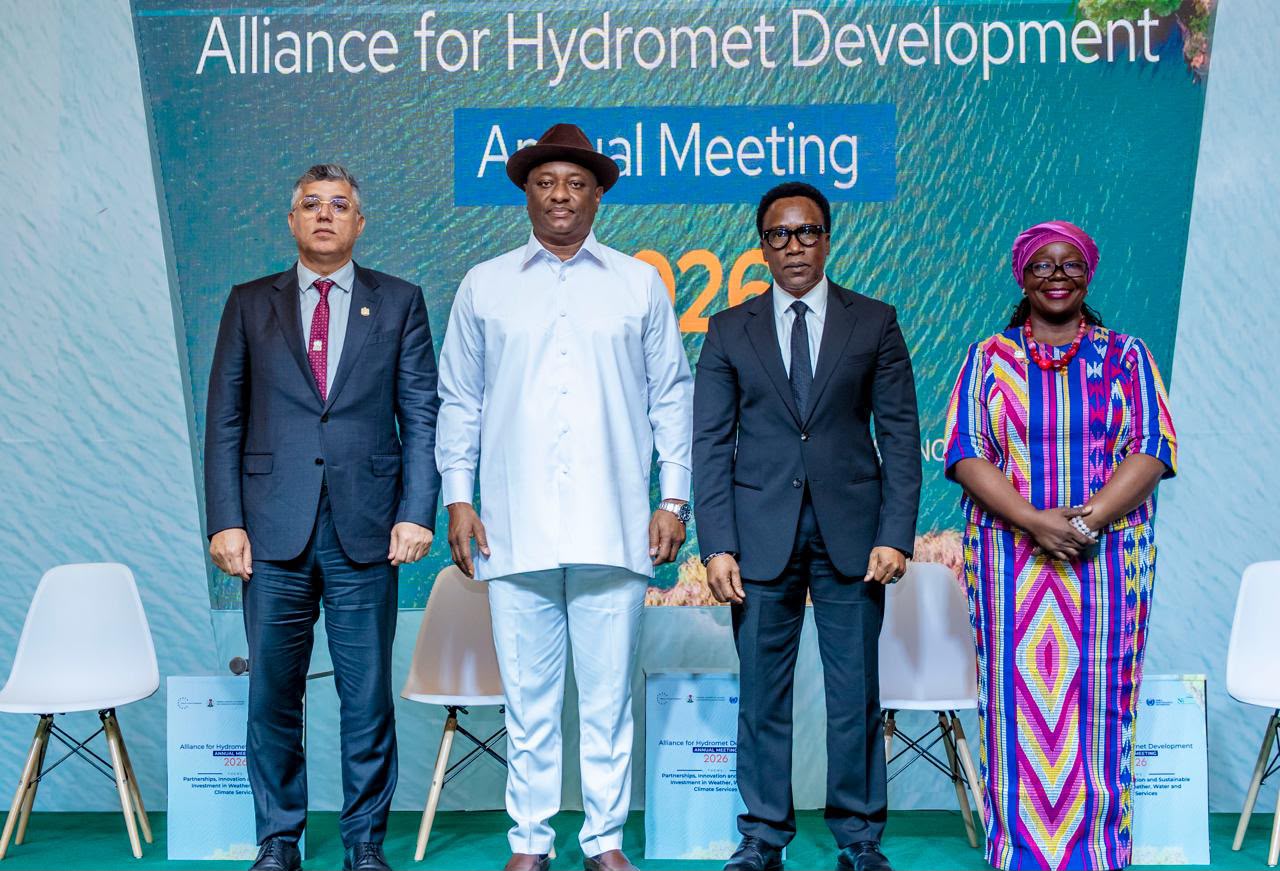
The Director-General of the Nigerian Meteorological Agency (NiMet), Professor Charles Anosike, and the President of the World Meteorological Organisation (WMO), Dr Abdulla Ahmed Al Mandous, have called for increased investment in weather and climate observation infrastructure across Africa to address critical data gaps, strengthen early-warning systems and protect lives and livelihoods.
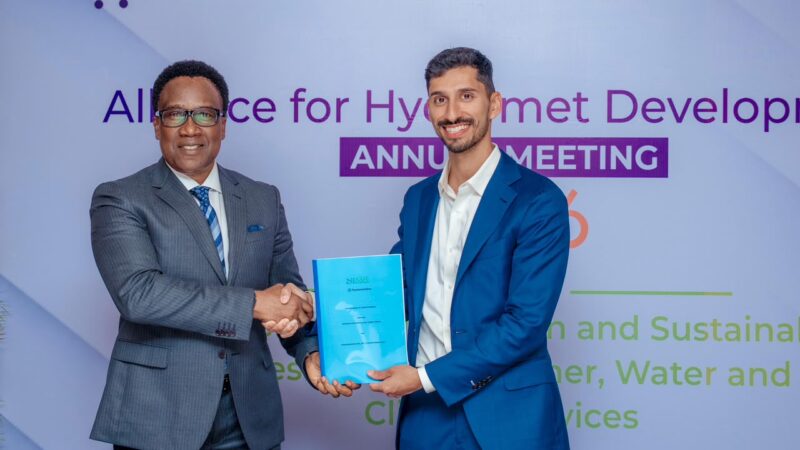
They made the call at the opening ceremony of the 2026 Annual Meeting of the Alliance for Hydromet Development, held at Eko Hotel & Suites, Lagos, from October 13 to 15.
Anosike, who is also Nigeria’s Permanent Representative with the WMO, said Africa continued to face significant deficiencies in weather and climate observation infrastructure, limiting the continent’s capacity to provide reliable forecasts and timely warnings about potentially hazardous weather conditions.
He disclosed that Africa accounted for approximately 30 per cent of the global weather and climate observation deficit, while the continent’s weather station density remained significantly below the minimum recommended by the WMO.
According to him, Africa has only about 12.5 per cent of the minimum weather station density recommended by the international organisation, while compliance rates for surface land stations and upper-air stations stood at just seven per cent and nine per cent, respectively, across 53 African countries.
The NiMet chief executive warned that these deficiencies undermined the availability of reliable meteorological information needed to support decision-making across critical sectors of the economy, including aviation, agriculture, maritime operations and disaster risk management.
He, therefore, called for increased investment in observation infrastructure, remote-sensing technologies, data analytics and modern data platforms to improve the collection, processing and dissemination of weather and climate information.
Anosike stressed that governments could not meet the growing demand for reliable weather and climate services through public funding alone, making stronger partnerships with the private sector and other development stakeholders imperative.
He said increased investment must be accompanied by efforts to translate meteorological information into practical guidance that individuals, businesses, governments and vulnerable communities could use to make informed decisions.
The NiMet director-general also underscored the importance of strengthening early-warning systems, noting that reliable weather information was essential to reducing disaster risks, protecting economic activities and improving the resilience of communities to the effects of climate-related hazards.
He said NiMet continued to contribute to aviation safety, agricultural productivity, maritime operations and disaster risk management through the provision of meteorological information and services.
However, he emphasised that closing existing observation gaps would require sustained investment in infrastructure, improved data systems and stronger collaboration among governments, development partners, financial institutions and private-sector organisations.
The WMO president, Al Mandous, similarly urged Nigeria and other African countries to increase investment in meteorological and hydrological services to improve early-warning capabilities, protect lives and livelihoods, and support sustainable economic development.
He described the period leading to 2030 as critical to addressing the continent’s capacity gaps in weather, water and climate services, stressing the need for countries to move beyond identifying deficiencies to implementing practical investment programmes.
According to him, stronger meteorological and hydrological services are essential to helping countries anticipate weather-related risks, improve preparedness and minimise the economic and social consequences of disasters.
He urged African governments and development partners to prioritise investment in observation infrastructure, strengthen institutional frameworks, expand partnerships with key economic sectors and promote regional cooperation.
Al Mandous also called for a more coordinated approach to addressing the continent’s weather and climate challenges, noting that collaboration among countries could accelerate capacity development and improve the delivery of services.
He said Nigeria was increasingly contributing to regional cooperation and the development of meteorological and hydrological services in other African countries.
The WMO president noted that Nigeria had progressed from being a beneficiary of technical assistance to sharing its expertise with other countries, citing its support for Burkina Faso as a peer reviewer under the Country Hydromet Assessment initiative.
The initiative is designed to help countries assess their hydrometeorological capabilities, identify gaps and determine investment priorities needed to strengthen weather, water and climate services.
Al Mandous said such cooperation demonstrated the importance of regional partnerships in addressing shared challenges and accelerating progress towards improved climate resilience across Africa.
He said: “Our direction is clear: to turn assessments into investments, investments into lasting capacity, and early warnings into early action that saves lives and livelihoods.”
His remarks highlighted the need to ensure that technical assessments and recommendations translate into tangible improvements in observation networks, forecasting capabilities, institutional capacity and the delivery of early warnings to communities at risk.
The WMO president’s call also reinforced the importance of aligning development financing with clearly identified national priorities to ensure that investments in weather and climate services deliver measurable benefits.
Meanwhile, Anosike expressed appreciation to the Federal Government, particularly President Bola Ahmed Tinubu, and the Minister of Aviation and Aerospace Development, Olorogun Festus Keyamo, for their support towards strengthening NiMet’s institutional capacity and operational efficiency.
He acknowledged the government’s role in supporting the agency’s efforts to improve the delivery of meteorological services and enhance its contribution to national development.
The three-day meeting brought together government representatives, development partners, financial institutions and other stakeholders to discuss strategies for strengthening collaboration and identifying investment priorities for weather, water and climate services.
The gathering also provided an opportunity for stakeholders to examine existing capacity gaps, explore financing options and develop collaborative approaches towards improving hydrometeorological services across Africa.
The discussions come amid growing concerns about the impact of climate-related hazards on economic activities, infrastructure, food production and vulnerable communities, increasing the need for reliable forecasts and effective early-warning systems.
For African countries, closing the observation gap is particularly important because accurate and timely weather information supports planning across several sectors, from agricultural production and water-resource management to aviation operations, transport and emergency response.
Improved observation networks and forecasting systems can help governments and businesses anticipate potentially hazardous weather conditions, reduce avoidable losses and make better-informed investment decisions.
The calls by Anosike and Al Mandous therefore place renewed emphasis on the need for sustained financing, stronger institutions and deeper public-private partnerships to ensure that Africa can build the capacity required to respond effectively to weather and climate risks by 2030.