
Shettima: Productive Enterprise, Innovation Key to Nigeria’s $1trn Economy
Vice-President Kashim Shettima has said Nigeria’s ambition to build a $1 trillion economy can only be achieved through productive enterprise, investment, innovation and the capacity of Nigerians to create value.
He said the Federal Government’s Renewed Hope Agenda was anchored on building a strong economic ecosystem in which businesses could emerge, grow, compete in international markets and contribute to national development.
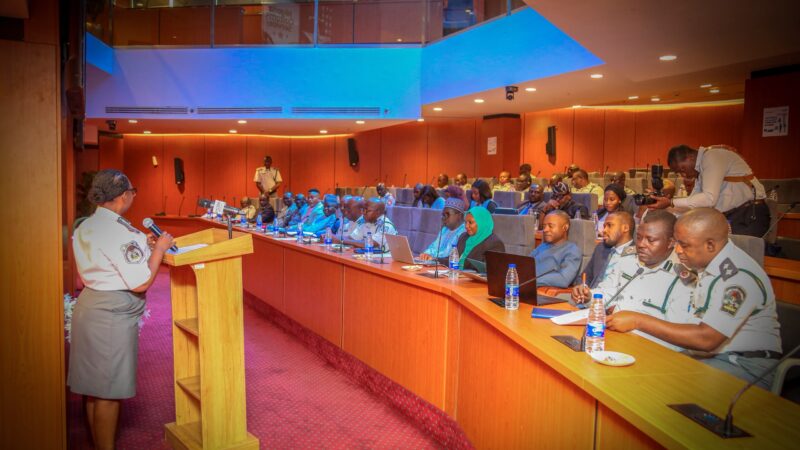
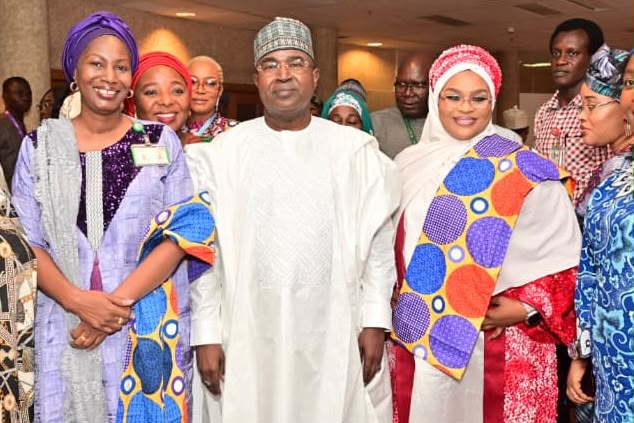
Shettima stated this in his keynote address at a masterclass organised by the Aspire Women Forum at the Conference Hall of the Presidential Villa, Abuja, on Wednesday.
The masterclass, themed, “From Survival to Thriving: Empowering Women and Youth for Export Readiness, Global Market Access and Prosperity under the Renewed Hope Agenda”, brought together women and young people to equip them with the skills and knowledge required to expand their businesses and access international markets.
The Vice-President, who was represented by the Special Assistant to the President on Humanitarian Affairs and Development Partners, Inna Binta Audu, described the transition from survival to thriving as not merely a personal aspiration but an economic imperative and a national development priority.
He said the success of the initiative should be measured by its impact on businesses and livelihoods rather than the number of participants who attended the programme.
“What makes this initiative particularly valuable is its emphasis on practical knowledge. The true measure of this masterclass will not be the number of people in this hall, but the number of businesses that become stronger, the number of entrepreneurs who reach new markets and the number of livelihoods transformed by what is learnt here,” he said.
Shettima stressed that women and young people must occupy a central position in the country’s economic development, noting that their participation in productive activities would expand national output, improve household incomes, generate employment and create opportunities for future generations.
He, however, maintained that economic inclusion must go beyond training programmes and empowerment announcements to provide beneficiaries with the tools, institutions and market access required to translate their skills into sustainable income.
The Vice-President commended the founder of Aspire Women Forum, Dr Zainab Marwa, and other institutions and partners that supported the initiative, expressing optimism that the programme would help participants build stronger businesses and take advantage of emerging economic opportunities.
Also speaking at the event, the Chairman and Chief Executive Officer of the National Drug Law Enforcement Agency (NDLEA), Brig.-Gen. Mohamed Buba Marwa (retd.), warned aspiring exporters against allowing their businesses to be exploited by drug traffickers, cautioning that a single shipment contaminated with illicit drugs could result in imprisonment, damage their reputation and undermine Nigeria’s image internationally.
Marwa urged women and young Nigerians seeking to expand their businesses and enter global markets to protect their health, exercise sound judgement and maintain the integrity of their commercial transactions.
He warned that the promise of financial rewards by criminal networks was not worth the risk of losing one’s freedom or destroying years of business investment.
Commending Aspire Women Forum for bringing together hundreds of women and young people for training and connections to markets, finance and relevant institutions, the NDLEA chief said the programme addressed the aspirations of millions of Nigerian households seeking better incomes, opportunities to develop their talents and a more secure future.
He acknowledged that opportunities were emerging under President Bola Tinubu’s Renewed Hope Agenda but stressed that participants needed relevant skills, supportive institutions, discipline, resilience and responsible decision-making to benefit from them.
Marwa also welcomed the programme’s focus on confidence-building, emotional intelligence, managing pressure and balancing family responsibilities with business demands.
He, however, identified substance abuse and illicit drug trafficking as serious threats capable of undermining the ambitions of entrepreneurs, particularly young people facing economic pressure and uncertainty.
“Do not let pressure, disappointment, curiosity or the desire to belong draw you into drugs. Drugs solve no business problem and end no hardship; they only multiply them,” he warned.
The NDLEA boss encouraged people struggling with drug dependence to seek professional assistance, describing the decision to obtain help as an act of courage rather than a source of shame.
He drew attention to the agency’s toll-free helpline, 0800 1020 3040, which operates round the clock and provides access to trained professionals, including clinical psychologists, psychotherapists and psychiatrists.
According to him, the NDLEA Call Centre offers support in English, Pidgin, Hausa, Igbo and Yoruba, making assistance accessible to people from different linguistic backgrounds.
He urged parents, mentors and community leaders to guide individuals struggling with drug-related problems towards treatment and support instead of isolating them.
Addressing participants preparing to export goods, Marwa emphasised the need for vigilance throughout the supply chain, warning that traffickers could exploit legitimate businesses to move illicit substances across borders.
“Know exactly what you are shipping. Verify your partners and your transactions. Never carry a package you did not pack, and never let your goods be used for trafficking,” he said.
He explained that an exporter whose shipment was found to contain illicit drugs could face imprisonment, suffer reputational damage and expose family members to public disgrace.
Such incidents, he added, could also jeopardise access to international markets painstakingly developed by individual entrepreneurs and undermine confidence in Nigerian exports.
Marwa said export readiness required more than the desire to sell products abroad, stressing the importance of business integrity, reliable products, compliance with applicable standards, accurate documentation and dependable service.
He encouraged participants to identify at least one practical step they could take immediately after the masterclass, including formalising their businesses, improving record-keeping, strengthening their digital skills or preparing their products for wider markets.
The NDLEA chief also pledged the agency’s willingness to collaborate with Aspire Women Forum through its War Against Drug Abuse (WADA) social advocacy initiative.
He urged the participants to invest in their abilities, choose their associations carefully and pursue their business goals with discipline and integrity while remaining drug-free.
Earlier, the Founder and President of Aspire Women Forum, Dr Zainab Marwa, said many Nigerians worked long hours producing goods, selling merchandise, sewing clothes, farming, processing food and providing services but still struggled to earn enough to sustain their households.
She attributed some of the challenges to practical business gaps, including poor record-keeping, lack of business registration, unsuitable financing arrangements, inadequate packaging and limited access to buyers.
Marwa said the masterclass was designed to help entrepreneurs understand how to overcome these barriers and take advantage of available government interventions and opportunities in the domestic and international markets.
She commended the Federal Government for supporting enterprise development and economic inclusion under the Renewed Hope Agenda, particularly through intervention financing for small businesses via the Bank of Industry and initiatives focused on skills development and digital enterprise.
According to her, the programme sought to bridge the gap between the opportunities available to entrepreneurs and their ability to access and benefit from them.
She disclosed that the Forum deliberately included young men alongside women and young women, explaining that income uncertainty affected entire households and required a broader approach to economic empowerment.
While reaffirming the organisation’s commitment to advancing women, she said its engagement with participants would continue beyond the masterclass through a dedicated team responsible for communication, referrals and further learning opportunities.
Marwa expressed appreciation to Shettima for the support provided by his office and acknowledged the Director-General of the World Trade Organisation, Dr Ngozi Okonjo-Iweala, whose meeting with her in Geneva strengthened her determination to pursue the initiative.
She also recognised the contribution of Dr Queen Onyinye Okpa, founder of Women in Agribusiness, Trade and Export, and other supporters who helped advance the programme’s objectives.
The organisers said the initiative was intended to move participants beyond subsistence-level business activities towards sustainable enterprise, stronger market access and greater economic independence.