
NiMet DG Calls for Regional Cooperation to Strengthen Weather Observation, Early Warning Systems
The Director-General and Chief Executive Officer of the Nigerian Meteorological Agency (NiMet), Prof. Charles Anosike, has called for stronger regional cooperation among African countries to improve weather observations, strengthen multi-hazard early warning systems and ensure the long-term sustainability of National Meteorological and Hydrological Services (NMHSs).
Anosike, who is also Nigeria’s Permanent Representative with the World Meteorological Organisation (WMO), made the call at the ongoing 31st United Nations Climate Change Conference (COP31) in Antalya, Türkiye.
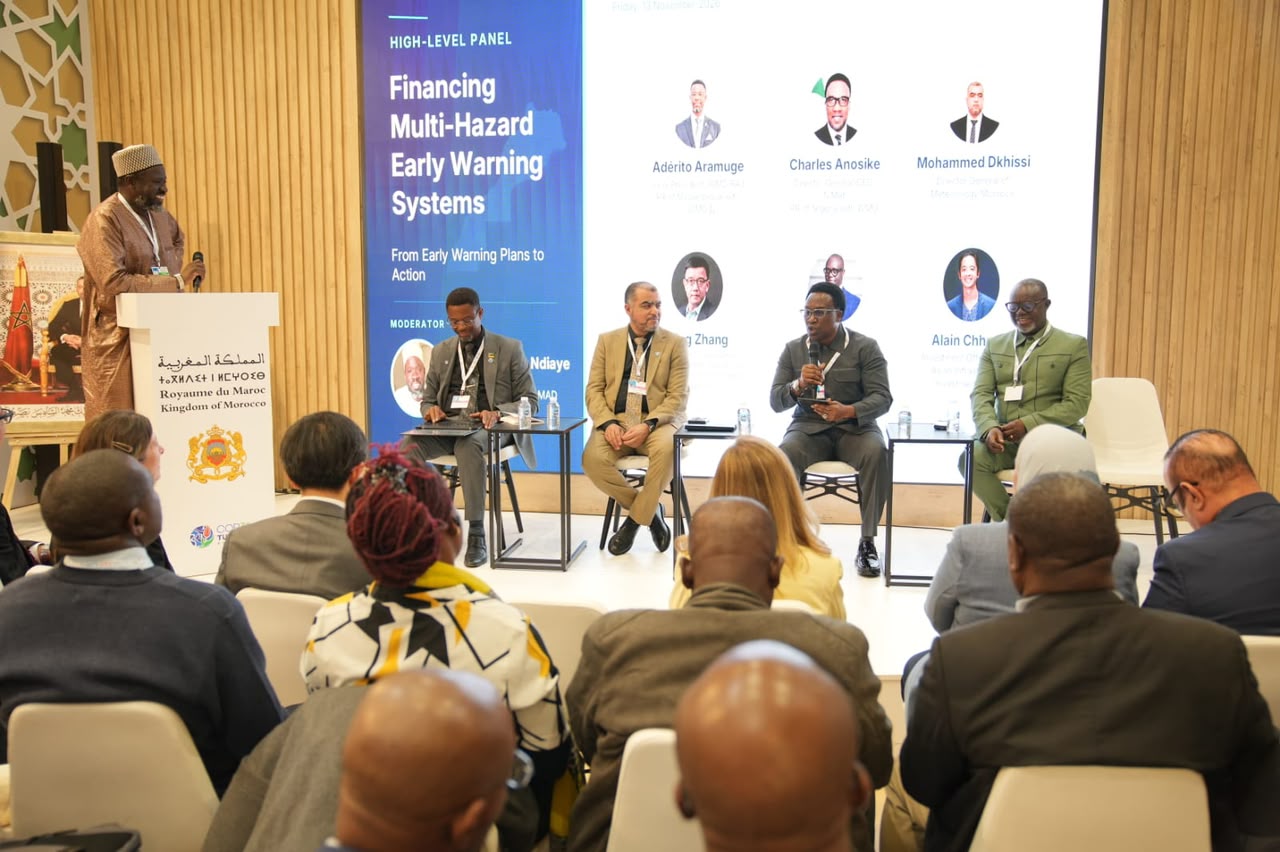
He spoke during a high-level side event hosted at the Morocco Pavilion, organised by the General Directorate of Meteorology (DGM) in collaboration with Morocco’s Ministry of Equipment, Water and Forests.
The event featured a high-level panel session on financing multi-hazard early warning systems, where participants discussed strategies for mobilising resources, strengthening meteorological infrastructure and ensuring that countries have the capacity to provide reliable and timely climate information.
Speaking at the session, Anosike identified three major priorities guiding NiMet’s resource mobilisation strategy, stressing that sustained investment in human capacity, observation infrastructure and strategic partnerships was essential to improving the delivery of meteorological services.
According to him, the agency is prioritising investment in its workforce through employee growth and improved welfare, the continuous expansion of its weather observation networks and systems, as well as the strengthening of partnerships that would enable it to translate climate data into practical and actionable information for Nigerians and the national economy.
While acknowledging the importance of government budgetary allocations in funding meteorological services, the NiMet boss argued that government financing alone would not be sufficient to guarantee the long-term sustainability of National Meteorological and Hydrological Services.
He maintained that greater private sector participation was necessary, particularly as climate-related risks increasingly carry significant financial implications for businesses, governments and communities.
Anosike said meteorological agencies must begin to develop business portfolios capable of attracting private sector investment and encouraging businesses to participate in discussions about climate risk management.
He explained that physical climate risks have financial costs, making it imperative for weather and climate service providers to demonstrate the economic value of their services to potential investors and commercial partners.
He disclosed that NiMet was already engaging private sector organisations, including insurance companies, to explore opportunities for sharing climate-related risks and reducing the long-term financial burden associated with climate-induced damages.
The engagement, he indicated, was part of efforts to establish mutually beneficial partnerships through which meteorological information could support better risk assessment, planning and decision-making in the private sector.
The NiMet Director-General also stressed that no country could independently shoulder the financial and technical responsibilities involved in generating and disseminating reliable weather and climate information.
He noted that weather systems and climate-related hazards do not respect national boundaries, making cross-border cooperation indispensable for effective forecasting, preparedness and disaster risk reduction.
According to him, meteorological observations and data must be shared across regions and converted into timely, actionable warnings by National Meteorological and Hydrological Services to protect lives, property and economic activities.
He therefore called for stronger regional collaboration among African countries to reduce the financial burden of maintaining weather observation infrastructure.
Such cooperation, he said, would allow countries to pool resources, standardise operational processes and establish regional frameworks capable of unlocking multiple cost-saving opportunities while improving the quality and availability of meteorological information.
Anosike further advocated increased support for regional and continental meteorological institutions, particularly the African Centre of Meteorological Applications for Development (ACMAD).
He described such institutions as critical to harmonising regional frameworks and creating an enabling environment for countries to access and effectively utilise climate finance.
He noted that stronger continental institutions would help address institutional and technical gaps, improve coordination among national meteorological agencies and facilitate the mobilisation and absorption of financial resources required to strengthen climate services across Africa.
The discussions also underscored the importance of collaboration among governments, international organisations, development partners, financial institutions and private sector operators in building effective multi-hazard early warning systems.
The event attracted representatives of the Moroccan Government, the WMO and partners under the Early Warnings for All (EW4All) initiative, including the United Nations Office for Disaster Risk Reduction (UNDRR), WMO, International Telecommunication Union (ITU) and International Federation of Red Cross and Red Crescent Societies (IFRC).
Also in attendance were Permanent Representatives with WMO, directors of African National Meteorological and Hydrological Services, multilateral development banks, climate funds, bilateral development partners, United Nations agencies, regional institutions, scientific and technical organisations, private sector partners and other relevant national stakeholders.
Anosike’s intervention at the conference reflects growing efforts to strengthen cooperation between African meteorological institutions, mobilise sustainable financing and improve the availability of weather and climate information needed to address the continent’s increasing exposure to climate-related hazards.