
Customs Intercepts Live Olive Ridley Sea Turtle at Nigeria-Benin Border
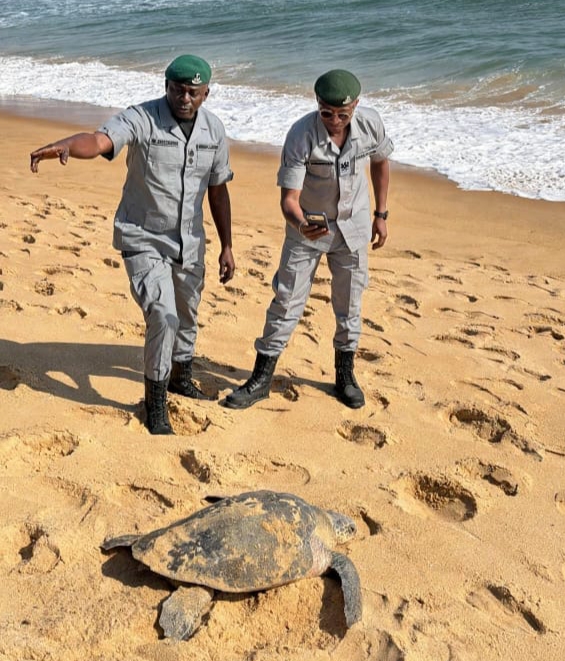
The Nigeria Customs Service (NCS), Seme Area Command, has intercepted a live endangered Olive Ridley Sea Turtle concealed in a sack along the Nigeria-Benin border, in a renewed effort to curb wildlife trafficking and protect endangered species.
The interception was made at about 10.30pm on Thursday, November 12, 2026, during a routine patrol by Customs officers along a footpath linking Nigeria and the Republic of Benin.
The officers reportedly sighted a suspicious individual carrying a sack who abandoned the item and fled into a nearby bush upon noticing the patrol team. Efforts by the officers to apprehend the suspect were unsuccessful as he escaped.
However, a search of the abandoned sack led to the discovery of a live Pacific Ridley Sea Turtle, also known as the Olive Ridley Sea Turtle (Lepidochelys olivacea).
The animal was immediately rescued and secured by the officers before being handed over to the relevant wildlife authorities for proper care, rehabilitation and eventual release into its natural habitat in line with established conservation practices.
The Acting Customs Area Controller of the Seme Area Command, Deputy Comptroller of Customs Norman Olisah Alumanah, described the interception as a demonstration of the vigilance, discipline and professionalism of officers in combating smuggling and other transnational crimes.
He stressed that the Nigeria Customs Service would not allow the country’s borders to become corridors for wildlife trafficking, warning smugglers, poachers and their collaborators to desist from the illegal trade.
Alumanah said the Service recognised wildlife trafficking as a serious environmental crime with far-reaching consequences for biodiversity, ecosystem preservation, national security and sustainable development.
According to the Command, sea turtles, particularly the Olive Ridley species, face growing threats from illegal exploitation and trafficking for their meat, eggs, shells, traditional medicine and the exotic pet trade.
Wildlife trafficking is regarded as one of the most lucrative forms of transnational organised crime globally, with activities associated with it threatening the survival of several endangered species, destroying ecosystems and fuelling corruption.
The Customs chief reiterated the Service’s commitment to enforcing national and international conservation laws, particularly the Convention on International Trade in Endangered Species of Wild Fauna and Flora (CITES), which Nigeria signed as part of global efforts to ensure that international trade in wildlife does not threaten the survival of endangered species.
Nigeria domesticated the convention through the Endangered Species (Control of International Trade and Traffic) Act, Cap E9, Laws of the Federation of Nigeria, 2004. The legislation criminalises unauthorised hunting, capture, possession, trade, importation and exportation of endangered species.
The Nigeria Customs Service Act, 2023, also empowers the Service to enforce relevant laws governing importation and exportation, including the suppression of smuggling and illicit trade in endangered wildlife.
Alumanah attributed the Command’s enforcement achievements partly to the operational support and logistics provided by the Comptroller-General of Customs, Bashir Adewale Adeniyi, and the management of the Service.
He expressed appreciation to the Customs leadership for equipping the Command with enhanced logistics and operational assets to strengthen its capacity to tackle smuggling and other illegal activities along the border.
The Acting Area Controller also called on residents of border communities to support Customs officers with credible intelligence, noting that the fight against wildlife trafficking required collective responsibility and the cooperation of well-meaning Nigerians.
He disclosed that the Command had intensified patrols, surveillance and intelligence gathering across its area of responsibility to prevent smugglers from exploiting the country’s porous border routes.
He added that the enforcement drive would be complemented by stakeholder education and public sensitisation on endangered species, their ecological importance and the legal consequences of their unauthorised trade.
The Seme Area Command reaffirmed that it would continue to discharge its statutory responsibilities of revenue generation, suppression of smuggling, trade facilitation and border security, while strengthening its contribution to environmental protection and the preservation of Nigeria’s biodiversity for future generations.