

Arik Air Flight Makes Precautionary Landing in Benin After Engine Sound During Descent
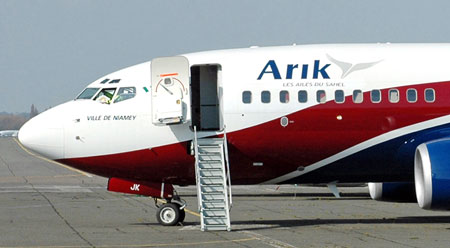
An Arik Air domestic flight travelling from Lagos to Port Harcourt was diverted to Benin City on Wednesday, 11 February 2026, after the crew detected an unusual noise from one of the aircraft’s engines while preparing to land, prompting an immediate precautionary response in accordance with aviation safety procedures.
The flight, designated W3 740 and operated by a Boeing 737-700 aircraft registered 5N-MJF, was on its descent into Port Harcourt International Airport, Omagwa, when the pilots reportedly heard a loud bang emanating from the left engine.
Recognising the potential risk, the flight crew swiftly initiated standard safety protocols and elected to divert to the nearest suitable airport rather than continue the approach.
The aircraft touched down safely at Benin Airport, where all 80 passengers on board disembarked without incident. The airline confirmed that no injuries were recorded among passengers or crew members, underscoring that the diversion was strictly precautionary and undertaken to ensure maximum safety.
In an official statement released shortly after the occurrence, Arik Air expressed regret over the disruption caused to travellers and assured those affected that alternative arrangements had been made to convey them to Port Harcourt so they could complete their journeys with minimal delay.
The airline reiterated that passenger safety and wellbeing remain its highest operational priority.
Aviation experts note that diversions of this nature are not uncommon in global aviation and are widely regarded as evidence of effective safety culture, as pilots are trained to respond decisively to any unusual mechanical sound or system indication, regardless of how minor it may appear.
Such actions, they say, reflect strict compliance with international aviation standards that place passenger protection above schedule or convenience.
The incident serves as a reminder of the multiple layers of monitoring, training, and procedural safeguards built into modern air travel, which are designed to ensure that even unexpected technical alerts can be managed calmly and safely without harm to those on board.