
Court Orders Detention of Brazilian Vessel, 21 Crew Members over Cocaine Seizure at Apapa Port
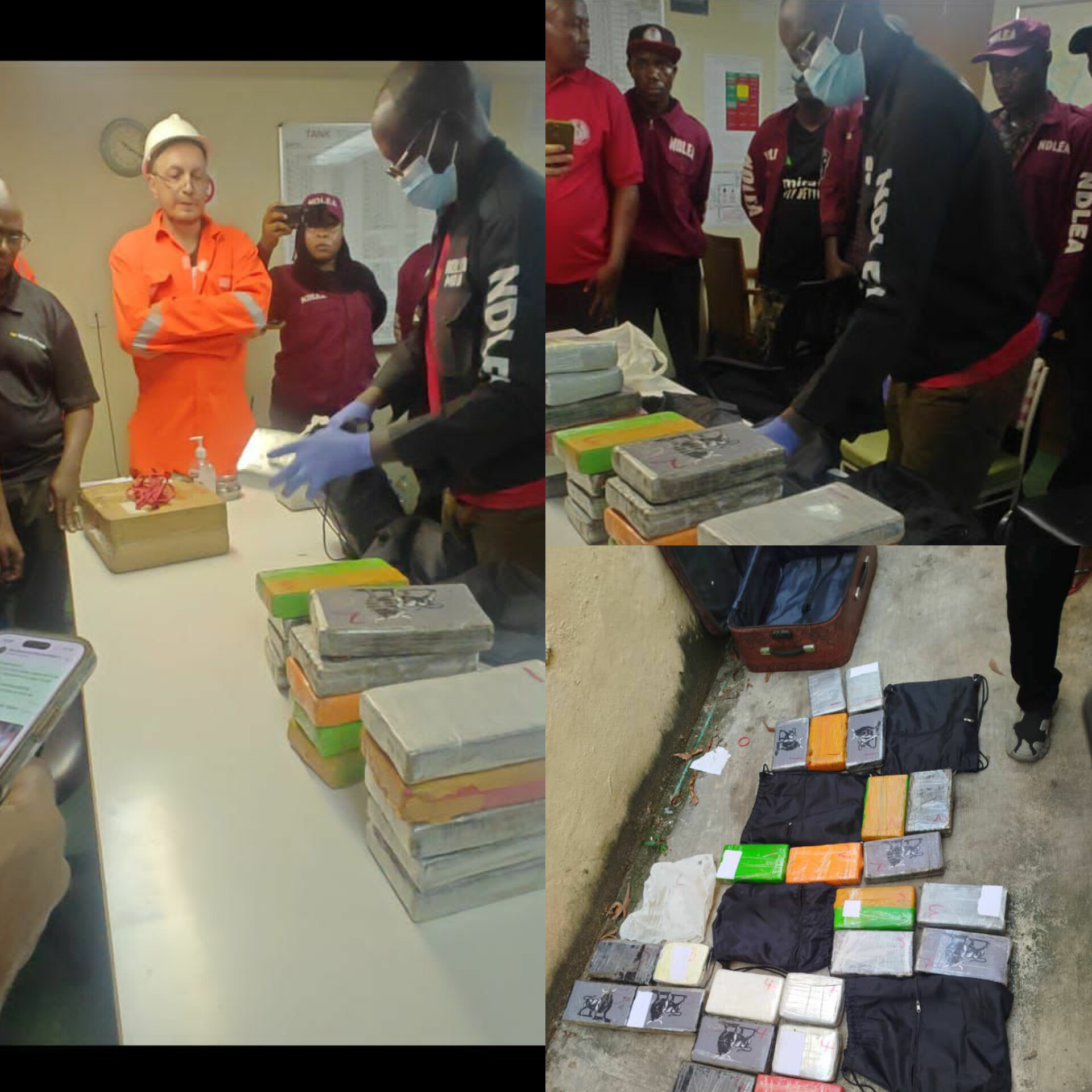
The National Drug Law Enforcement Agency (NDLEA) has secured an order of the Federal High Court in Lagos authorising the detention of a commodity vessel, its captain and 20 other crew members following the interception of 25.5 kilograms of cocaine aboard the ship at the Apapa seaport.
The order follows the discovery of the illicit drug concealed in the hatch of the merchant vessel, MV San Anthonio, which sailed into Nigeria from Brazil.
Operatives of the NDLEA, acting on credible intelligence, uncovered the cocaine consignment on 6 December 2025 during a search of the vessel shortly after its arrival at the Lagos port.
Upon the completion of the discharge of the ship’s cargo, a total of 21 crew members of various nationalities were taken into NDLEA custody along with the seized drug exhibits. The crew comprises nationals of Russia, the Philippines, Ukraine and Azerbaijan, among others.
The latest seizure comes barely weeks after a similar operation by NDLEA officers at the Apapa seaport. On 16 November 2025, another commodity-laden vessel, MV Nord Bosporus, which also arrived from the Brazilian port of Santos, was intercepted with no fewer than 20 kilograms of cocaine buried beneath its cargo.
The back-to-back interceptions have further underscored Nigeria’s increasing use of maritime routes by international drug trafficking syndicates.
Those taken into custody in connection with the MV San Anthonio seizure include the Master of the vessel, Trofymov Oleksandr, alongside crew members identified as Stoychev Sergiy; Bobrov Maksim; Stupnytsky Sergiy; Bitinev Aleksei; Novruzov Teymur; Sosnov Oleg; Bondar Ihor; Klymenko Oleh; Cala Michael De Jesus; Jamir Julfikhar Jacusalem; Blanco Crus Veloso; Fajardo Ronnel Luntaao; Gumela Lolito Jr. Serojano; Toston Romulo Jr. Oling; Smirnov Viacheslav; Gorre Mar Kemmeth Tabudlong; Cruz John Vhoie Glavez; Sablan Jamille Alorro; Abesia Kelvin Belarmino; and Ubay Kenneth Biaoco.
In line with international legal protocols governing maritime interdictions, the NDLEA on Friday, 12 December 2025, filed an ex-parte application before the Federal High Court, Lagos, seeking the detention of the vessel and the 21 crew members pending the conclusion of investigations and the filing of charges.
The application, marked suit number FHC/L/MISC/1408/2025, was heard by Justice Frida Nkemakonam Ogazi.
In her ruling, Justice Ogazi granted the agency’s request, ordering the continued detention of the ship and its crew.
“An order of court is hereby made extending the detention of the vessel MV San Antonio being investigated by the Applicant, National Drug Law Enforcement Agency (NDLEA), for fourteen days in the first instance following the seizure of 25.5 kilograms of cocaine aboard the said vessel on 6 December 2025 at Apapa seaport, Lagos, pending the conclusion of investigation and or filing of criminal charge and prosecution,” the judge held. The matter was subsequently adjourned to 29 December 2025.
Reacting to the development, the Chairman and Chief Executive Officer of the NDLEA, Brigadier General Mohamed Buba Marwa (retd), said the seizure and court order reaffirm the agency’s firm stance against international drug trafficking networks.
He noted that the latest operation reinforces his earlier warning to drug cartels and their local collaborators that Nigeria will not serve as a safe haven for their activities.
Commending officers of the NDLEA Apapa Strategic Command for what he described as back-to-back operational successes, Marwa said the interceptions reflect the agency’s strengthened capacity and determination.
“This is no doubt a testament to NDLEA’s heightened capacity and unwavering resolve to frustrate the drug syndicates targeting the West African sub-region, especially Nigeria,” he stated.
He added that the agency would continue to work closely with both local and international partners to ensure zero tolerance for substance abuse and illicit drug trafficking, stressing that sustained collaboration remains key to protecting Nigeria’s borders and maritime corridors from organised criminal networks.