
Customs Pledges Sweeping Reforms to Boost Onion Exports as Stakeholders Seek Seamless Trade Corridors
The Nigeria Customs Service (NCS) has reaffirmed its commitment to dismantling non-tariff barriers, resolve operational bottlenecks and foster a more enabling export environment for onion farmers and traders, in a move widely seen as a strategic push to strengthen regional trade and diversify Nigeria’s non-oil economy.
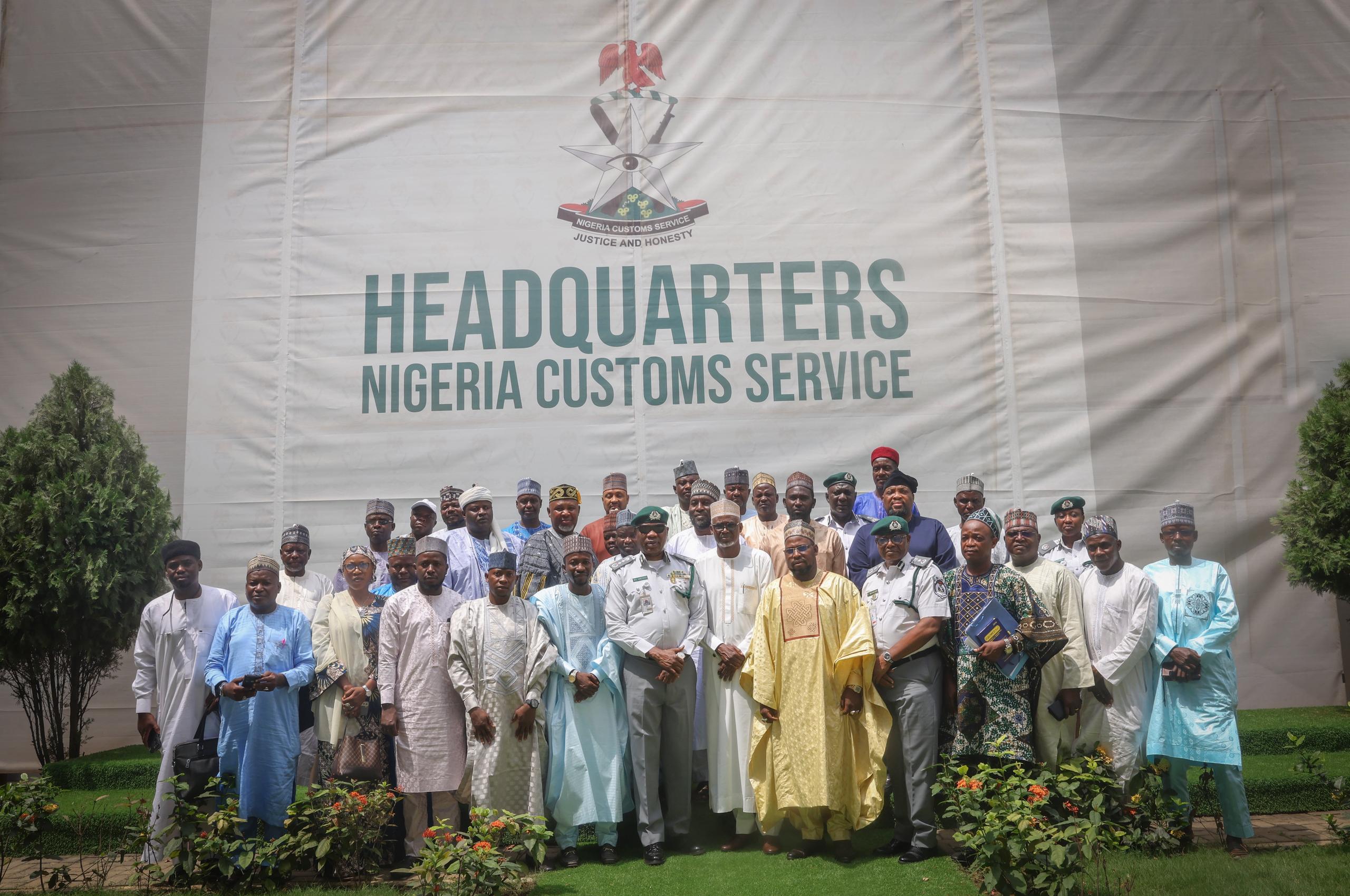
The assurance was given on Monday, 9 February 2026, when the Comptroller-General of Customs, Adewale Adeniyi, received a delegation from the Regional Observatory of Onion in West and Central Africa (ORO/AOC), led by its President, Aliyu Maitasamu, during a courtesy visit to the Customs House Maitama Abuja.
Addressing the delegation, Adeniyi declared that the Service would “stand solidly behind” onion farmers and export-oriented stakeholders, stressing that Customs would collaborate with relevant government agencies to eliminate procedural constraints that hinder trade flows.
“We will remove all known non-tariff barriers and work with other government agencies and stakeholders to create a more facilitating environment for your trade,” he said.
The Customs chief described the engagement as timely, revealing that the Service had, over the previous six months, faced sustained pressure from economic operators in Benin and the Niger Republic over access to Nigeria’s transit corridors, particularly routes running through the North-East and the Kamba axis.
He noted that conversations around transit corridors have traditionally focused on imports, but engagement with onion exporters presents an opportunity to rebalance discourse toward export expansion and its associated macroeconomic benefits.
According to him, exports not only stimulate employment and economic prosperity but also improve the balance of trade and support national gross domestic product growth.
Adeniyi further disclosed that, beyond enforcing compliance, regulatory agencies must address legitimate stakeholder concerns. He said he had directed the Deputy Comptroller-General overseeing Enforcement, Inspection and Investigation to establish a structured engagement framework with the association following earlier representations.
Speaking on behalf of the delegation, Maitasamu commended the Service for what he described as a swift and decisive response to recent disruptions affecting onion transit along regional corridors.
“With recent developments and the reopening now in effect, we are here to appreciate the NCS for its prompt action,” he stated, urging continued engagement to guarantee stable and predictable operations, consistent with earlier assurances given by the Comptroller-General during a visit to Kebbi State.
He acknowledged the complexity of regulating cross-border trade and pledged the association’s readiness to partner with Customs through improved coordination mechanisms.
According to him, ORO/AOC possesses the infrastructure, expertise and regional footprint required to support documentation, compliance monitoring and logistics across transit corridors.
Highlighting the sector’s economic significance, Maitasamu revealed that Nigeria is Africa’s second-largest onion producer after Egypt, with an estimated annual output of about 2.1 million metric tonnes.
He cited figures from the Food and Agriculture Organisation indicating that Nigeria’s onion production is valued at roughly ₦1.17 trillion. He added that regional partners including Algeria, Sudan, Burkina Faso and Cameroon play complementary roles in the broader onion value chain.
He emphasised that Nigeria and the Niger Republic remain the two dominant forces in onion production and cross-border trade within the ECOWAS and Sahel regions.
Earlier, the Deputy Comptroller-General of Customs in charge of Enforcement, Inspection and Investigation, Timi Bomodi, described the engagement as consistent with government efforts to balance economic expansion with security and infrastructure sustainability.
He explained that a proposed token system discussed during the meeting rests on two pillars: data and infrastructure. While the association already maintains detailed trade data, he said the infrastructure component would allow authorities to offset the cost of road maintenance caused by heavy truck traffic along transit routes.
“Trucks moving across these corridors put pressure on our roads, and the token system will allow the government to recover some of those costs over time,” he noted.
Industry observers say the renewed collaboration between Customs and onion exporters signals a broader policy shift towards export-led growth and regional trade integration.
If implemented effectively, the planned reforms could enhance corridor efficiency, reduce delays and position Nigeria as a stronger agricultural export hub across West and Central Africa.