

IATA Pushes for Stronger Global Standards, Digitalisation in Ground Handling Operations
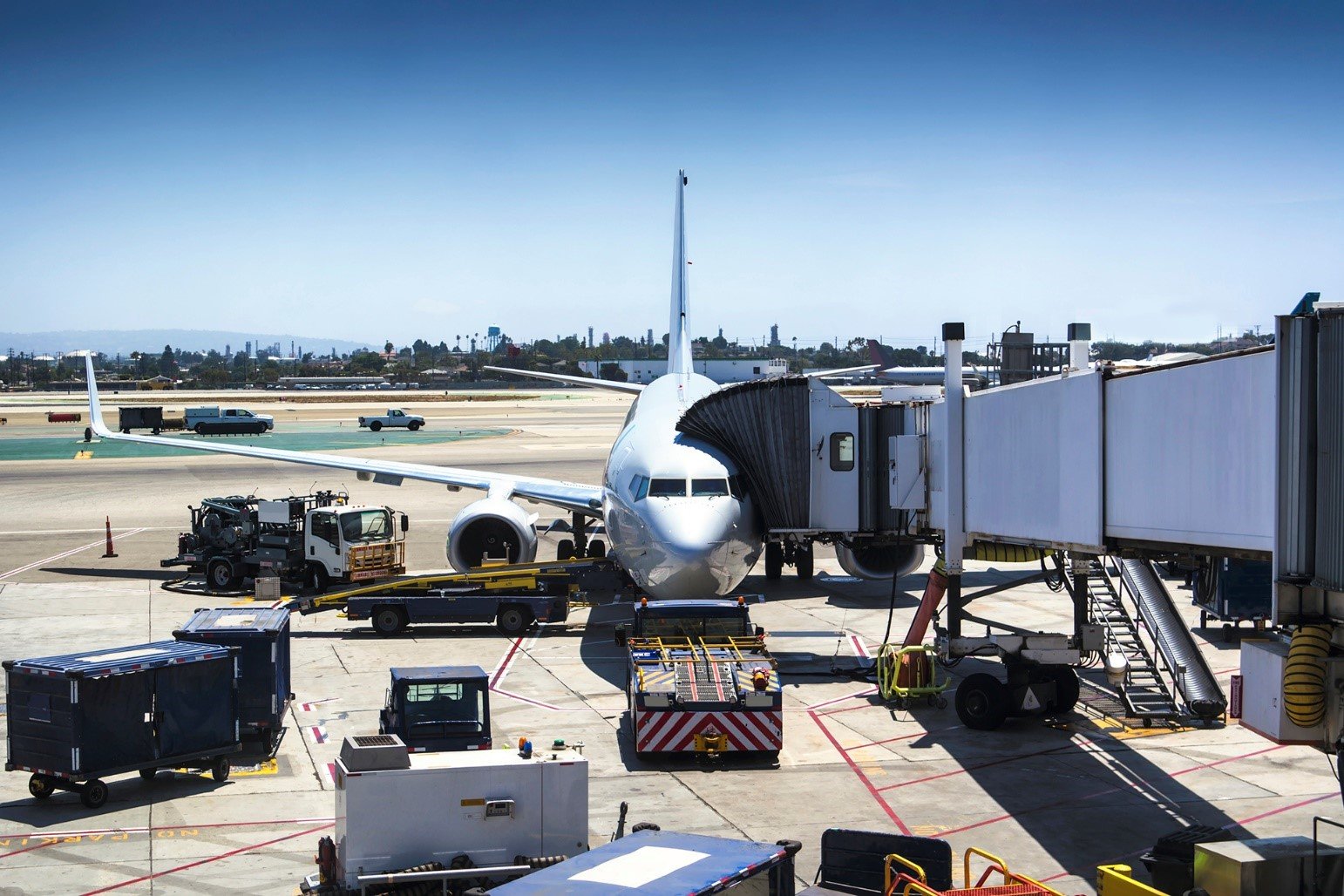
The International Air Transport Association has called for stronger implementation of global operational standards, accelerated modernisation of ground support equipment (GSE), and wider adoption of digital technologies in the aviation ground handling sector as part of efforts to improve safety, efficiency, sustainability and operational resilience across the industry.
The call was made at the 38th IATA Ground Handling Conference (IGHC), which opened in Cairo, Egypt, and was hosted by EgyptAir.
Speaking at the conference, IATA’s Director of Ground Operations, Monika Mejstrikova, stressed that although ground handling activities are often unnoticed by passengers, any disruption in the process can have widespread consequences for airline operations globally.
According to her, incidents such as delayed baggage delivery, aircraft damage, loading errors and disrupted aircraft turnarounds may appear minor but can trigger significant operational challenges across airline networks.
She said stronger implementation of global standards, smarter equipment and digitalisation would provide the foundation for safer, more efficient and more resilient ground operations.
IATA revealed that its latest global safety data showed continued progress in the sector, with no fatal ground handling accidents and only one serious injury recorded in 2025 across nearly 40 million flights worldwide.
The association noted that globally recognised operational standards remain central to improving safety and efficiency in aviation ground services.
It identified the IATA Ground Operations Manual (IGOM) and the Airport Handling Manual (AHM) as the industry’s principal operational references for airlines and ground handling service providers.
To improve compliance and operational discipline, IATA urged stakeholders to accelerate adoption of the standards while reducing unnecessary operational variations and making greater use of audit programmes such as the IATA Safety Audit for Ground Operations (ISAGO).
The association disclosed that the Operational Portal supporting implementation of IGOM and AHM is now being used by more than 1,000 registered users, including 280 airlines and over 700 ground handling service provider accounts.
It added that in 2025 alone, 582 organisations shared their IGOM adoption rates, while more than 500 organisations reported alignment with AHM training requirements.
On operational variations, IATA said over 40 per cent of organisations that submitted their IGOM gap analysis reported no variations from the prescribed standards.
However, the industry still recorded an average of 32 operational variations per audit report in 2025, accounting for about eight per cent of total IGOM procedures, particularly in aircraft arrival processes.
The association further stated that nearly 300 audits had been conducted this year under the revamped ISAGO programme.
Presently, the programme supports more than 230 ground handling service providers operating across 441 accredited stations at over 250 airports globally, with more than 200 airlines relying on ISAGO audit reports.
On aircraft ground damage, Mejstrikova described the issue as one of the aviation industry’s most persistent operational and financial risks, disclosing that more than 29,000 aircraft ground damage incidents were reported globally in 2025.
She warned that unless the rate of such incidents is reduced, the associated costs would continue to rise as the aviation industry expands.
According to her, modernising ground support equipment is critical not only for improving operational safety but also for supporting environmental sustainability objectives.
To support safer operations, IATA said it launched the Enhanced GSE Recognition Programme in 2024 to encourage the deployment of ground support equipment fitted with anti-collision technology.
Since the programme’s launch, the association said it has received more than 450 applications, validated 187 stations and recognised 75 stations for reducing operational risks through improved equipment standards.
The association also highlighted the environmental benefits of transitioning from fuel-powered GSE fleets to electric-powered equipment.
It explained that electric GSE has the potential to reduce turnaround emissions by between 35 and 52 per cent, depending on the equipment mix and electricity source used at airports.
IATA recently issued operational guidance for airports and ground handlers transitioning to electric GSE fleets as part of broader aviation decarbonisation efforts.
On digital transformation, the association noted that fragmented data systems, manual operational processes and delayed information sharing continue to hinder efficiency and safety in ground handling operations.
Mejstrikova stated that many ground handling processes still depend heavily on disconnected systems and manual inputs, increasing the risk of baggage mishandling, aircraft loading errors and delayed identification of operational hazards.
She explained that improved data sharing and digital visibility would enable operators to make faster and more accurate operational decisions.
IATA identified baggage operations, aircraft loading and de-icing processes as key areas where digitalisation could significantly improve operational performance.
The association said the newly developed IATA Baggage Community System (BCS) would enable airlines, airports and ground handlers to exchange baggage information on a unified platform with real-time visibility throughout the baggage journey.
On aircraft loading, IATA disclosed that nearly 38,000 loading errors were reported globally in 2025.
It said the X565 data standard is helping modernise aircraft loading information exchange by replacing manual processes with faster and more accurate digital workflows.
According to the association, Boeing is supporting the use of the X565 standard for the Boeing 737 aircraft family, while Airbus has advanced implementation across its A320, A330 and A350 aircraft families, including future cargo aircraft variants.
IATA added that airlines using digital load control and reconciliation systems are already reporting reductions in loading errors of more than 90 per cent alongside fewer operational delays.
The association also highlighted improvements in de-icing and anti-icing operations through the De-Icing/Anti-Icing Quality Control Pool initiative, which enhances operational risk visibility through stronger data sharing and industry-wide safety dashboards.
According to IATA, the programme is expanding globally, with the first major United States operator set to join during the coming winter season, while engagement with Chinese stakeholders is also increasing to strengthen alignment with global operational standards.