
WPRF 2026: United Nigeria Airlines Chairman Okonkwo Bags Global Alliance President’s Award
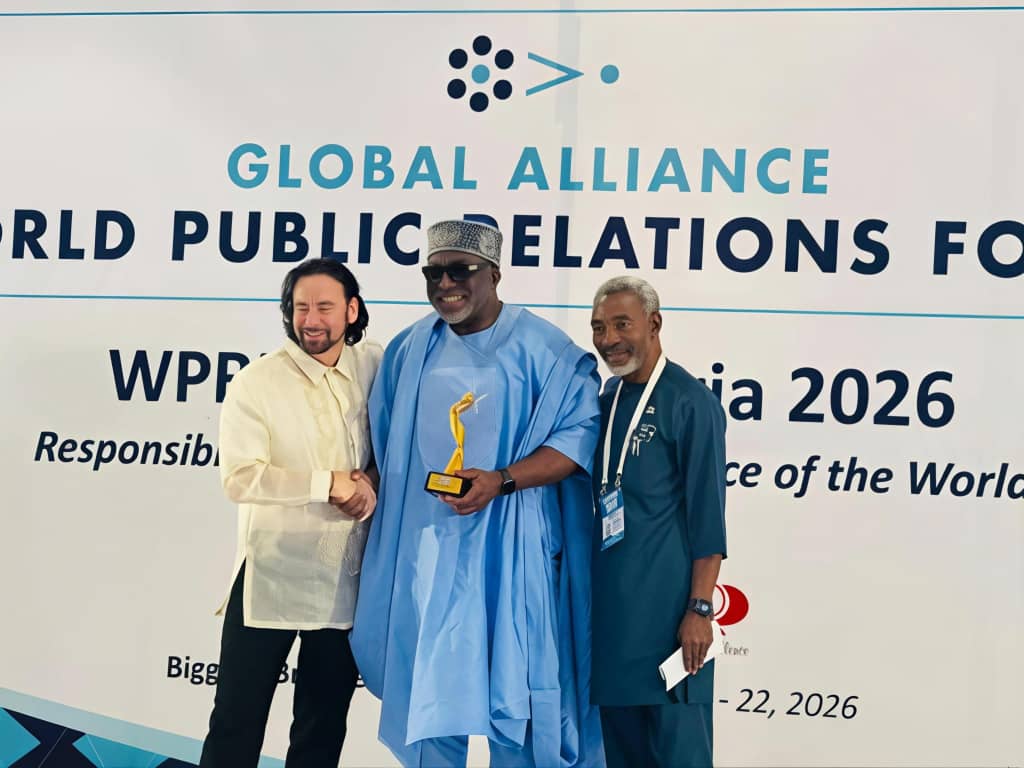
The Executive Chairman of United Nigeria Airlines, Prof. Obiora Okonkwo, has been honoured with the 2026 Global Alliance President’s Award for his contributions to the development of public relations, support for the profession and commitment to the successful hosting of the 13th World Public Relations Forum (WPRF) in Abuja.
Okonkwo received the award from the President and Chief Executive Officer of the Global Alliance, Prof. Justin Green, at the organisation’s 25th Anniversary Gala Dinner and World Public Relations and Communication Awards held in Abuja on Tuesday, 17 November 2026.
The award recognised Okonkwo’s support for the advancement of public relations and his role in hosting the global gathering of communication professionals, which brought together stakeholders to deliberate on the importance of effective communication in business, governance and sustainable development.
His recognition followed his participation in a high-level dialogue at the 2026 WPRF, where he challenged businesses to make transparency, honesty and responsible communication fundamental to their operations.
Speaking on the topic, *Responsible Business Communication: Building Trust and Financing Investments for Sustainable Human Development*, the United Nigeria Airlines chairman said organisations must understand that public trust was built not merely through what they communicated but through their ability to fulfil promises and deliver quality services.
He argued that communication would have limited impact if customers’ experiences contradicted the assurances and commitments made by organisations.
Drawing from the aviation industry, Okonkwo explained that airlines operated in a particularly sensitive service environment where customers often judged their experience by the quality and reliability of service delivery.
He observed that passengers were primarily concerned about reaching their destinations as scheduled, rather than receiving explanations for operational disruptions.
To illustrate the difficulty of managing customer expectations, he recounted an encounter with a passenger who reportedly vowed never to travel with United Nigeria Airlines again because the airline had departed 10 minutes earlier than scheduled.
Okonkwo said he responded humorously by apologising for the airline’s decision to leave on time, an experience he used to demonstrate the sometimes conflicting expectations service providers face in dealing with customers.
He, however, maintained that organisations must not allow the challenges of managing public perception to discourage them from communicating honestly, particularly when operational problems arise.
The airline executive warned that concealing information, withholding important details or misleading customers during crises could inflict greater damage on corporate reputation than admitting that problems existed.
He urged businesses to embrace openness and provide accurate information to stakeholders, stressing that timely disclosure was essential to maintaining credibility, especially during difficult situations.
Okonkwo also challenged organisations to move beyond the traditional practice of assigning crisis communication exclusively to public relations and corporate affairs departments.
He said effective crisis management required the involvement of the entire organisational leadership because decisions taken across different departments could have significant implications for public confidence and corporate reputation.
According to him, every level of management must recognise its responsibility in ensuring that organisations communicate appropriately and respond promptly to issues affecting their operations.
On the aviation industry’s communication challenges, he called on airlines to take advantage of available technologies and communication platforms to keep passengers informed about developments that could affect their journeys.
He specifically highlighted airport information display systems, digital technology platforms and social media as important channels for providing timely information and managing passenger expectations.
He also stressed the need for airlines to communicate promptly about operational challenges, including industrial actions and safety-related developments, rather than leaving passengers uncertain about the status of their flights.
However, Okonkwo cautioned that the need to satisfy customers or protect commercial interests must never take precedence over aviation safety.
He insisted that safety considerations must remain paramount in airline operations, adding that decisions concerning the airworthiness of aircraft should be left to the appropriate safety departments.
His position underscored the importance of maintaining professional independence in safety-related decisions, particularly in an industry where operational pressures and customer expectations can sometimes create difficult choices.
On the broader business environment, Okonkwo identified trust as a critical factor in customer loyalty, business continuity and long-term corporate sustainability.
He explained that customers who have developed confidence in a brand are more likely to maintain their relationship with the organisation and stand by it when challenges emerge.
He therefore urged businesses to see responsible communication as a continuous organisational commitment rather than a strategy deployed only when they face public criticism or reputational difficulties.
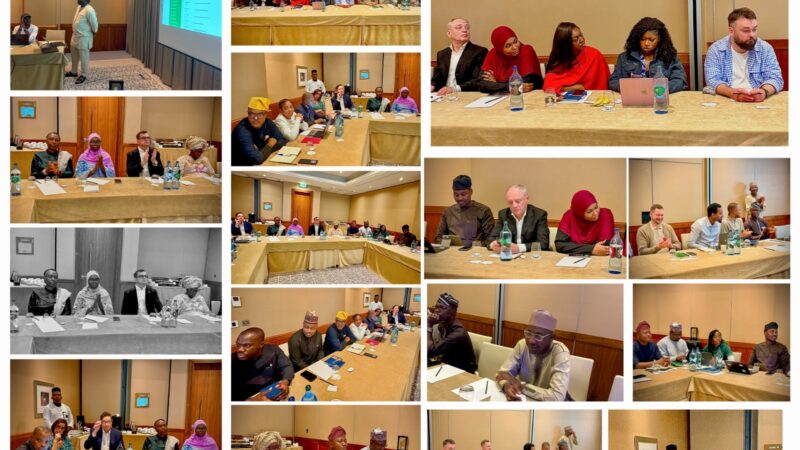
The 2026 World Public Relations Forum provided a platform for industry leaders, communication professionals and other stakeholders to examine how responsible communication could strengthen institutional credibility, encourage investment and support sustainable human development.
Okonkwo’s receipt of the Global Alliance President’s Award added to the recognition of his contribution to the successful hosting of the international public relations gathering in Nigeria.