
Digital Equity Africa to Take Young Africans to China for AI, Robotics Immersion
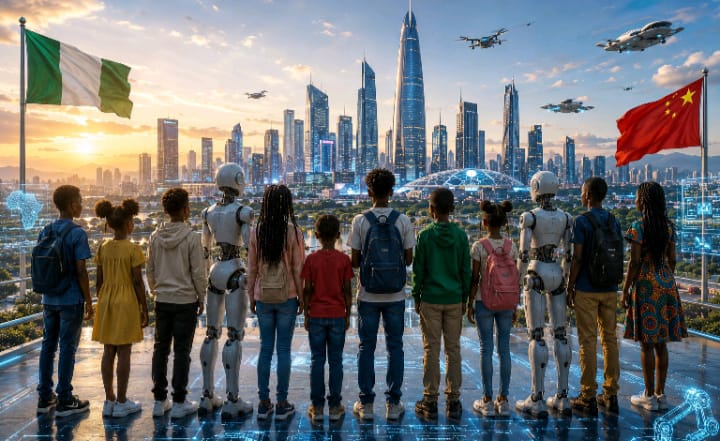
Digital Equity Africa has unveiled plans for an international summer camp in Shenzhen, China, aimed at giving young Africans first-hand exposure to artificial intelligence, robotics and emerging technologies as part of efforts to prepare the next generation for the rapidly evolving digital economy.
The initiative, tagged “Live in the Future” AI and Innovation Immersion Summer Camp, will see 30 participants aged between five and 17 years travel to the Chinese technology hub for what the organisation described as a transformative learning experience.
Announcing the programme, the organisation said the camp was conceived to introduce African children and young people to the innovations and ecosystems shaping the future of humanity.
Shenzhen, widely regarded as China’s Silicon Valley, was selected because of its reputation as one of the world’s foremost centres for technological advancement and innovation.
According to Digital Equity Africa, the theme “Live in the Future” reflects its conviction that preparing young Africans for tomorrow requires exposing them to the realities of the future today.
The organisation noted that Shenzhen has earned a reputation for being a city that appears to be “living in 2070”, owing to its extensive adoption of artificial intelligence, robotics, automation, smart infrastructure and technology-driven lifestyles.
It said the immersion programme was designed to move beyond theoretical instruction and offer participants direct interaction with real-world technological applications.
During the trip, the participants are expected to visit leading robotics companies, artificial intelligence laboratories, innovation hubs, research institutions, technology parks and advanced manufacturing facilities.
These visits, according to the organisers, will provide valuable insight into how technology is transforming economies and societies around the world.
Beyond the educational experience for the children, Digital Equity Africa disclosed that it would hold discussions with some of the world’s top robotics and technology companies to explore collaborations aimed at establishing robotics and innovation centres across Nigeria.
The engagements are expected to support robotics education, artificial intelligence literacy and innovation development at primary, secondary and tertiary levels.
Founder and Chief Executive Officer of Digital Equity Africa, Justina Oha, said the programme was inspired by the need to provide African children with practical exposure to the technologies that will define the future.
“The future cannot be taught solely through textbooks. It must be experienced,” she said.
According to Oha, the organisation’s vision is to connect African children directly with the world’s leading innovation ecosystems, enabling them to understand and create technologies rather than simply consume them.
She described the initiative as the beginning of a wider movement that seeks to establish innovation experience centres and comprehensive robotics programmes in schools and communities across Nigeria.
“Our goal is to establish innovation experience centres and robust robotics programmes across schools and communities in Nigeria, creating pathways for millions of young Africans to participate meaningfully in the global AI economy,” Oha added.
Participants will engage in a wide range of activities, including artificial intelligence and robotics workshops, coding challenges, innovation and design thinking sessions, entrepreneurship discussions and future-of-work conversations.
They will also participate in technology demonstrations, cross-cultural exchanges and hands-on learning experiences designed to deepen their understanding of emerging technologies.
The programme will be implemented through Digital Equity Africa’s Future Minds AI Community, an initiative dedicated to equipping African children and young people with the knowledge and skills required to thrive in an increasingly AI-driven world.
Digital Equity Africa said the initiative represents a significant step towards bridging the gap between African talent and global technological opportunities, while nurturing a generation of innovators capable of contributing to the technologies that will define the next century.