
House Panel Urged to Scrap Percentage-Based Ticket Sales Charge as Airlines Seek Sweeping Aviation Funding Reforms
The Airline Operators of Nigeria (AON) has urged the House of Representatives to use the ongoing review of the 5 per cent Ticket Sales Charge (TSC) as an opportunity to fundamentally reform the financing of Nigeria’s aviation sector, arguing that the current funding model has become outdated, inequitable and unsustainable.
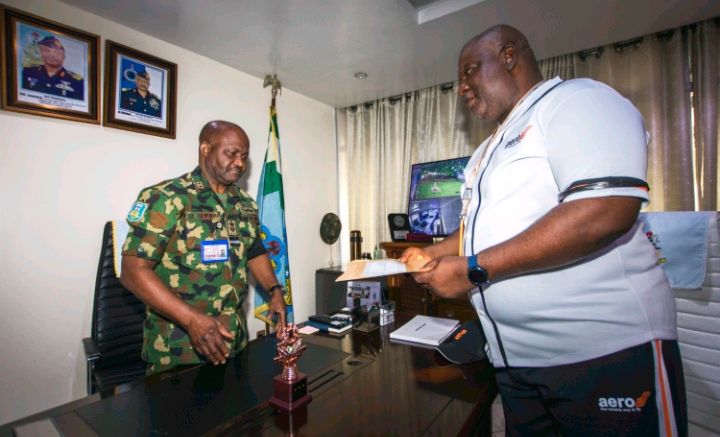
Presenting the airlines’ position during the House Committee on Aviation public hearing on the proposed review of the allocation of the 5 per cent Ticket Sales Charge and Cargo Sales Charge, former Managing Director of the Nigerian Airspace Management Agency (NAMA), Capt. Roland Iyayi, said the debate should extend beyond the sharing formula between aviation agencies to include a comprehensive review of how the entire industry is funded.
Iyayi, who represented the AON and is currently the Chief Executive Officer of Topbrass Aviation, said the existing percentage-based charge has become a major financial burden on domestic airlines, many of which are struggling with soaring fuel costs, foreign exchange pressures and multiple statutory charges.
The hearing comes against the backdrop of a long-running dispute over the distribution of proceeds from the Ticket Sales Charge, which is collected by the Nigerian Civil Aviation Authority (NCAA) on behalf of aviation agencies.
NAMA has consistently argued that the current allocation formula leaves it underfunded despite its responsibility for providing air navigation services across the country’s airspace.
The disagreement has lingered for several years and has repeatedly generated tensions among aviation agencies, with unions threatening industrial action on several occasions over what they describe as the non-remittance of statutory revenues owed to NAMA. The issue has also featured prominently in previous engagements between industry stakeholders and the National Assembly.
Addressing lawmakers, Iyayi traced the origins of the Ticket Sales Charge to the era of the defunct Federal Civil Aviation Authority (FCAA), explaining that the charge was created when the aviation industry operated under a single regulatory structure.
He said: “I’m going to talk about how this 5% came about. The 5% was introduced when we had the FCAA, the Federal Civil Aviation Authority. The Federal Civil Aviation Authority at the time comprised the elements of today’s NCAA, NAMA, NiMet and FAAN.
“At some point, FAAN emerged as NAA, which combined both NAMA and FAAN of today. Every single time an agency was established out of the FCAA, charges were introduced. NAMA introduced charges, NCAA introduced charges, and FAAN introduced charges.”
According to him, every new aviation agency established over the years created its own revenue streams, resulting in an increasingly complex charging system that has continued to place additional financial obligations on airlines.
Recalling his tenure as Managing Director of NAMA, Iyayi explained that international legal developments also shaped the industry’s present funding arrangements.
“NCAA was the first agency to introduce the passenger service charge. That passenger service charge has since been taken on by FAAN. When NAMA was established in 2006, the European Union went to court to insist that NAMA would not charge overflight charges. I was then made the MD of NAMA. Rather than fight the matter, we introduced the terminal navigation charge simply to ensure that NAMA was adequately funded.”
He argued that while those measures may have been appropriate at the time, the current framework no longer reflects the realities facing Nigeria’s aviation industry.
“The 5% service charge has outlived its usefulness. It has become a burden on domestic airlines. We have made a submission on this. We have been proactive. As the AON, we have actually produced a document addressing institutional reform for the entire funding policy of the industry. So, essentially, what I am here to say, in a nutshell, is this: there are issues for consideration.”
Iyayi further alleged that contradictions contained in the Nigerian Civil Aviation Authority Act, 2022, have contributed to inefficiencies within the sector’s funding structure.
“In the NCAA Act of 2022, there are contradictions. It is important to note that we are complaining about not having adequate funding, yet the NCAA is the fourth-highest contributor to the Consolidated Revenue Fund.
“In 2023, the NCAA contributed N500 million at a 25% deduction rate. By my estimation, the NCAA’s gross revenue at that point was around N2 billion. I am not sure any domestic airline was able to earn such an income.”
He argued that an agency operating under a cost-recovery principle should not simultaneously be required to generate excess revenue for the government.
“The same Act, Part 5, Section 21, addresses the cost-recovery basis for all services provided by the NCAA. By the way, the NCAA charges airlines for every service provided, aside from the 5% charge. Part 5, Section 21, however, contradicts itself. It also discusses the allocation of two-thirds of operating funds to the Consolidated Revenue Fund. If an agency operates on a cost-recovery basis, it should never have such a system.
“This means the entire aviation ecosystem is overburdened by surplus charges and any earnings or funds that go unrequited amount to a tax.”
The aviation veteran also revisited concerns that operators raised when the NCAA Act was originally debated nearly two decades ago.
“The NCAA Act of 2006… made provisions regarding operators. In this same committee, then led by Chairman K.G. Nduguogwa, myself and Dr. Harold Demuren sat and had a disagreement, because the Act was not passed in the form and structure we had proposed.
“Dr. Nduguogwa promised that our areas of concern would be addressed. But rather than being addressed, those concerns were modified and skewed in favour of the NCAA.”
He also criticised the utilisation of revenues generated from mast approval fees, arguing that despite billions of naira collected over the years, critical aviation infrastructure has not improved sufficiently.
“The NCAA collects fees on masts, structures erected in the airspace. The reason a mast’s geolocation is required is so that NAMA can produce low-level navigation charts. As we speak, helicopters in this country cannot conduct what is called low-level flight at night, and most of our airspace, because we lack low-level navigation charts, can scarcely be used.”
According to him, these deficiencies continue to reduce aircraft productivity and operational efficiency.
“Aircraft that could be flying eight to 10 hours a day are used for only about six hours because of inadequate infrastructure. It is understood that over the last 20 years, the NCAA has collected over N10 billion from mast application fees and similar charges. That needs to be reversed.”
On the financial challenges facing domestic carriers, Iyayi argued that the current ad valorem charging system penalises airlines whenever fares increase in response to rising operating costs.
“Beyond the 5% charge, the AON recommends a different model. Rather than charging a percentage, we recommend adopting a structure similar to the one FAAN uses for the passenger service charge, because that creates a level playing field. Right now, the 5% is charged on everything an airline earns.”
He noted that the sharp increase in aviation fuel prices had severely weakened airlines’ finances.
“Since March, we’ve experienced fuel shocks worldwide. The average fuel price increase elsewhere in the world was 60 to 80%, but in Nigeria it was 270%. Since March, domestic airlines have not been able to pay the 5% to the NCAA. We have managed to remit only because domestic airlines are now taking on charter flights to pick up loads rather than continuing scheduled flights. Essentially, ticket revenue is now going straight into fuel costs. Fuel accounts for 40% of an airline’s operating costs.”
The International Air Transport Association (IATA) estimates that aviation fuel typically accounts for about 25 to 30 per cent of airline operating costs globally. Nigerian carriers, however, have repeatedly said their fuel costs are significantly higher due to exchange rate volatility, supply constraints and the high cost of Jet A1, making profitability increasingly difficult.
Rather than retaining the existing arrangement under the Treasury Single Account, Iyayi proposed the creation of a dedicated Aviation Development Fund into which all aviation-generated revenues would be paid before being distributed transparently among agencies.
He said: “Yes, we support 100% the bill to increase NAMA’s earnings from that source. But we are also saying that aviation-related funds should be removed from the Consolidated Revenue Fund and placed into a special fund, call it an Aviation Development Fund, or whatever name is appropriate.
“Once funds accrue in that pool, a percentage of whatever has accumulated can then be allocated as needed. If the NCAA can afford to pay N500 million a year and still remain in business, then the industry can generate a surplus. My belief is that the entire system needs a complete overhaul.”
Among the recommendations submitted by the AON were a review of the Ticket Sales Charge sharing formula, immediate remittance of outstanding funds allegedly owed to NAMA, replacement of the current percentage-based system with a unit-charge model, stronger financial accountability for TSC collections, amendments to sections of the NCAA Act considered contradictory, removal of provisions relating to overflight rights, exemption of aviation agencies from aspects of the Fiscal Responsibility Act, and the return of funds currently deducted into the Consolidated Revenue Fund.
The proposals align with long-standing positions canvassed by airlines, aviation experts and international industry bodies.
The International Civil Aviation Organisation (ICAO) advocates that charges imposed on airlines should be based on the cost of providing services rather than being used as revenue-generating taxes, while IATA has consistently opposed ad valorem charges, warning that they increase ticket prices, weaken airline finances and ultimately slow the growth of the aviation sector.
The House Committee on Aviation is expected to consider the submissions of all stakeholders before making recommendations on the proposed legislation, which many industry observers believe could determine the future funding framework for Nigeria’s aviation industry.