
Jetour blends motoring, technology and culture in three-day Abuja auto experience
By turning a conventional vehicle exhibition into a fusion of motoring, technology, entertainment and culture, Jetour Nigeria used its three-day Abuja experience to deepen engagement with Nigerian consumers and showcase the breadth of its growing vehicle range.
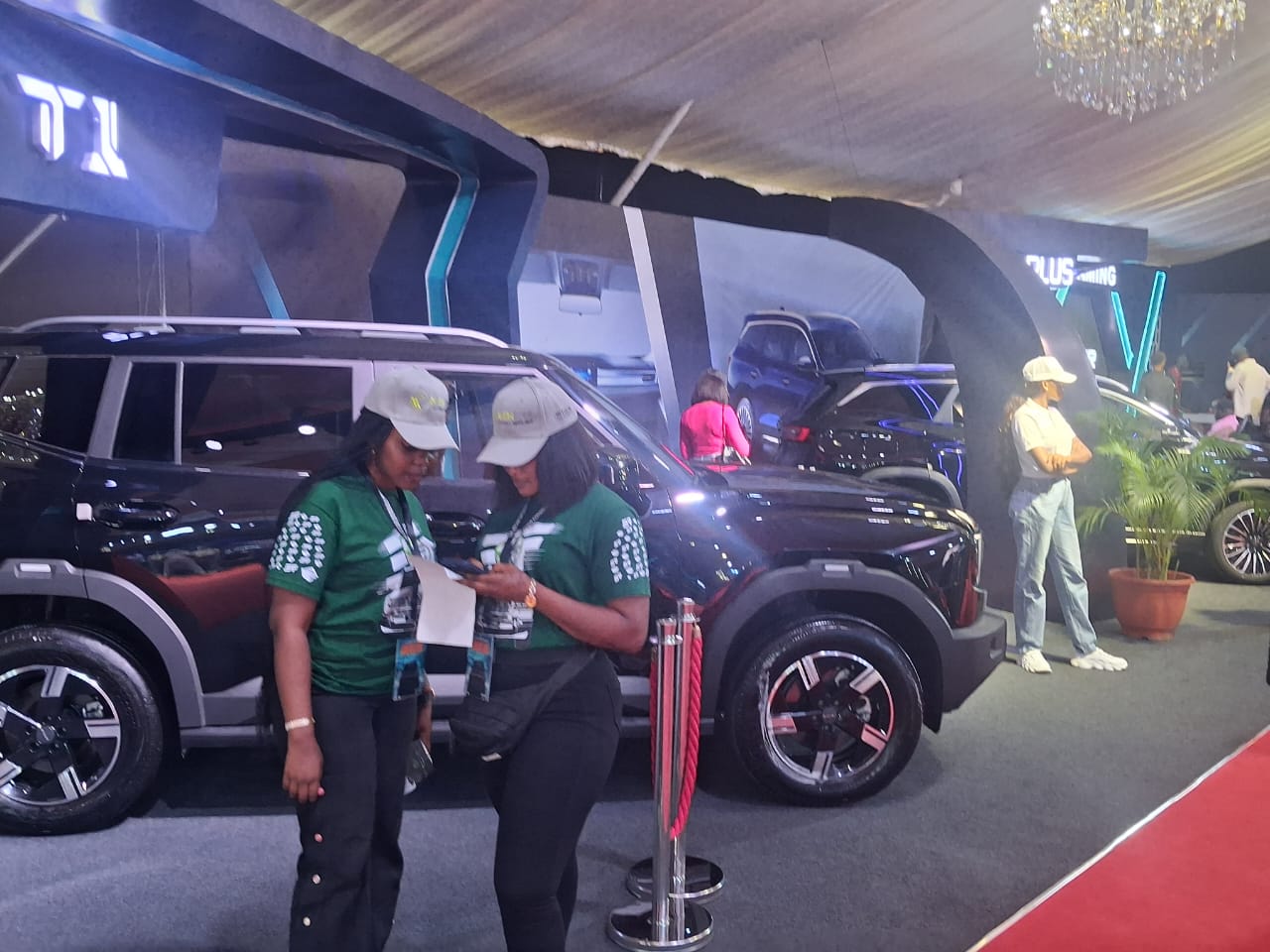
For three days, the Maha Event Centre in Garki, Abuja, became a meeting point for automobiles, technology, luxury and culture as Jetour Nigeria hosted the Jetour Experience Abuja 2026 from September 22 to 24.
The event attracted automotive enthusiasts, prospective vehicle buyers, industry stakeholders, VVIP guests and lifestyle enthusiasts, but unlike a conventional motor show, it was designed to make the vehicles part of a broader lifestyle experience.
Visitors were able to examine Jetour’s vehicles, participate in test drives and interact with the technologies incorporated into the different models, while also enjoying a programme that featured music, art, drama and cultural performances.
Spoken-word performances, acapella, violin music, Chinese cultural dances and artwork exhibitions formed part of the programme, alongside panel discussions and a live stage play.
Popular Nollywood actor Uzor Arukwe, popularly known as Odogwu Panrara, added further excitement to the opening day with his surprise appearance.
Yet, despite the entertainment surrounding the event, the vehicles remained at the centre of the experience, with Jetour presenting one of its broadest model line-ups to Nigerian consumers.
The range on display cut across conventional petrol-powered vehicles, hybrid models and plug-in hybrid electric vehicles (PHEVs), reflecting the company’s strategy of offering customers different powertrain options as automotive technology continues to evolve.
Among the vehicles showcased were the X50, X70 Plus, X70 PHEV, X90 Plus, T2, T2 PHEV, Dashing and G700, alongside the newly introduced T1 and F700.
The variety of models was significant because it allowed Jetour to demonstrate that its Nigerian product strategy extends beyond a single vehicle category or powertrain.
Visitors were given the opportunity to experience several of the vehicles through test drives, moving the event beyond static displays and allowing prospective customers to assess performance, comfort, handling and technology for themselves.
For an increasingly discerning Nigerian automotive market, the opportunity to physically experience a vehicle before purchase can be particularly important, especially as buyers pay greater attention to technology, fuel economy, comfort, safety and long-term ownership costs.
This changing consumer behaviour was highlighted during one of the panel sessions by the Managing Director of New Era AutoVehicle Services, Kemi Koyejo.
Koyejo said the modern Nigerian motorist could no longer be viewed as having a single set of expectations, making it necessary for automobile brands to provide different products and technologies to meet individual preferences.
“There is no one-size-fits-all product,” she said. She explained Jetour’s “Jet plus Tour” concept and its “Drive Your Future” philosophy, which accommodates petrol, hybrid and plug-in hybrid powertrain options.
The approach, she suggested, reflects the reality of a market in which consumers have different mobility requirements and financial considerations, while also becoming increasingly aware of emerging automotive technologies.
Focus on ownership experience
The Abuja experience also gave Jetour’s Nigerian partners an opportunity to address issues beyond the appearance and performance of its vehicles.
For many Nigerian motorists, the decision to purchase a vehicle is influenced not only by the initial price but also by warranty coverage, availability of spare parts, maintenance support and the manufacturer’s ability to provide assistance throughout the vehicle’s lifespan.
Executive Director of Elizade Nigeria Limited, Dr Ademola Philip-Adewunmi, said Jetour had established a significant and steadily expanding presence in Nigeria within three years of entering the market.
He said the company’s expansion had been accompanied by efforts to strengthen customer support and provide greater assurance to vehicle owners.
According to him, Jetour vehicles are backed by a five-year or 150,000-kilometre warranty.
The company also offers structured trade-in programmes, while efforts to ensure spare-parts availability are intended to address some of the concerns traditionally associated with vehicle ownership in Nigeria.
Philip-Adewunmi said Nigerian consumers were becoming more deliberate in their vehicle purchasing decisions.
“Nigerian buyers are increasingly research-driven. They aren’t just looking at aesthetics; they are paying close attention to technology, connectivity, performance and long-term value for money,” he said.
His comments underscored the changing nature of Nigeria’s automobile market, where consumers increasingly have access to information about vehicle specifications, safety systems, powertrain technologies and competing brands before making purchasing decisions.
Technology and road safety
Safety was another important component of the Abuja experience.
Corps Commander Cherries Muta of the Federal Road Safety Corps (FRSC) commended the integration of modern driver-warning systems and proximity sensors into contemporary vehicles.
Such technologies, she noted, have the potential to provide drivers with additional information and warnings, supporting safer decision-making on the road.
The emphasis on driver-assistance technology also reflected a wider transformation within the global automotive industry, where vehicle manufacturers are increasingly integrating electronic systems designed to improve driver awareness and reduce the risks associated with human error.
For a country such as Nigeria, where road safety remains a major concern, the incorporation and proper use of such technologies could form an increasingly important part of conversations around vehicle safety.
Strengthening its Nigerian presence
Beyond the immediate objective of displaying vehicles, Jetour used the Abuja event to reinforce its longer-term commitment to the Nigerian market.
The company has increasingly positioned Nigeria as an important market within its African expansion strategy, with its growing model range providing different options for customers seeking conventional and electrified vehicles.
Speaking at the conclusion of the three-day event, Jetour Senior Manager for Africa, Perry Huo, thanked Nigerian consumers and other stakeholders for their support.
He also reaffirmed the company’s commitment to strengthening its presence in Nigeria and expanding across other African markets.
That commitment comes at a time when competition within Nigeria’s automotive market is becoming increasingly focused on more than vehicle sales.
Brands are seeking to differentiate themselves through technology, customer experience, warranty packages, financing and trade-in arrangements, after-sales support and lifestyle marketing.
Jetour’s decision to combine these elements with entertainment and cultural programming in Abuja was therefore part of a wider effort to create a more direct relationship between the brand and consumers.
More than a motor show
The choice of the event format also marked a departure from the traditional approach to vehicle exhibitions.
Rather than simply placing vehicles on display and allowing visitors to walk around them, Jetour created an environment in which consumers could interact with the vehicles while experiencing entertainment and cultural performances.
The presence of Chinese cultural dances alongside Nigerian entertainment and artistic performances also reflected Jetour’s attempt to combine its international identity with the cultural environment of the Nigerian market.
The format effectively turned the automobile from a static product into part of an experience.
For prospective buyers, this meant having the opportunity to examine the vehicles closely, experience their driving characteristics and learn about their technologies, while also engaging with representatives of the brand and its local partners.
The test-drive sessions were particularly important in this regard, providing a practical dimension to the showcase and enabling visitors to form their own impressions of the vehicles.
As the event drew to a close on September 24, Jetour had succeeded in presenting its growing portfolio to an Abuja audience while simultaneously creating a platform for discussions around technology, safety, ownership and the future of mobility.
The experience also reinforced the company’s attempt to build a distinctive identity in Nigeria’s increasingly competitive automotive market.
For Jetour, the Abuja event was ultimately about more than putting new vehicles on display. It was an effort to demonstrate that the modern automobile can occupy a space at the intersection of technology, mobility, luxury, entertainment and culture.
And with petrol, hybrid and plug-in hybrid models featuring prominently in its line-up, the company used the three-day experience to signal its intention to remain part of the changing conversation about what Nigerians drive – and how they experience mobility.