

Emirates elevates onboard dining with rare Champagnes, fine wines in 2026
Emirates is set to further enhance its inflight experience with a new portfolio of exceptional Champagnes and fine wines, offering passengers across all cabins the opportunity to sample carefully selected bottles from some of the world’s most prestigious wine-producing regions.
The Dubai-based airline said the latest collection would be introduced across its global network over the coming months, with the selections ranging from highly sought-after Bordeaux and Burgundy wines in First Class to distinctive French, South African and Australian wines in Economy Class.
Among the headline additions is Dom Pérignon Vintage 2017, which will be introduced in First Class towards the end of the year, while Château Mouton Rothschild 2003 will be served to First Class passengers travelling on UK routes from October.
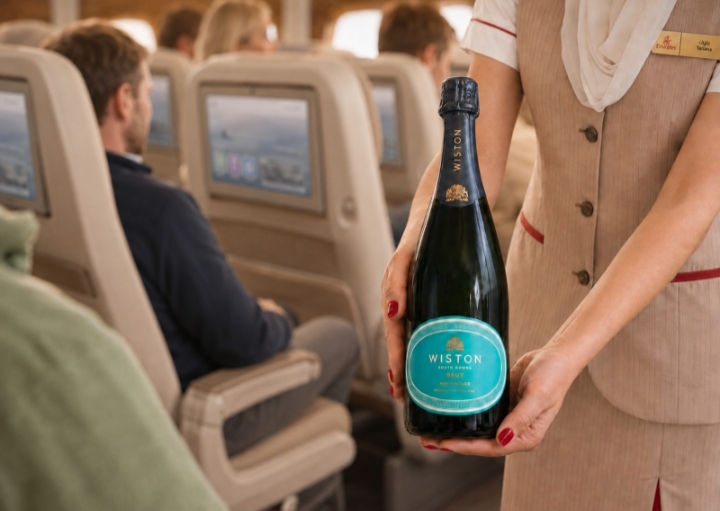
Premium Economy passengers travelling on UK routes will also experience a notable first, with Wiston Estate Brut NV becoming Emirates’ first English sparkling wine.
The airline’s latest wine programme highlights its long-standing investment in fine wines and its strategy of allowing selected vintages to mature for years before they are served onboard.
Since 2006, Emirates said it had invested more than US$1 billion in its wine programme, building a cellar containing approximately five million bottles in dedicated facilities in France.
The airline frequently purchases wines years ahead of their intended service dates, storing and maturing them under controlled conditions until they reach their optimum drinking window.
According to Emirates, this approach has also enabled it to secure small parcels and limited allocations of rare wines that can be difficult to obtain elsewhere.
First Class gets prestigious global selection
First Class passengers will be at the centre of Emirates’ latest wine offering, with a selection covering Champagne, Bordeaux, Burgundy, Chile, Australia and South Africa.
The forthcoming introduction of Dom Pérignon Vintage 2017 will add another prestigious Champagne to the carrier’s First Class portfolio.
Produced following a year of marked contrasts in Champagne, the 2017 vintage combines richness and freshness. It presents aromas associated with wet stone, jasmine and candied citrus, followed by a vibrant palate characterised by precision, freshness and mineral complexity.
Meanwhile, Emirates is already serving Chevalier-Montrachet Grand Cru 2015 from Bouchard Père & Fils on First Class services to Africa.
The wine comes from Puligny-Montrachet, one of Burgundy’s most celebrated Chardonnay-producing areas. The extremely limited production associated with the Grand Cru appellation makes the wine a particularly restricted allocation.
The 2015 vintage offers ripe citrus and white peach flavours, together with subtle spice and toasted notes, while retaining freshness and a lengthy finish.
On European routes, First Class passengers can currently enjoy Le Petit Cheval Blanc 2023 from Château Cheval Blanc.
Although Château Cheval Blanc is internationally renowned for its red Bordeaux, its limited-production white wine offers a different expression of the estate.
Produced primarily from Sauvignon Blanc with Sémillon, the 2023 vintage delivers citrus, white flowers and grapefruit flavours, combined with freshness, aromatic precision and subtle mineral character.
For First Class passengers travelling to East Asia, Emirates is currently offering Seña 2016, one of Chile’s most recognised premium wines.
Produced in the Aconcagua Valley, the Cabernet Sauvignon-led blend is known for its depth and ageing potential. The 2016 vintage displays black fruit, violet, tobacco and cedar notes, with fine tannins and a long, layered finish.
From late September, passengers travelling to Australasia will be able to experience Penfolds RWT Shiraz 2015.
The Australian wine, regarded as one of the benchmark expressions of Barossa Valley Shiraz, features dark fruit, liquorice, mocha and spice, supported by subtle savoury characteristics.
With roughly a decade of maturity, the wine has developed additional depth and complexity, while polished tannins provide structure.
From October, Emirates will introduce Château Mouton Rothschild 2003 on First Class flights to the UK. The Pauillac wine is one of the most prestigious names in Bordeaux and was classified as a First Growth under the historic 1855 Classification.
More than 20 years of maturation have allowed the 2003 vintage to develop flavours of blackcurrant, blackberry and plum alongside cedar, tobacco and warm spice. Ripe tannins and a long, structured finish further contribute to its complexity.
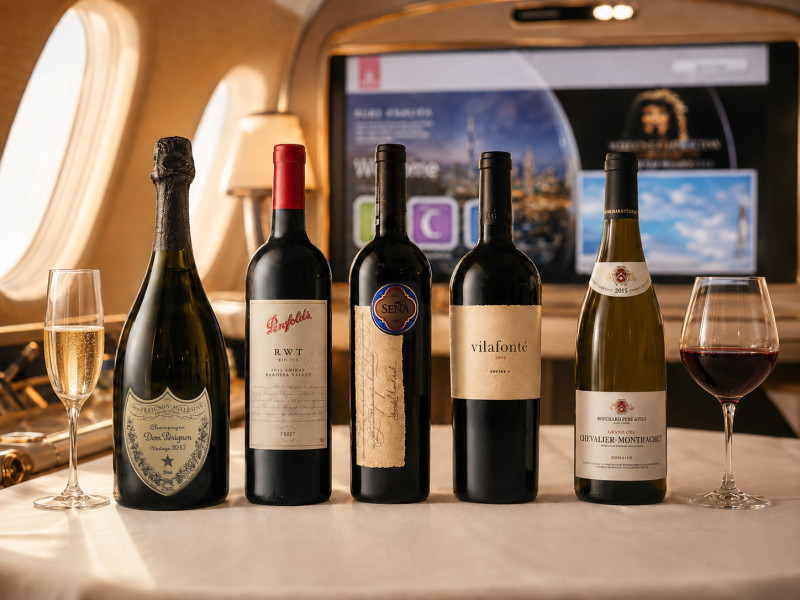
From December, selected First Class routes will feature Vilafonté Series C 2016, a Cabernet Sauvignon-led Bordeaux-style blend from South Africa.
The wine combines black fruit with cedar and spice, supported by polished tannins and a refined finish.
Business Class adds Bordeaux and white Rhône wine
Emirates is also refreshing its Business Class wine selection with premium French offerings.
On US routes, Business Class passengers are currently being served La Dame de Montrose 2014, the second wine of Château Montrose, a prominent estate in Saint-Estèphe and a Second Growth under Bordeaux’s 1855 Classification.
The wine combines blackcurrant and dark cherry with cedar and tobacco, while polished tannins contribute structure and a long, savoury finish.
From late September, Business Class passengers travelling to East Asia will be able to sample Châteauneuf-du-Pape Blanc 2024 from Domaine des Sénéchaux.
White wine represents only a small proportion of production in the Châteauneuf-du-Pape appellation, making the style relatively uncommon.
The 2024 vintage offers aromas and flavours of white flowers, citrus and pear, complemented by subtle spice. A rounded texture and fresh mineral finish complete the wine.
Premium Economy welcomes first English sparkling wine
Premium Economy will receive a particularly diverse selection, including wines from Bordeaux, Burgundy, Australia and England.
From October, passengers will be offered La Parde de Haut-Bailly 2014, produced by Château Haut-Bailly in Bordeaux’s Pessac-Léognan appellation.
After around a decade of maturation, the wine presents blackcurrant, red plum and cherry, with additional tobacco and cedar notes. Silky tannins and fresh acidity contribute to a long and elegant finish.
From September, Emirates will serve Chablis Premier Cru Jean-Marc Brocard 2024.
The Chardonnay-based wine reflects the characteristic freshness and mineral precision associated with Chablis, with lemon, green apple and white flower notes leading to a palate marked by bright acidity, saline tension and a precise finish.
However, the most significant development in Premium Economy will come in October when Emirates introduces Wiston Estate Brut NV, its first English sparkling wine.
The wine will be available exclusively in Premium Economy on UK routes, providing passengers with an opportunity to experience an English sparkling wine produced in West Sussex.
Wiston Estate is a family-owned property whose vineyards sit on the chalk soils of the South Downs.
Its Brut NV is produced from Chardonnay, Pinot Noir and Pinot Meunier using the traditional method. Reserve wines and extended lees ageing provide additional depth while preserving freshness and minerality.
The wine opens with green apple and freshly cut lemon, followed by notes of sourdough, candied citrus, butter and toast, with a fine mousse.
Wiston Estate has achieved considerable international recognition and has been named WineGB Winery of the Year six times.
Emirates said the decision to serve Wiston Estate on UK routes was designed to celebrate British provenance and craftsmanship while introducing its customers to one of England’s leading sparkling wines.
Also continuing in Premium Economy is Chandon 2021, which remains a global Emirates exclusive.
Produced in Victoria’s Yarra Valley using the traditional method and aged for four years, the wine combines vibrant fruit with brioche and almond-meal characteristics, while its low dosage helps preserve freshness and regional expression.
Economy Class receives new French and South African wines
Emirates has also expanded its Economy Class wine offering with a range of approachable wines designed to complement the cabin’s meal service.
Among the new selections is Domaine de la Baume Tautavel 2023, a Grenache-Syrah blend from Roussillon in southern France.
The wine features ripe blackberry, blackcurrant and red plum, accompanied by liquorice, pepper and Mediterranean herbs. Smooth tannins and a fruit-focused finish make it an accessible option for passengers.
From October, Emirates will introduce Château Pech-Latt Corbières 2024. Made from traditional Corbières varieties including Syrah, Grenache, Carignan and Mourvèdre, the wine delivers blackberry, blackcurrant and red fruit flavours alongside spice and Mediterranean herbs.
For passengers who prefer white wine, Cuvée Sabourin Picpoul de Pinet 2024 brings the character of France’s Mediterranean coast to the airline’s Economy Class offering.
It combines lemon, green apple and white flower notes with subtle mineral and saline characteristics. Its crisp acidity and clean citrus finish make it particularly suitable for seafood and lighter dishes.
Completing the new Economy selection is Journey’s End Weather Station Sauvignon Blanc 2025, produced by the family-owned Journey’s End estate near Stellenbosch in South Africa.
The wine offers green apple, citrus, grapefruit and kiwifruit, alongside subtle saline minerality, lively acidity and a clean, refreshing finish.
Wines selected specifically for inflight conditions
Emirates’ extensive wine programme is underpinned by a specialised selection process that takes into consideration how wines perform both on the ground and at altitude.
The airline assesses factors including fruit character, acidity, tannin levels, oak influence and maturity before wines are selected for service.
The carrier said the ageing process was particularly important because many of its premium wines are not purchased immediately before they are served.
Instead, wines can be acquired years in advance and matured in professional storage facilities in France.
Bordeaux wines destined for Business Class generally undergo a minimum of eight to 10 years of ageing, while wines selected for First Class may be matured for 12 to 15 years or more.
This strategy allows Emirates to serve wines when they are considered to be at or near their optimum drinking stage rather than simply according to the year in which they were purchased.
It also allows the airline to secure limited parcels of prestigious wines before they become even harder to source.
With its vast cellar, long-term purchasing strategy and investment of more than US$1 billion since 2006, Emirates has made fine wine a significant component of its premium passenger proposition.
The 2026 collection further broadens that offering, bringing together iconic French labels, premium wines from Australia, Chile and South Africa, and, for the first time, an English sparkling wine.
For Emirates, the initiative represents another element of its “Fly Better” proposition, using carefully selected food and wine offerings to differentiate the inflight experience across its four passenger cabins.