

High taxes, charges threatening airline sustainability, affordable air travel – UNA CCO
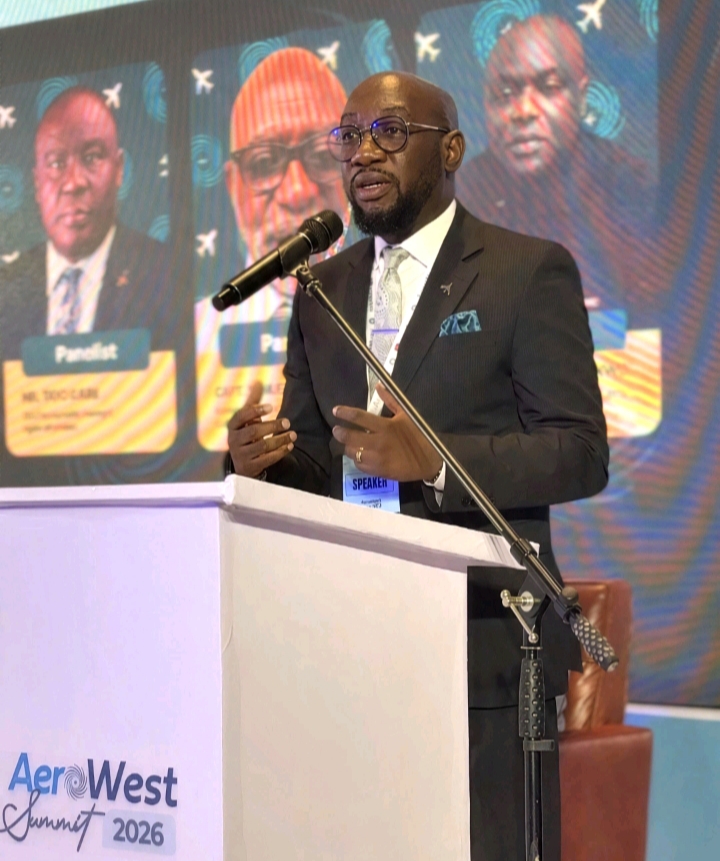
The high level of taxes, regulatory charges, foreign exchange exposure and other operating costs in Nigeria’s aviation sector is putting pressure on airlines and making air travel increasingly expensive, the Chief Commercial Officer of United Nigeria Airlines (UNA), Adedayo Olawuyi, has said.
Olawuyi called on the Federal Government to review aviation-related taxes and charges, arguing that a reduction in the financial burden on airlines would help lower ticket prices, improve connectivity and create a more sustainable operating environment for domestic carriers.
He made the submission during a panel session at the AeroWest conference in Lagos, where industry stakeholders examined the economic realities of running airlines under the theme, “The Real Cost of Running Aviation Business: Fixing Connectivity, Affordability, FX, Fuel and Border Friction.”
The UNA executive said the debate around expensive air tickets could not be separated from the structural challenges confronting airlines, particularly the disparity between their revenue and expenditure.
According to him, while airlines primarily sell their tickets in naira, many of their most significant operational expenses are paid in foreign currency.
This, he explained, exposes carriers to substantial foreign exchange risks and places additional pressure on their balance sheets, particularly in an environment where access to foreign currency remains costly.
Olawuyi said the cost of financing was another major challenge, questioning the sustainability of borrowing at high interest rates to operate an airline business that generates relatively low margins.
“How many of you would take a loan of 30 per cent to invest in a business that gives you less than five per cent profit?” he asked.
He described the cost of financing as a “pressing issue” for airlines across Africa, particularly in Nigeria, where operators have to contend with several other cost pressures simultaneously.
Olawuyi also identified the cost and availability of skilled aviation personnel, particularly pilots, as a growing concern for the industry.
He said airlines were spending substantial amounts on pilot training while the increasing global demand for experienced pilots was making recruitment and retention more expensive.
“Consider the cost of training a pilot. Pilots today are in high demand and are not cheap to come by,” he said.
The UNA executive further disclosed that the shortage of pilots had contributed to some aircraft remaining grounded within the Nigerian aviation industry.
“We have airlines in this country with grounded aircraft because there are no pilots available,” he said.
He noted that airlines could not simply reduce expenditure on training, crew development and other safety-critical areas in an attempt to bring down ticket prices.
Such expenditure, he stressed, remained essential to maintaining safe operations.
Lack of MRO facilities increases dollar spending
Another major area of concern highlighted by Olawuyi was the lack of adequate aircraft maintenance, repair and overhaul facilities in Nigeria and the wider West African region.
He said the absence of local MRO infrastructure meant Nigerian airlines had to send aircraft abroad for heavy maintenance and other technical work.
The practice, he noted, further increased the industry’s foreign exchange requirements because airlines had to pay overseas service providers in foreign currency.
“Consider maintenance: we have to send aircraft abroad because we do not have MROs in this region,” Olawuyi said.
He added that airlines also incurred significant foreign exchange expenditure on simulator training for pilots.
“ We are also spending on simulator training for pilots, meaning we earn naira but spend USD,” he said.
According to him, developing strong aviation support infrastructure locally would help reduce the amount of foreign exchange leaving the country and lower some of the costs currently borne by Nigerian airlines.
Olawuyi also pointed to the sharp increase in aviation fuel prices as one of the factors driving higher air fares.
He said airlines had experienced a dramatic increase in the cost of aviation fuel, moving from approximately N900 per litre in December 2025 to about N3,000 per litre in 2026.
The increase, he said, represented a significant additional burden for airlines because fuel constitutes one of the largest components of an airline’s operating costs.
According to him, airlines have had to absorb part of these increases rather than passing the entire burden to passengers.
However, he stressed that there was a limit to how much airlines could absorb without affecting their financial sustainability.
The airline executive also cautioned against attempts to reduce operational costs by cutting expenditure that directly affects safety.
“All of that must be covered. Why? Because safety must be paramount,” he said.
Olawuyi argued that airlines alone could not be expected to solve the affordability and connectivity problems confronting the sector.
He called for stronger collaboration between government, regulators, airlines, tourism operators and other stakeholders to address the underlying structural challenges.
“While we are discussing connectivity as a solution to the problems we see today, it is not just the airlines alone that can solve the problem. Government needs to create an enabling environment for us,” he said.
He warned that the numerous financial demands placed on airlines could become counterproductive if they eventually weakened the operators on which the aviation ecosystem depends.
“We all focus on making money from airlines. As my boss says, the airline is the goose that lays the golden egg, and everybody wants a piece of it. But at the end of the day, if the goose dies, everything is lost,” he said.
The UNA executive’s comments reflect the industry’s long-standing concern that excessive charges and taxes can undermine airline viability and, in turn, reduce the ability of carriers to maintain routes and expand connectivity.
Olawuyi said there was no single solution to the problems affecting aviation, noting that the industry involved multiple interconnected players.
“There is not a single part of this puzzle that can be fixed by just one person. The government cannot fix it alone, the regulators cannot fix it alone, and the airlines themselves cannot fix it alone,” he said.
He particularly highlighted the relationship between aviation and tourism, noting that tourism operators depended heavily on reliable and affordable air connectivity.
“In the room today, we have tourism operators. You need connectivity to travel for business,” he said.
He therefore advocated greater cooperation among stakeholders to improve air connectivity across West and Central Africa.
“So, all we are saying is that there has to be cooperation among all these stakeholders to improve connectivity within West and Central Africa,” he added.
Beyond taxes, fuel and foreign exchange, Olawuyi said airlines also faced commercial difficulties arising from low passenger volumes on some routes.
He explained that airlines were commercial businesses and could not continue operating routes that consistently failed to generate sufficient revenue to cover their operating costs.
“Every airline is set up to make money. I would not operate a route today where I cannot sustain operations,” he said.
He identified the prevalence of “thin routes” across West Africa as one of the challenges affecting regional connectivity.
According to him, airlines need access to different aircraft types and sizes that are appropriate for markets with varying passenger demand.
Deploying large aircraft on routes with limited passenger traffic, he explained, could make such services financially unsustainable.
“West Africa has many thin routes. Airlines must consider different aircraft sizes and types that will help them remain profitable on every sector they fly,” he said.
Olawuyi illustrated the challenge by pointing to the difficulty of deploying a Boeing 737 on a route where demand is extremely low.
“It becomes challenging to operate on thin markets with an aircraft like a 737 when the maximum number of passengers available on that route is only four,” he said.
He maintained that achieving affordable and sustainable air travel in Nigeria and across the region would require more than simply asking airlines to reduce fares.
Rather, he said, government policies, aviation charges, taxation, fuel supply, foreign exchange availability, financing, technical infrastructure, human capital and route economics must all be addressed as part of a broader strategy to build a financially viable aviation industry.
For the UNA executive, reducing the cost burden on airlines while supporting infrastructure development and encouraging cooperation among industry stakeholders would ultimately benefit both operators and passengers through improved connectivity, more sustainable routes and potentially more affordable air travel.