

African Airlines Top Global Air Cargo Rankings as Worldwide Freight Traffic Climbs in May
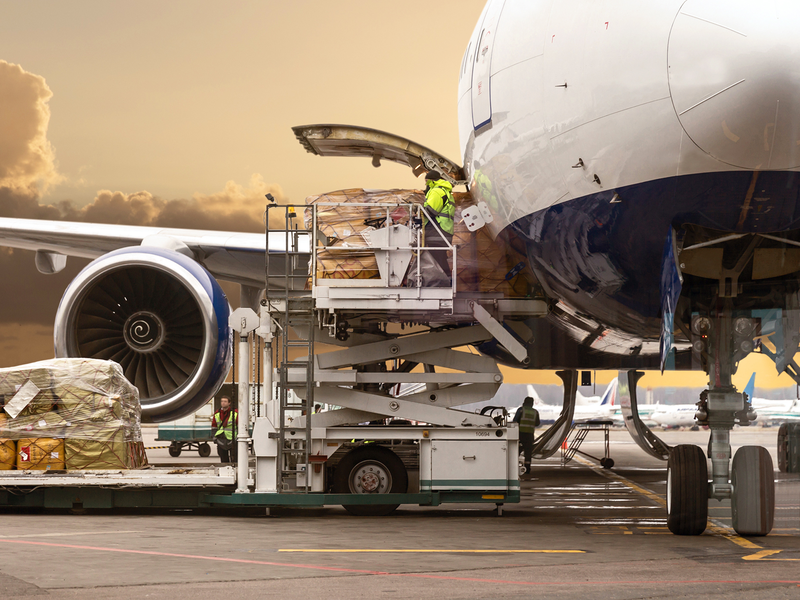
The global air cargo industry sustained its growth momentum in May 2026, with African airlines recording the strongest performance among all regions as international trade continued to expand despite geopolitical tensions and high operating costs.
According to the latest market data released by the International Air Transport Association (IATA), global air cargo demand, measured in cargo tonne-kilometres (CTKs), rose by 6.0 per cent compared with the corresponding period in 2025.
Demand for international cargo services increased even more strongly, growing by 6.5 per cent year-on-year.
The association also reported that industry capacity, measured in available cargo tonne-kilometres (ACTKs), grew by 1.9 per cent globally and 2.8 per cent on international routes, enabling airlines to accommodate rising freight volumes while maintaining improved load factors.
Commenting on the performance, IATA Director General, Willie Walsh, said the latest figures reflected the resilience of the global air cargo sector, even as parts of the industry continued to face disruption from conflicts in the Middle East.
He noted that carriers in Africa, Asia-Pacific, Europe and North America all posted stronger-than-average growth, while airlines in the Middle East experienced a significant decline in demand due to the continuing effects of regional instability.
Walsh said the industry’s outlook for the remainder of 2026 remained cautiously positive, supported by growing international trade, expanding manufacturing output and airlines’ ability to adapt their operations to changing market dynamics.
He explained that stronger freight yields and higher cargo load factors had helped operators offset the burden of elevated fuel prices, although geopolitical uncertainty continued to present challenges for some markets.
Overall, the industry’s cargo load factor improved by 1.8 percentage points to 46.3 per cent, indicating more efficient utilisation of available freight capacity.
Regionally, Africa emerged as the standout performer, recording a 13.3 per cent increase in cargo demand – the highest growth of any region. Capacity on African routes rose by only 1.3 per cent, allowing airlines to achieve a healthy cargo load factor of 46.9 per cent.
North American carriers also delivered a strong performance, posting 10.5 per cent growth in cargo demand while expanding capacity by 2.4 per cent.
Asia-Pacific airlines, which account for more than one-third of global air cargo traffic, recorded an 8.0 per cent increase in freight demand, supported by a 5.1 per cent rise in available capacity.
European airlines maintained steady growth, with cargo demand increasing by 6.7 per cent and capacity expanding by 2.2 per cent. The region also recorded the highest cargo load factor globally at 53.9 per cent, highlighting strong utilisation of available space.
By contrast, airlines in the Middle East remained under pressure. Cargo demand in the region fell by 8.9 per cent, while capacity declined by 9.2 per cent, making it the weakest-performing market as ongoing conflict continued to disrupt key international trade routes.
Latin American and Caribbean airlines posted comparatively modest growth, with cargo demand rising by 1.9 per cent despite a 5.6 per cent increase in capacity.
The report also highlighted significant differences across major global trade lanes.
The Asia–North America corridor remained the fastest-growing market, registering an impressive 19.9 per cent increase in cargo traffic and marking its fourth consecutive month of expansion.
Trade between Africa and Asia also continued to strengthen, growing by 14.1 per cent and extending an uninterrupted growth streak to 11 months, reflecting deepening commercial ties between the two regions.
Cargo traffic between Europe and Asia expanded by 10 per cent, recording its 39th consecutive month of year-on-year growth, while freight movements within Europe climbed 11.5 per cent.
However, routes linked to the Middle East continued to experience severe disruption. Cargo volumes between Europe and the Middle East fell by 19.8 per cent, while the Middle East–Asia trade lane contracted by 16.5 per cent, underscoring the impact of the regional conflict on global logistics networks.
IATA said broader economic indicators remained supportive of air freight demand. Global trade increased by 5.0 per cent compared with a year earlier, extending an impressive run of 25 consecutive months of annual growth.
The Global Manufacturing Output Purchasing Managers’ Index (PMI) rose to 53.5 in May, signalling continued expansion in manufacturing activity.
However, the New Export Orders Index remained below the neutral 50-point mark at 49.6, suggesting that cargo growth was being driven by specific high-performing trade corridors rather than a broad-based increase in global export orders.
While airlines benefited from a 16.3 per cent month-on-month decline in jet fuel prices during May, fuel costs remained 93.5 per cent higher than in the same month last year, continuing to place pressure on operating expenses.
Despite these headwinds, IATA said the sustained increase in freight demand, resilient global trade flows and airlines’ operational flexibility indicate that the air cargo market is well positioned to maintain steady growth through the second half of 2026, provided geopolitical tensions do not worsen further.