
EFCC Arraigns Miyetti Allah President Bello Bodejo Over Alleged $2.63m Terrorism Financing, Money Laundering
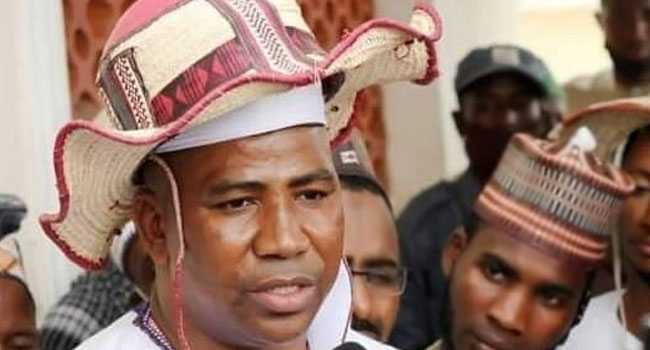
The Economic and Financial Crimes Commission (EFCC) has arraigned the National President of Miyetti Allah Kautal Hore, Bello Bodejo, before the Federal High Court in Abuja over allegations of terrorism financing and money laundering involving $2.63 million.
Bodejo was brought before Justice Inyang Ekwo on a 12-count charge filed by the anti-graft agency on June 25, 2026. The charge, filed through EFCC counsel, Wahab Shittu (SAN), lists Bodejo as the sole defendant.
At the commencement of proceedings, Shittu informed the court that the matter was slated for the defendant to take his plea. Following the court’s approval, the charges were read to Bodejo, who pleaded not guilty to all 12 counts.
Following the plea, the prosecution requested the court to fix a date for trial and order that the defendant be remanded in the custody of the Nigerian Correctional Service pending the determination of the case.
However, counsel to the defendant, Ahmed Raji (SAN), urged the court to admit Bodejo to bail, relying on a bail application filed on June 30, 2026.
The prosecution opposed the application, arguing that Bodejo constituted a public risk if released from custody.
Shittu further told the court that the Department of State Services (DSS) was monitoring the defendant and expressed concern that, given his influence, he could interfere with witnesses or impede the course of justice if granted bail.
After hearing submissions from both parties, Justice Ekwo declined to rule immediately on the bail application.
Instead, the judge ordered that Bodejo be remanded in the EFCC’s holding facility pending the determination of the bail request.
The court subsequently adjourned the matter until July 20, 2026, when it is expected to deliver its ruling on the bail application.
The case is one of the latest high-profile prosecutions involving allegations of terrorism financing and financial crimes.
Under Nigeria’s anti-money laundering and counter-terrorism financing laws, individuals found guilty of such offences face severe penalties, including lengthy prison terms, forfeiture of assets and substantial fines, depending on the nature and gravity of the offences proved by the prosecution.
For now, Bodejo remains innocent unless and until proven guilty by the court.