
France Weighs Retaliatory Measures as Burkina Faso Severs Diplomatic Ties
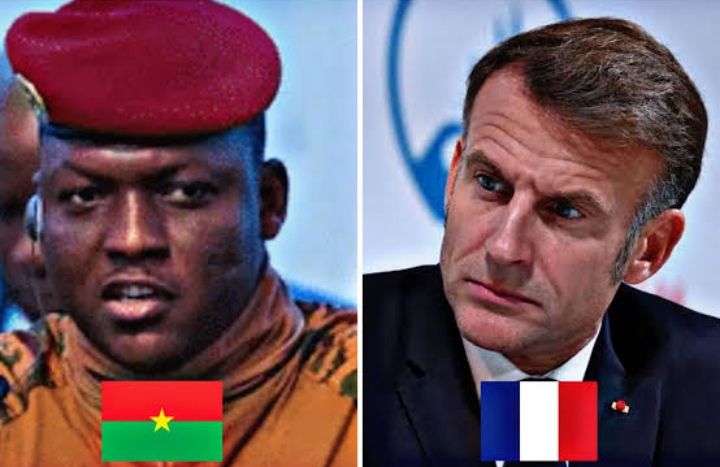
France has announced that it is considering retaliatory measures after Burkina Faso formally severed diplomatic relations with its former colonial ruler, marking a dramatic escalation in the worsening relationship between Paris and the military-led governments of the Sahel.
The move, announced by Burkina Faso’s authorities, represents the latest chapter in a steady breakdown of ties between France and several of its former West African colonies, including Mali and Niger, where military juntas have increasingly distanced themselves from Paris while forging closer relations with new international partners, particularly Russia.
Responding to the decision, the French Ministry for Europe and Foreign Affairs expressed deep regret, describing Burkina Faso’s action as both “hostile” and “unfounded”.
In a statement released on Saturday, the ministry said the diplomatic rupture reflected what it described as the “worrying drift” of Burkina Faso’s military authorities, adding that France was examining an appropriate retaliatory response.
Although French officials did not immediately disclose the specific measures under consideration, analysts say they could include diplomatic restrictions, reductions in bilateral cooperation, or other reciprocal actions.
The latest dispute further isolates Burkina Faso from one of its longest-standing international partners at a time when the country continues to grapple with a severe jihadist insurgency that has displaced millions of people and claimed thousands of lives.
Relations between France and Burkina Faso have steadily deteriorated since Captain Ibrahim Traoré seized power in a military coup in September 2022, overthrowing interim leader Lieutenant-Colonel Paul-Henri Damiba.
Traoré accused previous governments of failing to halt the growing insecurity caused by extremist groups linked to al-Qaeda and the Islamic State, which have spread across the Sahel over the past decade.
Since taking office, Traoré’s administration has implemented sweeping measures aimed at reducing French influence in Burkina Faso.
Among the most significant actions were the expulsion of French military forces stationed in the country, the termination of defence and military cooperation agreements with France, the suspension of several French media organisations – including Radio France Internationale (RFI) and France 24 – and the nationalisation of mining assets previously operated by French companies.
The military government has consistently argued that these steps are necessary to restore national sovereignty and allow Burkina Faso to pursue independent security and economic policies.
The current diplomatic crisis has its roots in broader political and security developments across the Sahel over the past several years.
France maintained a significant military presence in the region for nearly a decade through Operation Barkhane, launched in 2014 to combat Islamist insurgencies following earlier intervention in Mali under Operation Serval in 2013.
Despite deploying thousands of troops and investing heavily in regional counter-terrorism operations, France increasingly faced criticism from local populations who argued that insecurity continued to worsen despite the prolonged military presence.
Growing anti-French sentiment fuelled demonstrations across Mali, Burkina Faso and Niger, where protesters accused Paris of failing to restore security and maintaining excessive political influence in the region.
Military coups in Mali (2020 and 2021), Burkina Faso (2022) and Niger (2023) fundamentally altered the geopolitical landscape of the Sahel.
The new military governments adopted strongly nationalist policies, demanded the withdrawal of French troops, and sought alternative security partnerships.
By 2023, French forces had completed withdrawals from Mali and Burkina Faso, while Niger also requested the departure of French troops after its military takeover.
Burkina Faso, Mali and Niger have since strengthened cooperation through the Alliance of Sahel States (AES), a mutual defence pact established in 2023 and later expanded into a broader political and economic alliance.
The three countries have jointly withdrawn from the Economic Community of West African States (ECOWAS), accusing the regional bloc of serving foreign interests and imposing punitive sanctions against military governments.
They have also deepened security cooperation with Russia, including partnerships with Russian military instructors and security personnel, reflecting a broader geopolitical shift away from traditional Western allies.
Despite the change in foreign policy orientation, Burkina Faso remains one of the countries hardest hit by insecurity in Africa.
According to the United Nations, more than two million people have been displaced by violence, while humanitarian agencies continue to warn of worsening food insecurity and limited access to essential services in conflict-affected areas.
Large parts of the country remain outside full government control as armed extremist groups continue to launch attacks on civilians, military installations and local communities.
Security experts note that while Burkina Faso’s leadership has sought new military partnerships and adopted a more assertive nationalist agenda, the security situation remains extremely fragile.
Regional and International Implications
France’s consideration of retaliatory measures underscores the deepening diplomatic divide between Paris and the military-led governments of the central Sahel.
The latest development is expected to have implications beyond bilateral relations, potentially affecting regional security cooperation, humanitarian assistance, investment and diplomatic engagement in West Africa.
Observers say the diplomatic break symbolises the end of an era in relations between France and one of its former colonies, while reflecting the broader geopolitical realignment reshaping the Sahel, where military governments are increasingly seeking new alliances and redefining their relationships with Western powers.