

Kenya Grinds to a Halt as Fuel Price Protests Trigger Nationwide Transport Strike
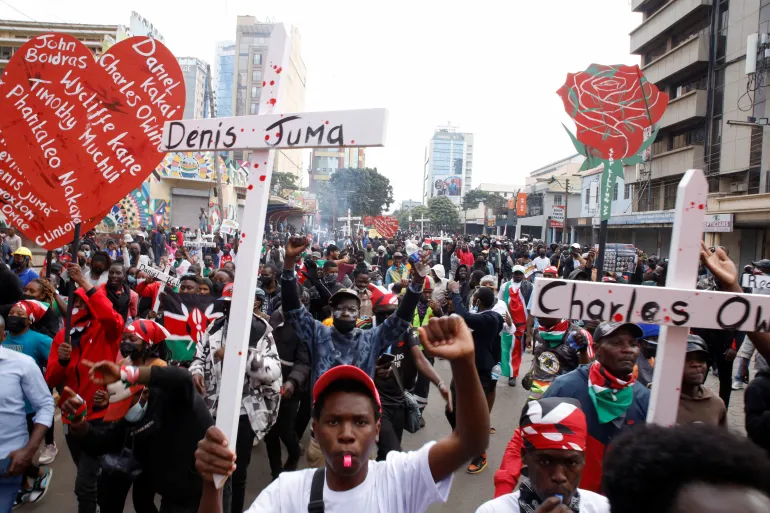
Fresh protests erupted across Kenya on Monday as a nationwide public transport strike over soaring fuel prices paralysed movement in the capital, Nairobi, leaving thousands of commuters stranded and intensifying pressure on President William Ruto’s government amid a worsening cost-of-living crisis.
According to reports by AP, Reuters and other media organizations, demonstrators barricaded major roads into Nairobi, burning tyres and erecting makeshift bonfires that brought traffic to a standstill in several parts of the city.
The protests quickly escalated into violent confrontations with security personnel, as police fired tear gas to disperse crowds in parts of the capital and neighbouring towns.
According to Kenyan authorities, at least four people were killed and more than 30 others injured during the unrest, while hundreds were reportedly arrested as protests spread across key urban centres.
The strike, organised by transport operators under the Transport Sector Alliance, began at midnight after the government announced another sharp increase in fuel prices last week.
Operators of matatus – the privately-owned minibuses that form the backbone of Kenya’s public transport system – suspended services nationwide, forcing many residents to trek long distances to work.
Major highways including Thika Road, Waiyaki Way and Mombasa Road were heavily disrupted as protesters blocked access routes into the city centre.
Businesses recorded low turnout, while many offices and schools either shut down or shifted activities online due to security concerns.
The Kenya Association of Private Schools advised member institutions to evaluate the safety of learners before reopening for classes, prompting many schools to adopt remote learning arrangements.
The protests were triggered by record fuel price increases announced by the Energy and Petroleum Regulatory Authority (EPRA) for the May 15 to June 14 pricing cycle.
Diesel prices surged by 23.5 per cent, while petrol rose by 8 per cent, pushing fuel costs in Nairobi to historic highs. Diesel now sells at about 242.92 Kenyan shillings per litre, while petrol retails at 214.25 shillings per litre.
Kenyan officials blamed the hikes on disruptions in global oil supplies linked to the ongoing conflict in the Middle East, particularly tensions involving Iran, which have driven up international crude prices.
Kenya relies heavily on imported petroleum products sourced through government-to-government agreements with Gulf suppliers.
Interior Minister Kipchumba Murkomen confirmed that the government had convened emergency talks involving the finance, transport and energy ministries in a bid to calm tensions and negotiate with transport unions.
However, frustration among ordinary Kenyans appeared to deepen as transport fares and food prices surged almost immediately after the fuel adjustment. Reports from Nairobi indicated that fares on some routes rose by as much as 50 per cent over the weekend.
The Kenya National Chamber of Commerce and Industry had earlier warned that the increase could trigger severe economic consequences across multiple sectors.
The chamber noted that although global crude oil prices rose by about 10.7 per cent between April and May, Kenya’s diesel prices climbed by 23.5 per cent during the same period, suggesting that domestic taxes and supply-chain costs were worsening the burden on consumers.
“This points to the continued role of domestic cost buildup,” the chamber stated.
The latest unrest has revived memories of previous anti-government demonstrations in Kenya over taxation and the rising cost of living, which have repeatedly tested the administration of President Ruto since he assumed office in 2022.
Opposition figures and sections of civil society have accused the government of failing to shield ordinary citizens from inflationary pressures, while many Kenyans on social media described the latest fuel increase as unsustainable for working-class families already grappling with high food and electricity costs.
Despite mounting public anger, President Ruto – who is currently outside the country – had not publicly commented on Monday’s demonstrations as of press time.