
NCAA Must Stop Using Flight-Delay Statistics to De-market Nigerian Airlines
By Bonaventure Phillips Melah
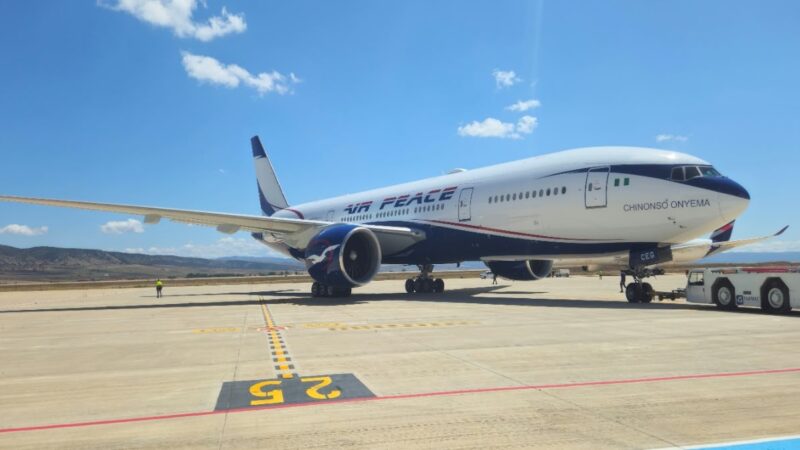
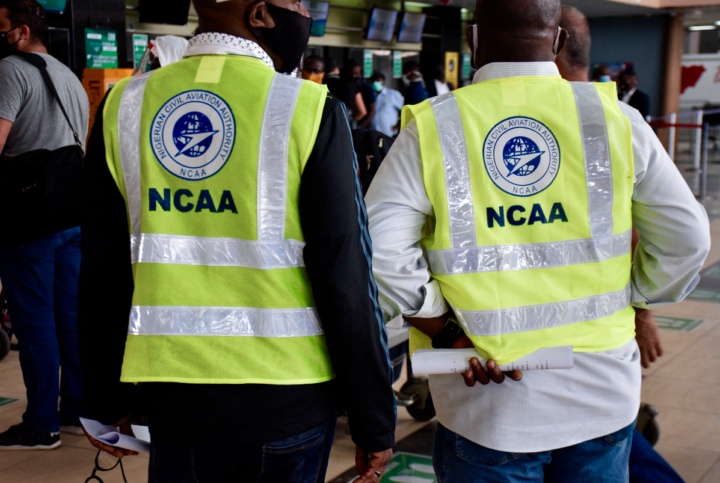
The recent publication of flight-delay statistics by the Nigeria Civil Aviation Authority (NCAA), indicating that Air Peace and United Nigeria Airlines recorded some of the highest numbers of delayed flights in August 2026, raises an important question about how aviation statistics should be compiled, interpreted and communicated to the Nigerian public.
Statistics are useful only when they provide proper context. Numbers presented without adequate explanation can create impressions that may be technically misleading, commercially damaging and unfair to the operators concerned.
According to figures attributed to the NCAA, Nigerian domestic airlines operated 7,961 flights in August, of which 4,765 were delayed. Air Peace alone operated 1,864 flights which further affirms the airline as the leading brand in Nigeria.
It is therefore wrong to simply announce that Air Peace “topped” the table of delayed flights without aligning it with total percentage or per unit of the number of flights for each airline operating in the country. This could also risk obscuring an elementary statistical reality which states that ‘an airline operating substantially more flights has substantially more opportunities to record delays than an airline operating only a fraction of that number.’
Therefore, airline operating hundreds or thousands of flights should not be compared with a much smaller operator merely on the absolute number of delayed flights. Arik Air for example operates with only one plane. You can’t put these two on the same scale. It makes no sense to do so.
The appropriate analysis must consider the total number of flights operated, the percentage delayed, the length of each delay, routes operated, airport conditions and, critically, the causes of those delays.
Indeed, even percentage rankings need context. A delay of 20 minutes caused by bad weather is fundamentally different from a five-hour delay resulting from an airline’s failure to provide an aircraft. Yet a simplistic table can count both merely as “delays.”
Who Actually Caused the Delay?
This is perhaps the most important question the NCAA should address. Not every flight delay is caused by an airline. Flights can be delayed by adverse weather conditions, airport infrastructure problems, air-traffic-control restrictions, runway closures, security incidents, bird strikes, late arrival of aircraft occasioned by earlier disruptions, industrial actions and other circumstances outside an airline’s reasonable control.
Birds strikes for example is the responsibility of NCAA to address. It is categorized as natural occurrence or force majure. In the real sense, when flights are disrupted by bird strikes, it is NCAA that should take responsibility and address the matter rather than pass the bulk to airlines.
Another case is bad weather. Most of the cases of flight cancellation arising from unclear weather can be mitigated if there are adequate infrastructure. But in Nigeria, such ‘bad weather’ often lead to cancellation; you also cant blame that on airlines since flights are often cancelled based on instructions from authorities.
August itself provides a powerful illustration.
On August 11, aviation labour unions disrupted operations at airports in Lagos and Abuja. Access to Air Peace departure terminals was blocked, preventing scheduled flights from departing and causing disruption across its network. United Nigeria Airlines and a few others were also affected.
How should such delays be classified?
Surely, it would be unfair to place a flight prevented from departing because access to an airport terminal was blocked in exactly the same category as a delay caused by an airline’s own operational inefficiency. Regulation must distinguish between airline-attributable delays and external or system-induced delays.
NCAA Should Regulate, Not Unintentionally De-market
The NCAA has an important responsibility to protect passengers. Airlines that consistently delay passengers because of poor scheduling, inadequate aircraft, crew problems or other avoidable operational deficiencies should be called to account. Passengers deserve punctual services, honest communication, refunds and compensation where applicable.
But consumer protection and fairness to airlines are not mutually exclusive. NCAA should therefore do its job as a regulator and not a competitor with airlines. It is wrong for NCAA to write sensational reports, most times, targeting Air Peace and United Nigeria airline. A regulator should not be seen to be biased but committed to seeing that operators comply to international best practices while encouraging them to grow.
Nigeria needs strong indigenous airlines. These companies employ Nigerians, pay taxes and statutory charges, invest enormous amounts of capital, connect Nigerian cities and compete with foreign carriers on international routes.
The regulator should therefore ensure that the way it communicates performance statistics does not inadvertently become a mechanism for demarketing the very indigenous aviation businesses it is mandated to regulate and help develop within a safe and sustainable industry.
A headline saying that an airline “tops the list of delayed flights” can easily be interpreted by the travelling public to mean that it is Nigeria’s least reliable airline. The underlying data may tell a considerably more complicated story. This is more worrisome, going by the established fact that Air Peace and United Airlines are about the best quality service providers among airlines in Nigeria today.
Publish Better Statistics
Going forward, NCAA’s flight-performance reports should provide Nigerians with a more comprehensive scorecard. For every airline, the Authority should publish total flights scheduled and operated; number and percentage of flights departing on time; number and percentage delayed; average and median duration of delays; cancellations; and, most importantly, delays attributable to the airline as against those caused by weather, airport infrastructure, air-traffic management, security, industrial action and other external factors.
Such methodology would allow passengers to make informed choices while giving airlines a fair and scientifically meaningful assessment.
It would also enable government to identify another important problem: what percentage of Nigeria’s flight delays are actually caused by deficiencies in the wider aviation system rather than by airlines?
If poor airport infrastructure or other systemic problems are responsible for a significant proportion of delays, publishing airline rankings without highlighting those factors risks punishing operators for failures outside their control.
Bigger Operators Should Not Be Punished for Being Bigger
Air Peace and United Nigeria are Nigeria’s largest airlines and operate an extensive domestic, regional and international network. Their scale mean that disruptions affecting a major hub can cascade through several subsequent flights.
That does not excuse avoidable delays. It simply means that performance must be assessed intelligently and proportionately. The objective should not be to shield any airline from legitimate scrutiny. It should be to make that scrutiny credible.
NCAA should therefore move away from sensational league tables based primarily on raw delay numbers and embrace transparent, contextual and cause-based performance reporting.
Nigerian passengers deserve reliable airlines. But Nigerian airlines equally deserve a regulatory environment in which their performance is judged by fair, transparent and scientifically meaningful standards. Statistics should illuminate the truth—not create a misleading impression that could damage public confidence in indigenous carriers.
Finally, NCAA should emulate the Minister of Aviation and Aerospace Development, Mr. Festus Keyamo who, though a strict and no-nonsense supervisor, is himself the Chief promoter of the Nigerian brand both at home and abroad.
Bonaventure Phillips Melah, a Public Affairs Analyst writes from Abuja. Email: [email protected] 08036062975