
NDLEA Begins Nationwide Training for Counsellors on Standard Rehabilitation Guidelines
The National Drug Law Enforcement Agency (NDLEA) has commenced a nationwide capacity-building programme for its counsellors, aimed at standardising rehabilitation protocols, strengthening clinical competencies and aligning drug treatment services with global best practices.
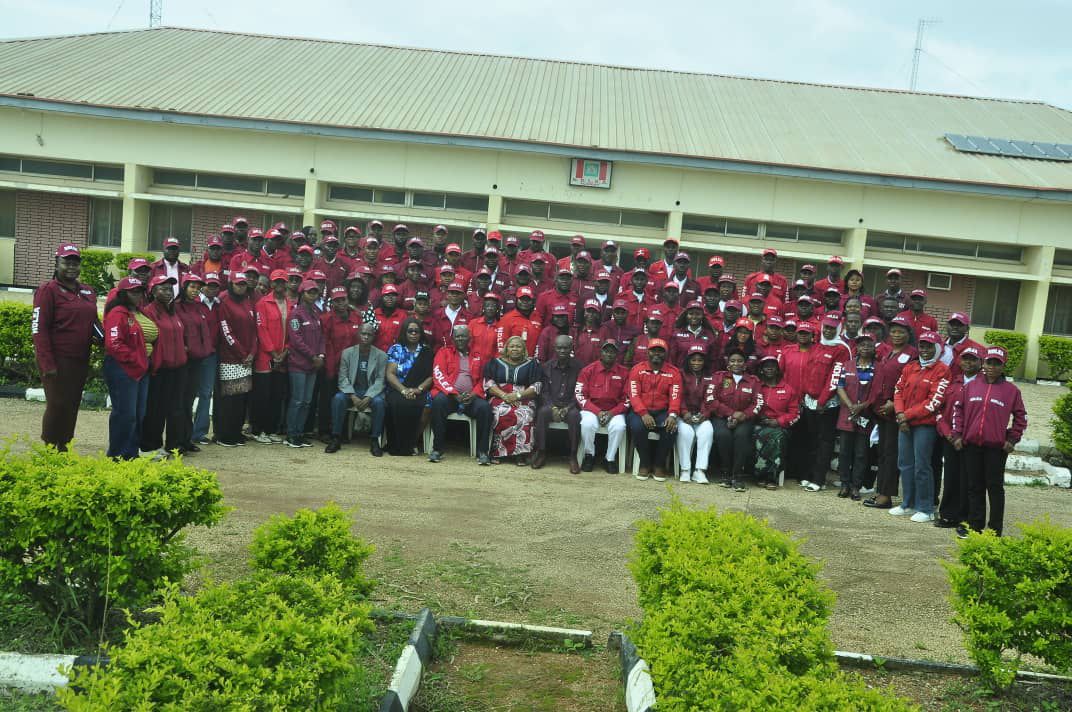
The comprehensive training, which began at the NDLEA Academy in Jos, Plateau State, is being coordinated by the Agency’s Directorate of Counselling, Treatment and Rehabilitation (DCTR).
More than 100 counsellors drawn from NDLEA formations across the country are participating in the first phase of the exercise, which the Agency said represents a renewed effort to strengthen its drug demand reduction and rehabilitation programmes.
The programme is the first major Agency-driven capacity-building initiative of its kind for NDLEA counsellors in several years and has been welcomed by participants as a significant demonstration of the Agency’s commitment to the professional development of its counselling workforce.
Speaking at the commencement of the training, the Chairman and Chief Executive Officer of the NDLEA, Brigadier-General Mohamed Buba Marwa (rtd), said the exercise was critical to improving staff morale and equipping counsellors with modern therapeutic skills needed to address the increasing complexities associated with substance use disorders.
Marwa, who was represented by the Director of Counselling, Treatment and Rehabilitation, ACGN Bashir Ibrahim, said the initiative further reaffirmed the importance of rehabilitation as a key pillar of the Agency’s mandate.
According to him, the training would help ensure that clients receiving treatment at NDLEA rehabilitation facilities across Nigeria have access to quality, evidence-based interventions delivered according to uniform professional standards.
He said the Agency was determined to entrench global best practices in its drug demand reduction efforts by strengthening the knowledge and capacity of personnel responsible for counselling, treatment and rehabilitation services.
Marwa explained that one of the major objectives of the programme was to harmonise professional practice across rehabilitation facilities operated by NDLEA State Commands through the adoption of uniform protocols and standard operating guidelines.
He added that the training would also enhance the clinical proficiency of counsellors in responding to emerging psychoactive substances and cases involving co-occurring mental health disorders.
Other objectives, he said, include aligning the Agency’s rehabilitation practices with national and international standards, strengthening ethical conduct, confidentiality and quality assurance, as well as improving data management to support evidence-based policymaking.
The NDLEA Chairman further said the programme would promote continuous professional development among counsellors through peer review and clinical supervision while also helping to optimise rehabilitation outcomes by reducing inconsistencies in service delivery across the country.
“Key objectives of the training include harmonising practice through uniform protocols across all State Command rehabilitation facilities; enhancing clinical proficiency to address emerging psychoactive substances and co-occurring mental health disorders; aligning the Agency’s rehabilitation practices with national and international standards,” Marwa said.
He added that the initiative would also strengthen ethics and confidentiality, improve quality assurance and data management, promote continuous professional development and ultimately enhance the effectiveness of rehabilitation services.
Marwa said the training underscored the NDLEA’s determination to build a resilient, well-equipped and professionally competent counselling workforce capable of responding effectively to Nigeria’s growing drug demand reduction challenges.
He noted that substance use disorders were evolving in complexity, making it necessary for counsellors and rehabilitation professionals to continually update their knowledge and therapeutic approaches.
The Chairman expressed confidence that the nationwide training programme would significantly improve the quality of care available at NDLEA rehabilitation facilities and further strengthen the integrity of Nigeria’s drug treatment and rehabilitation architecture.
According to him, investing in the professional capacity of counsellors remains essential to achieving sustainable outcomes in the treatment and rehabilitation of persons affected by substance use disorders.
Marwa assured that the Agency would continue to invest in the training and development of its personnel as part of its broader and holistic strategy for addressing both drug supply and drug demand in the country.
The NDLEA has in recent years intensified its drug demand reduction activities alongside its enforcement operations, with counselling, treatment, rehabilitation and preventive programmes forming a major component of its response to the drug abuse challenge.
The ongoing training in Jos is expected to equip participating counsellors with improved knowledge, standardised procedures and modern therapeutic tools that can be deployed across NDLEA rehabilitation facilities nationwide.
The programme is also expected to promote greater consistency in the delivery of treatment and rehabilitation services while ensuring that the Agency’s interventions conform with recognised national and international standards.
With the commencement of the training, the NDLEA said it was taking another step towards strengthening its human resources and ensuring that its drug demand reduction efforts are supported by skilled professionals capable of delivering effective, ethical and evidence-based care to clients across the country.