
NiMet, China Strengthen AI, Early Warning Partnership to Boost Weather, Aviation Services
The Nigerian Meteorological Agency (NiMet) and the China Meteorological Administration (CMA) have agreed to deepen their long-standing partnership by expanding collaboration in artificial intelligence, early warning systems, aviation research, staff development and climate services, in a move aimed at enhancing Nigeria’s weather forecasting capabilities and disaster preparedness.
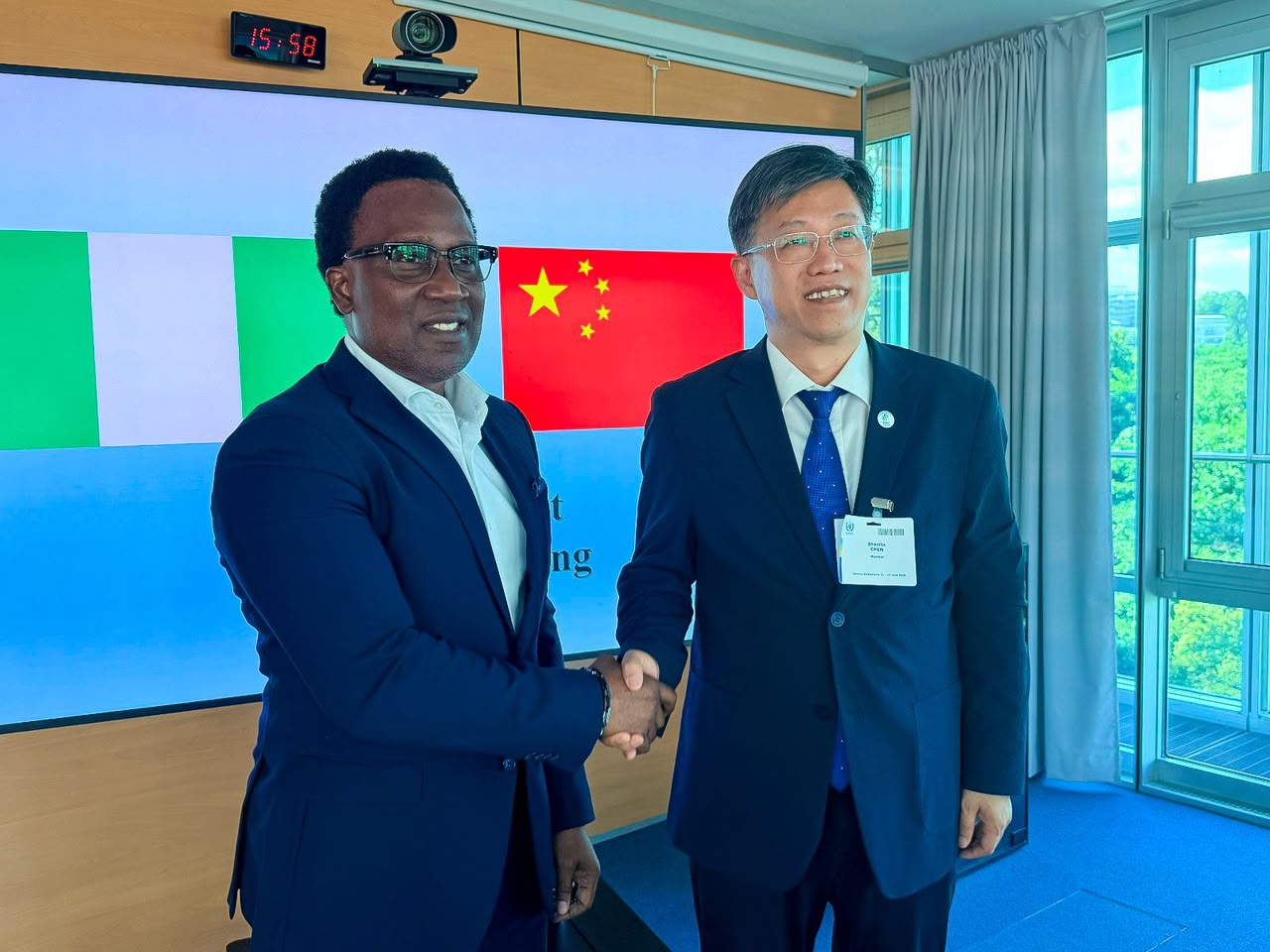
The renewed commitment was reached during a bilateral meeting held on the sidelines of the 80th Session of the World Meteorological Organisation (WMO) Executive Council, where the Director-General and Chief Executive Officer of NiMet, Prof. Charles Anosike, who also serves as Nigeria’s Permanent Representative with the WMO, met with the Administrator and Director-General of the China Meteorological Administration, Dr. Chen Zhenlin, China’s Permanent Representative with the WMO.
The high-level meeting provided an opportunity for both countries to reaffirm their long-standing cooperation in meteorology while identifying new areas of partnership that would leverage cutting-edge technologies to improve weather and climate services.
A major outcome of the discussions was the commitment by both meteorological agencies to advance cooperation through the adoption and customisation of the MAZU Artificial Intelligence Early Warning Platform for use in Nigeria.
The initiative is expected to harness emerging AI technologies to strengthen weather forecasting, climate monitoring and the dissemination of timely early warning information for extreme weather events.
Experts have increasingly highlighted the role of artificial intelligence in transforming meteorological services by enabling faster processing of vast amounts of weather data, improving forecast accuracy and supporting more effective early warning systems that help protect lives, property and critical infrastructure.
The partnership is also expected to support Nigeria’s efforts to build resilience against the growing impacts of climate change, including floods, droughts, heatwaves and other extreme weather events that have become more frequent across the country.
During the meeting, both delegations agreed on the adoption of a Memorandum of Understanding (MoU) that will provide a framework for expanded cooperation across several strategic areas.
The proposed agreement will cover the deployment of the MAZU AI Early Warning Platform, staff exchange programmes, joint scientific research, meteorological data sharing, remote sensing, aviation meteorology research, knowledge exchange initiatives and scholarship programmes.
Officials said the collaboration would promote capacity building, facilitate technology transfer and foster scientific innovation for the mutual socio-economic benefit of Nigeria and China.
The agreement also underscores the growing importance of international partnerships in strengthening national meteorological services, particularly as countries work to improve resilience to climate-related disasters through more reliable forecasting systems and enhanced early warning capabilities.
For Nigeria, the collaboration is expected to further strengthen NiMet’s ability to deliver accurate and timely weather, climate and aviation meteorological services to key sectors of the economy, including agriculture, aviation, marine transportation, disaster risk management and water resources.
The renewed partnership with the China Meteorological Administration comes at a time when global meteorological agencies are increasingly embracing advanced technologies, including artificial intelligence and remote sensing, to improve forecasting accuracy and support the World Meteorological Organisation’s global initiative to ensure that every person on Earth is protected by effective multi-hazard early warning systems.
By expanding cooperation in research, technology and human capacity development, both Nigeria and China aim to reinforce their shared commitment to modernising meteorological services and enhancing preparedness for weather- and climate-related hazards.