
L-PRES Partners NiMet to Boost Livestock Productivity Through Advanced Weather Monitoring
The Livestock Productivity and Resilience Support Project (L-PRES) has strengthened its collaboration with the Nigerian Meteorological Agency (NiMet) in a strategic move aimed at improving climate resilience within Nigeria’s livestock sector through enhanced weather monitoring and data-driven agricultural practices.
The partnership was highlighted during a courtesy visit by the National Coordinator of L-PRES, Mr Sanusi Abubakar, to the Director General and Chief Executive Officer of NiMet, Professor Charles Anosike.
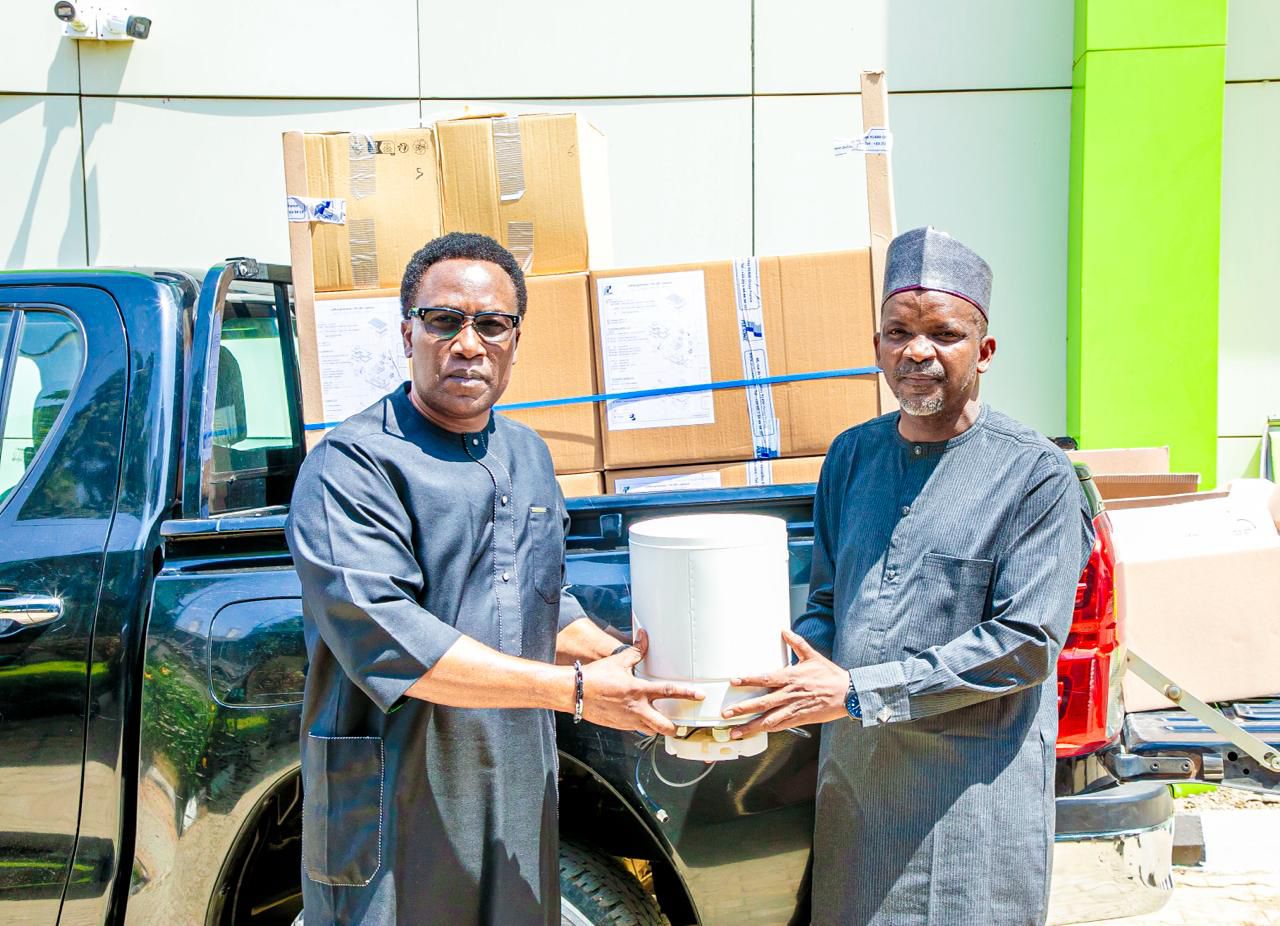
During the visit, L-PRES formally handed over four Automatic Weather Observation Systems (AWOS) to the meteorological agency to support the expansion of its weather monitoring infrastructure across the country.
L-PRES is a national initiative designed to improve livestock productivity and strengthen the resilience of farmers against climate-related challenges.
The project focuses on equipping livestock farmers with reliable resources, climate information and adaptive strategies to help them cope with increasingly unpredictable weather conditions that affect grazing patterns, water availability and overall animal health.
Speaking during the visit, Abubakar congratulated Anosike on the successful public presentation of NiMet’s 2026 Seasonal Climate Prediction (SCP), describing it as a vital tool for farmers and stakeholders in Nigeria’s agricultural sector.
He emphasised that accurate climate forecasting and real-time weather monitoring are critical to the success of livestock development programmes such as L-PRES.
According to him, collaboration with NiMet is essential in ensuring that livestock farmers across Nigeria receive reliable climate data that can guide their operational decisions.
He noted that the project’s support for the installation of Automatic Weather Observation Systems reflects L-PRES’s commitment to promoting science-based livestock management practices.
“These weather monitoring systems will provide valuable meteorological data that will help farmers understand climatic patterns and adapt their operations accordingly,” Abubakar said.
In his response, Professor Anosike commended L-PRES for its foresight in investing in weather observation infrastructure, describing the donation as a significant contribution to strengthening Nigeria’s meteorological network.
He explained that the four AWOS units would be installed in rehabilitated grazing reserves across the country, where they will provide accurate and localised weather data crucial for livestock farming activities.
According to the NiMet Director General, reliable weather observations are essential for improving early warning systems and ensuring that farmers are well informed about weather conditions that could affect their livestock operations.
“By deploying these stations in key grazing reserves, we will be able to generate precise meteorological information that will help livestock farmers plan grazing schedules, manage water resources effectively and protect their animals from adverse weather conditions,” Anosike said.
Automatic Weather Observation Systems are modern meteorological installations designed to automatically measure and transmit weather parameters such as temperature, humidity, wind speed and direction, rainfall and atmospheric pressure. These systems play a crucial role in providing real-time weather data used for forecasting, climate monitoring and agricultural planning.
Experts note that livestock farming in Nigeria is increasingly vulnerable to climate variability, including prolonged droughts, irregular rainfall and extreme heat, all of which can reduce pasture availability and negatively impact animal productivity.
Through improved weather monitoring and the dissemination of accurate climate information, initiatives such as the collaboration between L-PRES and NiMet are expected to help farmers mitigate these risks and improve their productivity.
Both organisations reaffirmed their commitment to sustaining the partnership in the years ahead, emphasising the importance of technology, research and institutional cooperation in safeguarding Nigeria’s livestock industry.
By leveraging advanced meteorological infrastructure and shared expertise, the collaboration is expected to enhance climate resilience within the livestock sector, improve farmers’ livelihoods and contribute to sustainable agricultural development across Nigeria.