

GISS 2026 Concludes in Marrakech with Global Aviation Commitments to Safety, Sustainability, Inclusive Growth
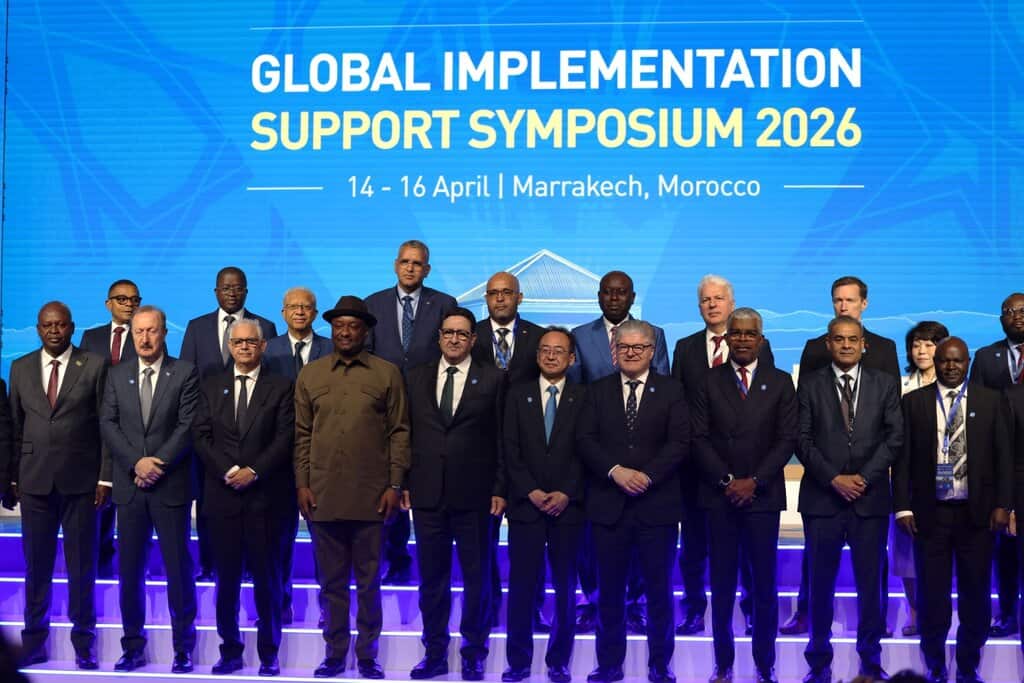
The International Civil Aviation Organization (ICAO) has concluded its Global Implementation Support Symposium (GISS 2026) in Marrakech, bringing together 1,450 participants from 101 countries in a major push to strengthen global aviation systems and accelerate implementation of international standards.
Held over three days, the high-level gathering focused on advancing ICAO’s long-term vision for 2050, anchored on the principle of “No Country Left Behind,” with an ambitious goal of achieving zero fatalities and net-zero carbon emissions in global air transport.
Speaking at the closing session, ICAO Council President Toshiyuki Onuma underscored the importance of universal compliance with aviation standards, stating that the safety and resilience of global aviation depend on every State having the capacity to implement ICAO’s Standards and Recommended Practices (SARPs).
Similarly, ICAO Secretary General Juan Carlos Salazar emphasised that the real measure of success lies not in commitments, but in execution.
“The outcomes of this Symposium demonstrate what multilateral cooperation looks like when it delivers results,” Salazar said, adding that translating agreements into measurable progress across all regions remains the immediate priority.
A key highlight of the symposium was the Ministerial Roundtable, which convened 22 aviation ministers and culminated in the adoption of the “Marrakech Call to Action.”
The declaration reaffirmed global commitment to strengthening aviation governance, enhancing institutional capacity, and unlocking growth through sustainable funding mechanisms.
It also prioritised the development of the next generation of aviation professionals and called for stronger accountability frameworks in implementing agreed standards.
The initiative reinforces ICAO’s commitment to ensuring that all countries – particularly developing States – can fully participate in and benefit from the expansion of global aviation.
In a significant outcome, ICAO and its partners signed 39 bilateral and multilateral agreements aimed at boosting aviation capacity development worldwide. These agreements were complemented by new financial commitments and strengthened collaboration between governments, industry stakeholders, and development institutions.
Major global contributors included Canada and United Kingdom, both of which pledged voluntary funding to support safety and training initiatives, particularly across Africa.
Industry giants such as Airbus and Boeing also made contributions towards safety capacity development and environmental programmes.
Key international bodies, including International Air Transport Association and International Federation of Air Line Pilots’ Associations, formalised partnerships with ICAO to expand training and implementation support globally.
African nations recorded notable progress at the symposium, with several agreements signed to strengthen aviation infrastructure, safety, and training.
Nigeria completed the handover of its Civil Aviation Master Plan, marking a significant step in long-term sector planning.
Angola not only advanced its own aviation master plan but was also announced as the host of GISS 2027, signalling growing continental leadership in aviation development.
Other countries, including Cabo Verde, Eswatini, Uganda, and South Sudan, secured training agreements and capacity development programmes, while host nation Morocco signed deals to enhance aviation security and training for inspectors.
Beyond Africa, the symposium saw a wide array of agreements across other regions. In the Americas, countries such as Guyana, Panama, and Peru secured partnerships aimed at strengthening aviation safety and infrastructure expansion.
Asian countries, including Indonesia, Kazakhstan, and Azerbaijan, focused on technical cooperation, training, and sustainability initiatives such as green airport certification.
In Europe, countries such as France, Greece, and Spain advanced scholarship programmes, safety systems, and professional training, while the United Arab Emirates led gender-focused initiatives by offering scholarships for women in aviation.
The symposium’s outcomes come against a backdrop of rapid projected growth in global aviation. ICAO forecasts that passenger traffic will nearly triple by 2050, while air cargo volumes are expected to increase more than two-and-a-half times.
Much of this growth is anticipated in emerging markets, making the need for robust safety systems, infrastructure investment, and skilled personnel even more critical.
As GISS 2026 draws to a close, ICAO emphasised that the partnerships and commitments forged in Marrakech will guide the next phase of global aviation development.
The symposium reaffirmed ICAO’s central role in coordinating international aviation efforts and ensuring that no country is left behind in the journey towards a safer, more sustainable, and inclusive global air transport system.
With Angola set to host GISS 2027, stakeholders expressed optimism that the momentum generated in Marrakech will translate into tangible progress across all regions in the years ahead.