
NDLEA, UNODC Unveil Weeklong Activities for 2026 World Drug Day, Vow to Intensify Crackdown on Drug Cartels
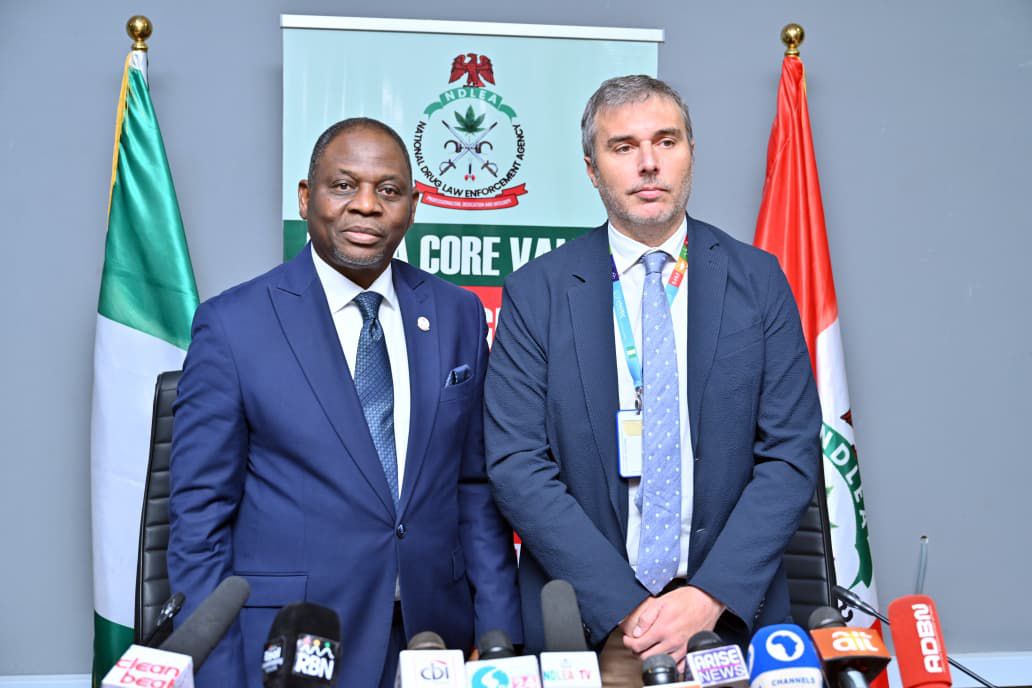
The National Drug Law Enforcement Agency (NDLEA) and the United Nations Office on Drugs and Crime (UNODC) have announced a weeklong line-up of activities to commemorate the 2026 World Drug Day, with the anti-narcotics agency reiterating its determination to dismantle criminal networks and deprive drug traffickers of their financial resources.
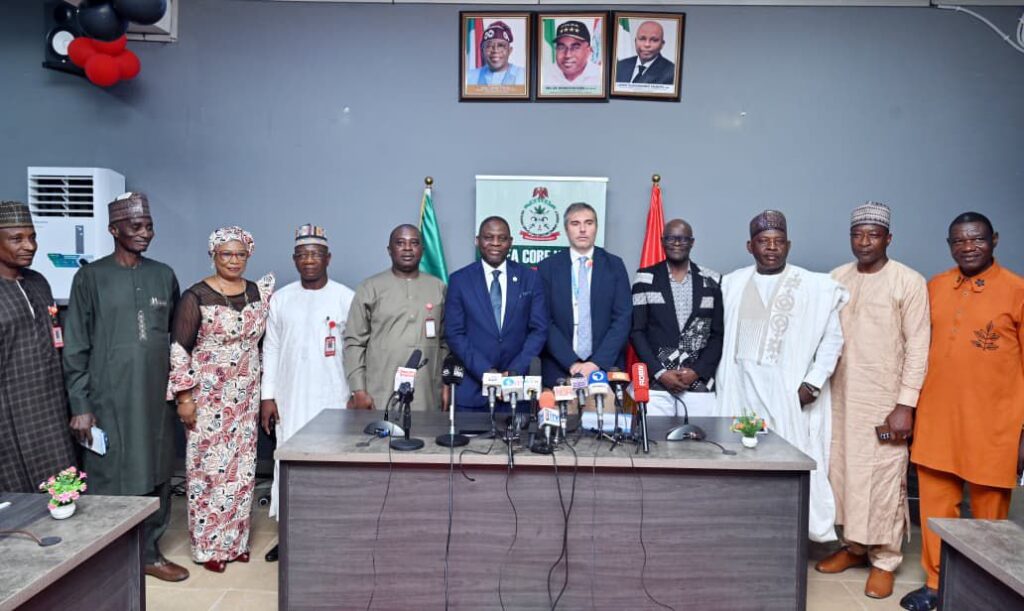
The announcement was made during a joint press briefing held at the NDLEA Headquarters in Abuja on Friday, where the agency emphasised that beyond arresting traffickers, it would continue to pursue the proceeds of illicit drug crimes in a bid to weaken and ultimately destroy organised drug syndicates.
World Drug Day, observed annually on June 26, is dedicated to strengthening action and cooperation in achieving a world free of drug abuse. The 2026 edition is themed, “The World Drug Problem: Persisting Issues, New Challenges, Innovative Responses.”
Addressing journalists at the briefing, Chairman and Chief Executive Officer of the NDLEA, Brigadier General Mohamed Buba Marwa (retd), represented by the Secretary of the Agency, Shadrach Haruna, described the global observance as an important opportunity to assess and recalibrate strategies against illicit drugs.
According to him, the theme reflects the changing nature of the global drug landscape, marked by the emergence of synthetic substances, increasingly sophisticated trafficking operations and the expansion of digital illicit markets.
“The theme underscores the evolving dynamic of the global drug landscape. It acknowledges that while old battlegrounds remain, new synthetic threats, sophisticated trafficking networks and digital illicit markets have emerged, demanding that we counter them with proactive, technology-driven and highly innovative responses,” he said.
Marwa stated that the NDLEA had recognised the limitations of traditional approaches and had modernised its operations through the deployment of technology and a stronger emphasis on prevention and advocacy.
He noted that the agency’s flagship War Against Drug Abuse (WADA) campaign, launched on World Drug Day in 2021, had evolved into a robust “whole-of-society approach” that bridges the gap between law enforcement and communities.
According to him, the initiative has enabled ordinary Nigerians to become active participants in the campaign against substance abuse, particularly among young people.
The NDLEA boss disclosed that activities marking the 2026 World Drug Day commenced on Friday, June 19, with a press conference and a special Juma’at prayer at the National Mosque, Abuja.
He said the programme would continue on Saturday, June 20, with the annual Walk Against Drugs, organised in collaboration with Baze University, Nile University and the MTN Foundation. The exercise is scheduled to begin at the African University of Science and Technology, Galadimawa, Abuja.
A thanksgiving church service is expected to hold on Sunday, June 21, while the final stage of the agency’s national essay competition, themed “Say No to Drug: Building a Healthy and Responsible Generation,” will take place on Monday, June 22, at the NDLEA Conference Room.
Tuesday, June 23, has been set aside as NGO Day to celebrate and strengthen collaboration with civil society organisations involved in grassroots sensitisation campaigns.
On Wednesday, June 24, the agency will implement its Youth Out of School Programme, targeting vulnerable groups in markets and motor parks within the Federal Capital Territory Area Councils with anti-drug messages designed to resonate with young people.
Thursday, June 25, will be devoted to strategic planning and final preparations for the grand finale scheduled for Friday, June 26, at the State House Conference Centre, Abuja.
According to Marwa, the closing ceremony will bring together senior government officials, members of the diplomatic corps and international stakeholders, during which fresh policy frameworks aimed at addressing contemporary dimensions of the drug crisis will be unveiled.
Highlighting the agency’s recent operational achievements, Marwa said the “Offensive Action” campaign launched in January 2021 had maintained steady momentum, leading to the dismantling of major drug syndicates and the successful prosecution of high-profile drug barons.
He said the agency’s legal department had recorded unprecedented conviction rates, aided significantly by the provisions of the Proceeds of Crime Act (POCA), which empowers authorities to confiscate assets linked to drug trafficking.
“We are not just arresting traffickers; we are liquidating their financial empires. Through civil action in rem procedures, assets reasonably suspected to be proceeds of drug crimes are aggressively targeted and forfeited to the Federal Government, effectively cutting off the lifeblood of these criminal networks,” he said.
Marwa expressed appreciation to President Bola Ahmed Tinubu for his continued support and political will in strengthening the fight against narcotics.
He also commended state governments and international partners, including the United Nations Office on Drugs and Crime (UNODC), the United States Drug Enforcement Administration (DEA), the Bureau of International Narcotics and Law Enforcement Affairs (INL), the United Kingdom’s Home Office International Operations, Border Force and National Crime Agency, as well as the French Police and Germany’s Federal Criminal Police Office (BKA).
The NDLEA chairman further acknowledged the cooperation of domestic agencies, including the Nigerian Armed Forces, Nigeria Customs Service, Nigeria Police Force, Nigeria Immigration Service, National Agency for Food and Drug Administration and Control (NAFDAC), Nigerian Financial Intelligence Unit (NFIU), Federal Road Safety Corps (FRSC) and the Nigeria Security and Civil Defence Corps (NSCDC).
He equally praised the media for sustaining public enlightenment efforts on the dangers of drug abuse.
In his remarks, the UNODC Country Representative in Nigeria, Cheikh Ousmane Toure, represented by Deputy Country Representative Danielo Campisi, stressed that the global drug problem was constantly changing and required coordinated responses.
He noted that Nigeria was at a critical stage where longstanding challenges must be addressed alongside emerging threats.
“No single institution can address these challenges alone. Progress depends on partnership, shared responsibility and sustained action. The problem persists, but it is not insurmountable. The challenges are evolving, but so are our solutions, and our response must be united, informed and forward-looking,” Campisi stated.
Reaffirming the organisation’s commitment to supporting Nigeria, he said the UNODC would continue to provide evidence-based interventions, innovative approaches and international cooperation to strengthen the country’s response to drug-related threats.
He added that collective efforts were essential to protecting communities and advancing sustainable solutions to the world drug problem.
The annual World Drug Day, officially known as the International Day Against Drug Abuse and Illicit Trafficking, was established by the United Nations General Assembly in 1987 to raise awareness of the dangers posed by illicit drugs and to encourage stronger international cooperation in tackling the menace.