
Omoda, Jaecoo build global trust as new-generation brands reshape automotive market
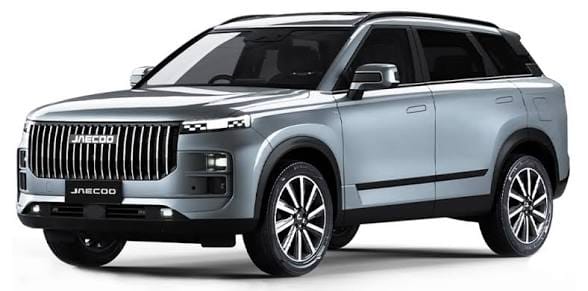
Omoda and Jaecoo are steadily breaking into markets traditionally dominated by long-established automotive manufacturers, with growing sales, independent safety ratings and rising consumer acceptance suggesting that brand heritage is no longer the only measure of confidence among car buyers.
The rapid expansion of the two automotive brands is providing a fresh perspective on how consumers assess relatively new manufacturers.
Rather than relying solely on a company’s history, buyers are increasingly looking at measurable indicators such as vehicle safety, value for money, customer experience, market performance and the availability of supporting infrastructure.
For many consumers, purchasing a vehicle from a less familiar manufacturer can raise several questions. Concerns about resale value, spare parts, servicing, warranty support, reliability and the manufacturer’s willingness to remain in the market for the long term can significantly influence a purchase decision.
Historically, established automotive brands have benefited from their long presence in the market, with decades of customer experience providing reassurance to buyers.
However, the performance of Omoda and Jaecoo in several international markets indicates that newer brands can increasingly build credibility through demonstrable performance.
One of the most significant indicators of the brands’ growing acceptance has been their performance in independent safety assessments.
The Jaecoo 7 secured a maximum five-star rating in Euro NCAP’s 2025 safety assessment, while the Omoda 5 achieved a five-star rating under Euro NCAP’s 2022 testing protocol.
Euro NCAP, an independent European vehicle safety organisation, subjects vehicles to controlled crash tests and assesses several aspects of vehicle safety. These include protection of occupants, protection of vulnerable road users and the effectiveness of safety-assistance technologies.
Such independent assessments are particularly important for newer manufacturers because they provide consumers with an external benchmark against which vehicles can be judged.
Rather than relying exclusively on advertising or manufacturer claims, prospective buyers can consider the results of recognised safety tests when assessing the credentials of a vehicle.
Beyond safety ratings, the brands have also begun to demonstrate their appeal through actual consumer demand.
In October 2025, the Jaecoo 7 was named Overall Car of the Year at the Leasing.com Awards in the United Kingdom. The recognition was based on factors including enquiry volumes, market share and value over a 12-month period.
This gave the award particular significance because it reflected real market interest and consumer behaviour rather than simply the preferences of a judging panel.
The Jaecoo 7 subsequently strengthened its position in the British market. The model became the United Kingdom’s third best-selling new car year-to-date in 2026, while both the Jaecoo 7 and Omoda 5 were listed among the country’s 10 best-selling models in April.
About 40 per cent of the brands’ registrations during the month were reportedly attributed to private buyers.
The private-buyer component is noteworthy because it indicates that the brands’ growth is extending beyond commercial and fleet purchases to individual consumers making personal vehicle-buying decisions.
The growth of Omoda and Jaecoo has also been recorded in other international markets. In Portugal, the brands commenced operations in December 2025 and recorded 1,649 vehicle registrations in 2026.
They also established a network of 15 dealerships covering mainland Portugal and the islands, providing a physical retail and support infrastructure for customers.
Brazil has recorded an even larger expansion. Since entering the Brazilian market in April 2025, Omoda and Jaecoo have registered 24,024 vehicles.
Their retail network has also expanded to 100 sales outlets across 25 of Brazil’s 27 states, giving the brands a substantial presence in one of Latin America’s largest automotive markets.
The expansion of dealership networks is particularly important for newer automotive brands because sales performance alone does not necessarily guarantee long-term customer confidence.
Consumers also need assurance that they can access servicing, maintenance, genuine parts and technical support after purchasing a vehicle.
Across Europe, cumulative sales by Omoda and Jaecoo reportedly surpassed 340,000 vehicles by June 2026. The brands’ global performance has been even more substantial.
During the first half of 2026, Omoda and Jaecoo recorded 380,000 registrations globally, representing a 38 per cent increase compared with the corresponding period of the previous year.
Their cumulative global sales subsequently exceeded 1.16 million vehicles across more than 65 markets.
The scale and speed of the expansion indicate that the two brands are no longer operating solely as emerging challengers seeking recognition. They are becoming increasingly visible participants in the global automotive market.
The performance of Omoda and Jaecoo also highlights a broader shift in the way consumers evaluate automotive brands.
Brand heritage remains important, particularly when buyers are committing significant amounts of money to a vehicle that they expect to own and operate for several years.
However, consumers today have access to significantly more information than previous generations of car buyers.
Independent safety assessments, vehicle reviews, sales figures, ownership experiences, customer feedback and online comparisons enable prospective buyers to conduct extensive research before making a purchase. This means that an unfamiliar badge does not necessarily have to remain unfamiliar for long.
A manufacturer capable of demonstrating safety, competitive pricing, product quality and reliable customer support can potentially establish consumer confidence within a relatively short period.
The development of Omoda and Jaecoo could have particular relevance for emerging automotive markets, including Nigeria. Consumers in such markets can be especially conscious of the long-term implications of buying vehicles from relatively new brands.
Issues such as the availability and cost of spare parts, access to trained technicians, warranty administration, resale value and dealership coverage can determine whether initial enthusiasm translates into sustained customer loyalty.
The experience of Omoda and Jaecoo suggests that consumers may increasingly be prepared to consider newer brands when the manufacturers can demonstrate credible products and establish adequate support systems.
Nevertheless, the challenge for the brands will be to convert rapid market growth into lasting customer relationships.
Strong sales can create initial momentum, but long-term automotive reputation is usually built through the ownership experience.
For Omoda and Jaecoo, maintaining dependable after-sales support, ensuring consistent product quality, keeping spare parts readily available and demonstrating a long-term commitment to each market will therefore be critical.
As the global automotive industry becomes increasingly competitive, the rise of the two brands demonstrates that decades of history may no longer be an absolute prerequisite for gaining consumer confidence.
Instead, measurable performance, independent validation and positive ownership experiences are emerging as powerful tools for newer manufacturers seeking to challenge established players.
With more than 1.16 million cumulative vehicles sold across over 65 markets, Omoda and Jaecoo are increasingly demonstrating that consumers are willing to look beyond traditional automotive heritage – provided a manufacturer can offer convincing evidence of safety, value, quality and long-term commitment.