
Customs, National Single Window Secretariat Begin Maritime Manifest Submission Phase, Sensitise Stakeholders

The Nigeria Customs Service (NCS), in collaboration with the National Single Window (NSW) Secretariat, has intensified the implementation of the National Single Window initiative with a sensitisation programme for Customs officers, shipping lines and other maritime stakeholders as the maritime manifest submission phase officially commences.
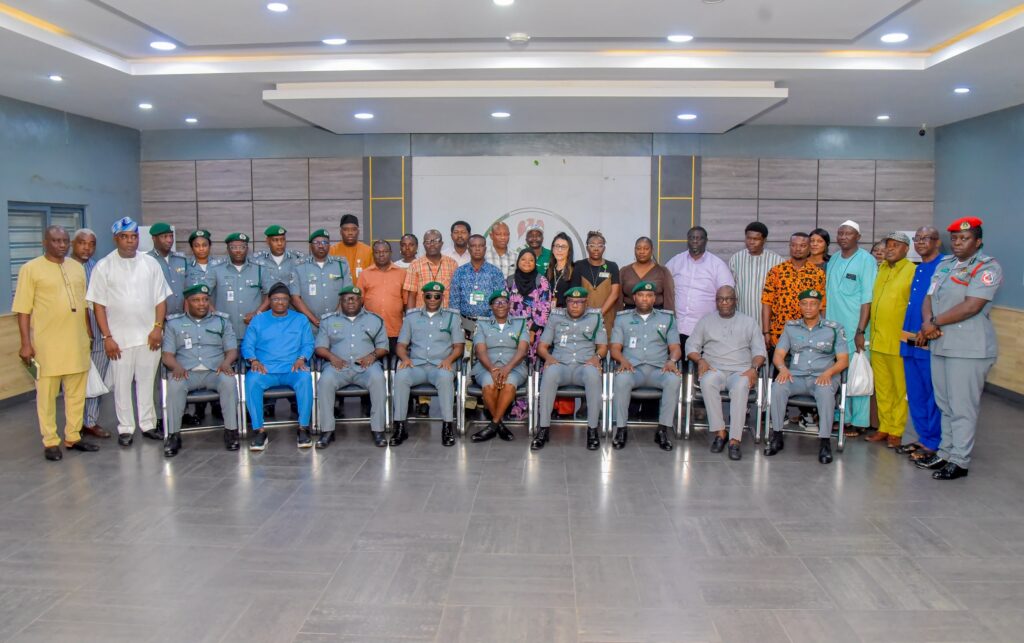
The sensitisation exercise, held at the Apapa Area Command on Tuesday, 4 August 2026, is part of ongoing efforts to deepen stakeholders’ understanding of the digital trade platform and ensure seamless compliance with the electronic submission of maritime manifests.
Speaking at the event, the Deputy Comptroller-General of Customs in charge of ICT/Modernisation, Oluyomi Adebakin, said the programme builds on a series of stakeholder engagements conducted before and after the successful launch of Phase One of the National Single Window on 27 March 2026.
She described the National Single Window as a globally recognised trade facilitation platform that aligns with international best practices and is expected to strengthen Nigeria’s competitiveness in international commerce.
According to Adebakin, the initiative is already yielding positive results for the country beyond the Nigeria Customs Service.
She said: “Since the introduction of the National Single Window, the country as a whole, not only the NCS, has begun to experience its benefits. Nigeria’s standing in international trade is improving, and the NCS remains committed to supporting the successful implementation of this initiative.”
She explained that the platform is designed not only to enhance revenue generation but also to facilitate trade, improve the availability of reliable trade data and strengthen anti-smuggling efforts through more efficient information management.
Adebakin assured stakeholders that the migration to electronic manifest submission would not alter the statutory responsibilities of the Nigeria Customs Service, stressing that it merely replaces the manual process with a faster and more transparent digital system.
“It is simply a more efficient and transparent method of submitting the same documents,” she stated.
Also addressing participants, the Zonal Coordinator for Zone ‘A’, Assistant Comptroller-General of Customs Mohammed Babandede, emphasised that stakeholder consultation remains a key feature of Customs reforms and policy implementation.
He noted that the Service consistently engages industry operators before introducing new digital solutions to ensure a smooth transition and encourage compliance.
Describing the sea manifest as a critical component of cargo declaration and risk management, Babandede urged shipping companies to ensure prompt and accurate submission of compliant manifests.
“The sea manifest is central to cargo declaration and risk management. I urge shipping companies to submit compliant manifests promptly to support faster cargo clearance and efficient risk profiling,” he said.
The National Coordinator of the National Single Window Project, Tola Fakolade, commended the Nigeria Customs Service for its continued commitment to the success of the project, noting that the platform has already recorded significant milestones since its launch.
According to him, more than 100,000 licences and permits have been issued through the system, while over 1,000 users have been successfully registered, demonstrating increasing acceptance and utilisation of the platform by stakeholders.
In his remarks, the Customs Area Controller of the Apapa Area Command, Comptroller Emmanuel Oshoba, applauded participants for their active involvement during the sensitisation programme.
He called on shipping companies, terminal operators and other players in the maritime sector to sustain collaboration with both the Nigeria Customs Service and the National Single Window Secretariat.
Oshoba said continued partnership would accelerate trade facilitation, improve regulatory compliance, strengthen transparency in cargo processing and reinforce Nigeria’s position as a competitive trading nation within the global maritime and logistics industry.
The commencement of the maritime manifest submission phase marks another major milestone in the implementation of the National Single Window project, which is expected to simplify trade processes, reduce cargo clearance timelines, improve inter-agency coordination and enhance the overall efficiency of Nigeria’s international trade ecosystem.