
FAAN Unveils Bold Reform Agenda to Boost Nigeria–UK Air Cargo Trade, Tackle Export Bottlenecks
Nigeria’s ambition to transform its air cargo sector and unlock the full potential of its export trade with the United Kingdom has taken centre stage, as the Federal Airports Authority of Nigeria (FAAN) outlined a sweeping reform agenda aimed at dismantling longstanding bottlenecks and repositioning the country as a competitive global exporter.
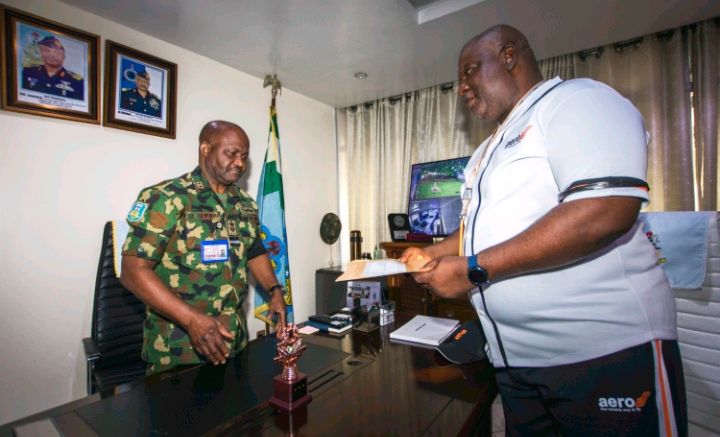
Speaking at a high-level forum of the Nigerian-British Chamber of Commerce earlier today – Thursday, April 23, 2026, the Director of Cargo Development and Services at FAAN, Mr Lekan Thomas, delivered a keynote address that painted a stark picture of inefficiencies within Nigeria’s export ecosystem, while simultaneously unveiling a comprehensive roadmap for reform.
Thomas highlighted what he described as a troubling paradox in Nigeria’s aviation trade corridor: cargo aircraft arriving from major global hubs such as London, Amsterdam, and Dubai are often filled to capacity with imports, yet depart Nigerian airports only partially loaded. According to him, this imbalance reflects not a lack of demand or market access, but systemic failures in export logistics and coordination.
He stressed that while Nigeria possesses the products, trade agreements, and market opportunities, it lacks a seamless system capable of moving goods from farms and factories to international markets with the speed, quality, and reliability required by global buyers.
Citing recent trade data, Thomas revealed that total UK–Nigeria trade reached £8.1 billion in the four quarters leading to the third quarter of 2025, marking an 11.4 per cent increase year-on-year.
However, he noted that Nigeria’s export potential remains significantly underutilised, despite the United Kingdom granting duty-free or reduced tariff access to over 3,000 Nigerian products under its Developing Countries Trading Scheme.
He emphasised that even a modest increase of between one and five per cent in exports to the UK could generate an additional $25 million to $125 million in revenue, describing such projections as achievable realities rather than mere aspirations.
The FAAN director further pointed to strong political backing for aviation sector reforms, referencing a recent high-level meeting between President Bola Ahmed Tinubu and a delegation from British Airways at the Presidential Villa.
He noted that the Federal Government’s resolution of long-standing financial obligations owed to international airlines has helped restore confidence among foreign carriers, signalling Nigeria’s renewed commitment to international aviation standards and partnerships.
Despite Nigeria’s status as Africa’s largest economy, Thomas acknowledged that the country currently ranks only fifth in air cargo performance on the continent, trailing behind nations such as Ethiopia, Kenya, South Africa, and Ghana.
He attributed this underperformance to a combination of infrastructure deficits, manual processes, regulatory inconsistencies, lack of standardisation, and poor inter-agency coordination.
According to findings from the FAAN Aviacargo Committee, exporters in Nigeria face multiple layers of bureaucracy, including as many as 24 separate charges – only six of which are legally recognised – alongside prolonged clearance times that can stretch from hours to days, in contrast to significantly faster processing in competing markets.
A key concern identified in the address was what Thomas termed the “missing middle” in Nigeria’s export chain—namely, the absence of efficient aggregation systems linking smallholder farmers to international markets.
He explained that aggregation centres, driven by private-sector investment through public-private partnerships, are essential for consolidating produce, ensuring quality control, and meeting export standards.
Drawing comparisons with successful models in Kenya and Senegal, he warned that Nigeria risks losing its competitive edge if it fails to develop integrated logistics systems capable of supporting large-scale, high-quality exports.
Thomas also underscored the importance of the National Single Window (NSW) initiative, describing it as a transformative platform designed to streamline trade processes by enabling exporters to submit documentation once for access by all relevant agencies. He noted that the system would facilitate pre-clearance, reduce cargo dwell times, enhance transparency, and improve traceability across the export chain.
However, he cautioned that the success of the NSW would depend on strong stakeholder advocacy and political will, urging the Nigerian-British Chamber of Commerce to actively champion its implementation and hold relevant authorities accountable.
Beyond structural reforms, the FAAN director highlighted emerging opportunities within the Nigeria–UK trade corridor, particularly in the export of perishables, pharmaceuticals, e-commerce goods, and solid minerals.
He pointed to growing investments in cold chain infrastructure in the UK, including new temperature-controlled facilities at Heathrow, as evidence of increasing demand for high-quality imports from Africa.
Thomas also warned against replicating trade imbalances observed in other bilateral relationships, stressing the need for Nigeria to build robust export systems that can support sustained and competitive trade flows.
Outlining FAAN’s action plan, he detailed ongoing efforts to modernise cargo infrastructure across major airports, develop cargo villages equipped with testing laboratories and packaging facilities, implement digital cargo management systems, attract dedicated freighter airlines through incentives, and harmonise regulatory frameworks.
He further revealed plans to establish Lagos and Abuja as dual cargo hubs, supported by a network of secondary airports and linked to agro-processing zones and special economic areas, thereby creating an integrated “farm-to-flight” export corridor.
Addressing the business community, Thomas identified significant investment opportunities in aggregation centres and agricultural value chains, encouraging British-Nigerian partnerships to drive innovation, improve yields, and enhance compliance with international standards.
In his concluding remarks, he likened Nigeria’s current export process to an “obstacle course” characterised by delays, inefficiencies, and fragmented systems. He expressed confidence that ongoing reforms – if fully implemented – would replace this with a seamless, digital, and efficient trade gateway capable of competing on the global stage.
“The market is open,” he declared. “The question is no longer whether the UK is ready, but whether Nigeria is ready to seize the opportunity.”
He added that beyond economic gains, improving export logistics is critical to broader national development, from connecting communities to ensuring the timely delivery of essential goods such as pharmaceuticals.
With renewed political support, strategic investments, and growing international partnerships, Nigeria’s aviation cargo sector now stands at a pivotal moment – one that could redefine its role in global trade if the outlined reforms are effectively executed.