
NDLEA, Nigerian Copyright Commission Join Forces Against Drug Trafficking, Piracy
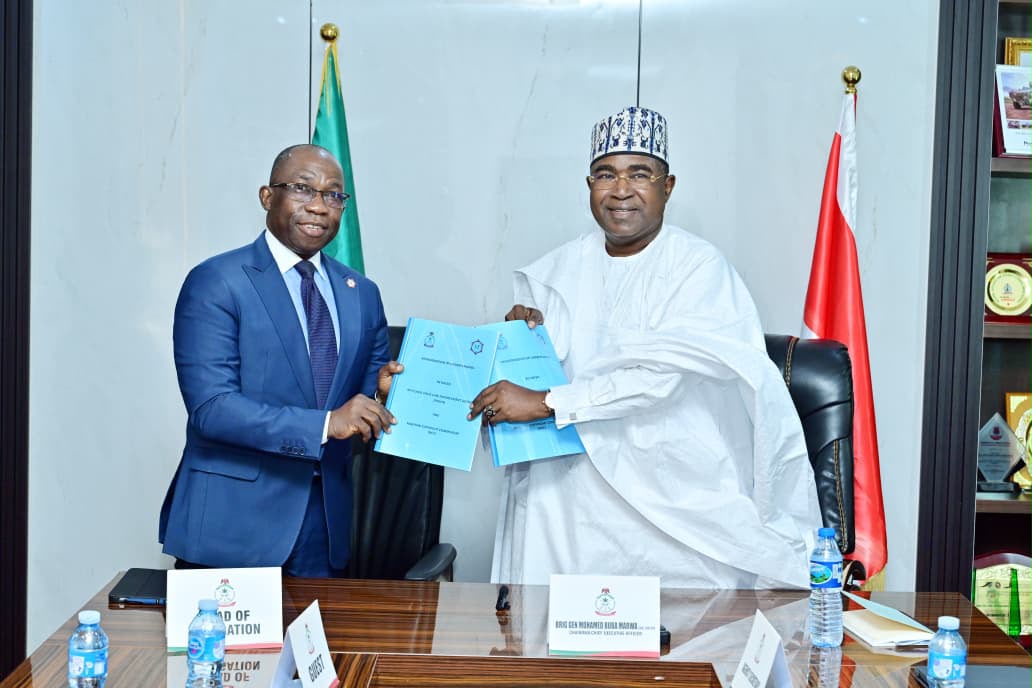
The National Drug Law Enforcement Agency (NDLEA) and the Nigerian Copyright Commission (NCC) have signed a Memorandum of Understanding (MoU) to strengthen collaboration against drug trafficking, copyright piracy and other forms of organised crime, with both agencies pledging to share intelligence, conduct joint operations and dismantle criminal networks operating across multiple illegal enterprises.
The agreement was signed at the NDLEA headquarters in Abuja on Friday, with the Chairman and Chief Executive Officer of the NDLEA, Brigadier General Mohamed Buba Marwa (Rtd), describing the partnership as a strategic move aimed at disrupting the criminal value chains that connect narcotics trafficking with intellectual property theft.
Marwa said although the mandates of both agencies might appear unrelated at first glance, experience from law enforcement operations has shown that criminal organisations often engage simultaneously in drug trafficking, copyright piracy and other economic crimes.
According to him, syndicates involved in narcotics trafficking frequently diversify into piracy of intellectual property belonging to Nigerian musicians, filmmakers, writers and software developers, while proceeds from one illicit activity are often used to finance another.
He said the newly signed MoU would provide a formal framework for cooperation between both organisations through intelligence sharing, coordinated enforcement operations, capacity building and the exchange of technical expertise.
Marwa disclosed that a Joint Working Committee would be established to drive implementation of the agreement, holding regular meetings to ensure that the partnership translates into measurable operational outcomes.
He stressed that the collaboration extends beyond law enforcement, noting that it seeks to protect public health, strengthen national security and preserve the country’s creative industry from the damaging effects of piracy.
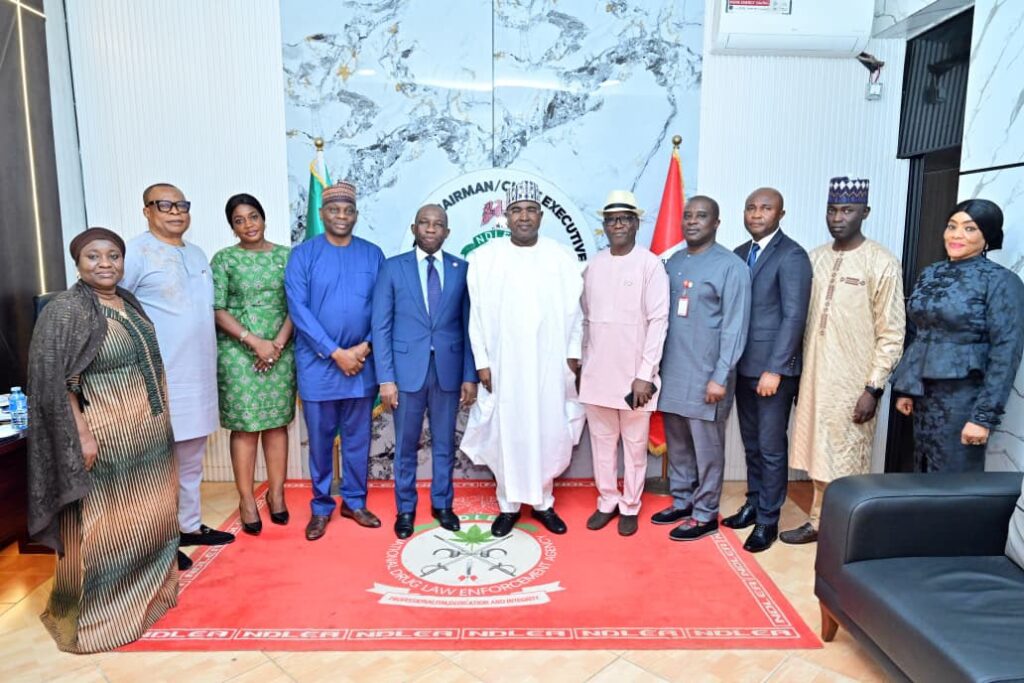
“This partnership is not just about law enforcement. It is about protecting the health and social wellbeing of our people, while safeguarding Nigeria’s immense creative talent from the theft represented by piracy,” he said.
Marwa also commended the Nigerian Copyright Commission for recognising the strong links between drug trafficking and copyright piracy, describing the agreement as an example of effective inter-agency collaboration within government.
According to him, government institutions achieve greater success when they identify common objectives and work together rather than operating independently.
Speaking at the ceremony, the Director-General of the Nigerian Copyright Commission, Dr John Asein, described the alliance as a significant milestone in strengthening cooperation among public institutions responsible for combating organised crime.
He said the collaboration would reinforce the shared responsibility of both agencies in protecting Nigeria from criminal enterprises that threaten national security, economic growth and the rule of law.
Asein observed that copyright piracy is often mistakenly regarded as a minor commercial offence, whereas in reality it has evolved into a sophisticated and highly profitable organised criminal enterprise.
He noted that large-scale piracy deprives creators and investors of legitimate earnings, destroys employment opportunities, discourages investment, reduces government revenue and weakens Nigeria’s rapidly growing creative economy.
The NCC Director-General further explained that international experience has consistently demonstrated that organised copyright piracy rarely exists in isolation, as the same criminal syndicates responsible for distributing pirated works are frequently involved in narcotics trafficking, money laundering, smuggling and cyber-enabled crimes.
According to him, the transportation routes, storage facilities, financial channels and distribution networks used to move illicit drugs are often the same infrastructure deployed for trafficking pirated books, films, music, software and other copyrighted materials.
He added that proceeds from piracy are also capable of being laundered or reinvested into other criminal activities, making closer collaboration between both agencies both necessary and timely.
Asein said the partnership would enable the NDLEA and NCC to combine their intelligence resources, investigative expertise and operational capabilities to identify criminal syndicates, trace illicit financial flows, disrupt illegal supply chains and dismantle organised criminal structures more effectively.
He also praised the NDLEA’s achievements in intelligence-led law enforcement, describing the agency as one of Nigeria’s leading institutions in combating organised crime.
According to him, the NDLEA has built an international reputation for professionalism through its intelligence gathering, strategic investigations, forensic capabilities, surveillance operations, financial intelligence, international cooperation and effective coordination with other law enforcement agencies.
Both agencies expressed confidence that the agreement would strengthen Nigeria’s efforts to tackle interconnected criminal activities while protecting the country’s citizens, economy and creative industries from the harmful impact of organised crime.