
Delta strengthens push for greener aviation with completion of sustainable fuel blending facility
Delta Air Lines has reinforced its commitment to reducing aviation emissions with the completion of a new sustainable aviation fuel (SAF) blending facility in Minnesota, a project expected to significantly improve the availability of cleaner aviation fuel at Minneapolis-St. Paul International Airport (MSP), the carrier’s second-largest operational hub.
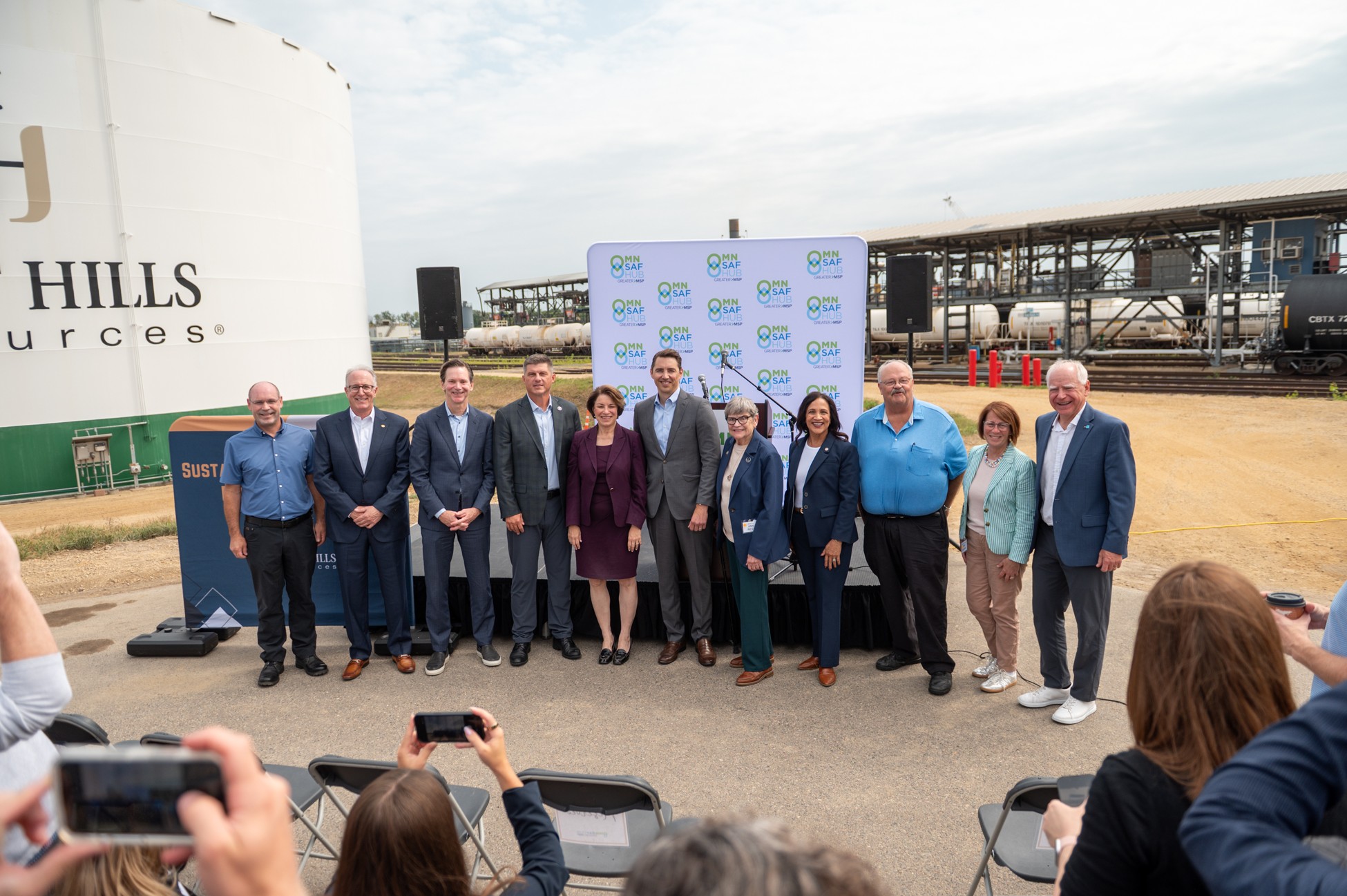
The airline joined partners in the Minnesota SAF Hub, alongside federal and state government officials, to celebrate the completion of the facility at Flint Hills Resources’ Pine Bend Refinery, describing the development as a major milestone in efforts to build a sustainable aviation fuel economy in the United States.
The newly completed installation enables sustainable aviation fuel to be blended with conventional jet fuel at the refinery before being transported through the existing pipeline network directly to Minneapolis-St. Paul International Airport.
By utilising existing fuel infrastructure, the project is expected to simplify the delivery of SAF while reducing the need for costly new transport systems.
According to Delta, the blending facility has the capacity to process up to 30 million gallons of neat sustainable aviation fuel annually, providing the infrastructure required to increase SAF consumption at MSP, where the airline uses approximately 250 million gallons of jet fuel every year.
Sustainable aviation fuel is produced from renewable feedstocks and has emerged as one of the aviation industry’s most effective tools for reducing greenhouse gas emissions.
Depending on the feedstock and production process, SAF can substantially reduce lifecycle carbon emissions compared with conventional fossil-based aviation fuel while maintaining the same safety and performance standards required for modern aircraft.
Despite its environmental advantages, the aviation industry continues to face limited global supplies of sustainable aviation fuel, making investments in production facilities, blending infrastructure and distribution networks increasingly important as airlines seek to meet climate commitments.
Delta and Flint Hills Resources first announced plans for the project in September 2024. The blending facility is one of four strategic initiatives identified by the Minnesota SAF Hub, an alliance established in 2023 to accelerate investment in sustainable aviation fuel production and strengthen the regional supply chain.
The coalition brings together Delta Air Lines, Greater MSP Partnership, Bank of America, Ecolab and Xcel Energy, with the objective of positioning Minnesota as a leading centre for sustainable aviation fuel production and distribution.
The inauguration ceremony attracted senior political leaders and industry executives, including Delta Air Lines President Peter Carter, Flint Hills Resources executive Geoff Glasrud, Ecolab Executive Vice-President and President Nick Alfano, Greater MSP President Peter Frosch, U.S. Senator Amy Klobuchar, Minnesota Governor Tim Walz, Congressman Brad Finstad, Speaker Lisa Demuth and Senator Ann Rest.
Speaking at the event, Carter said the facility represented the realisation of a shared ambition to establish Minnesota as a leader in sustainable aviation fuel development.
He noted that expanding blending and distribution infrastructure would play a vital role in making sustainable aviation fuel more widely available and commercially viable, adding that Delta was proud to work alongside public and private sector partners to support the transition to lower-carbon air transport.
The airline explained that while sustainable aviation fuel can already be used safely in existing aircraft engines and airport fuelling systems, wider adoption depends on increasing production capacity and ensuring reliable supply chains.
The Minnesota project forms part of Delta’s broader strategy to expand sustainable aviation fuel use across its network. Recently, the airline announced a five-year partnership with Shell Aviation to increase SAF availability at key airports and priority cities across the United States, including Minneapolis-St. Paul, through to 2030.
Delta estimates that nearly 90 per cent of its carbon emissions originate from the combustion of jet fuel, making the replacement of conventional aviation fuel with sustainable alternatives central to its long-term environmental strategy.
The airline has set a goal of achieving 10 per cent sustainable aviation fuel usage by 2030 and continues to regard SAF as one of the most effective pathways towards achieving its ambition of net zero carbon emissions by 2050.
The completion of the Minnesota blending facility is expected to strengthen regional fuel supply, encourage further investment in sustainable aviation technologies and support the wider aviation industry’s efforts to decarbonise air travel without compromising operational safety or efficiency.