

Nissan Posts First-Quarter Profit as Turnaround Strategy Gains Momentum Despite China Headwinds
Japanese automobile manufacturer Nissan Motor Co., Ltd. has reported a strong turnaround in its financial performance for the first quarter of the 2026 financial year, returning to profitability after posting losses in the corresponding period of the previous year, as its restructuring programme, Re:Nissan, continued to generate substantial cost savings and operational improvements.
The company announced that for the three months ended June 30, 2026, it recorded significant gains in revenue, operating profit and net income, driven by disciplined cost management, improved manufacturing efficiency, stronger sales performance in major markets and favourable foreign exchange rates.
According to the financial results released by the automaker, global vehicle sales stood at 701,000 units, while consolidated net revenue increased to ¥2.964 trillion, representing a year-on-year growth of ¥257 billion.
Nissan’s operating performance improved dramatically during the quarter, with the company posting an operating profit of ¥77.9 billion, compared with an operating loss of ¥79.1 billion recorded in the same period of fiscal year 2025. This represented a positive swing of ¥157 billion.
Its operating margin also improved considerably, rising from a negative 2.9 per cent last year to a positive 2.6 per cent.
Ordinary profit reached ¥49.1 billion, reversing the ¥109.2 billion loss posted a year earlier, while net income attributable to shareholders returned to positive territory at ¥3.8 billion, an improvement of ¥119.5 billion over the first quarter of the previous financial year.
Nissan attributed the improved financial performance to the successful implementation of its Re:Nissan transformation strategy, which generated approximately ¥60 billion in savings during the first quarter.
The company said the savings were achieved mainly through lower production and vehicle costs, improved manufacturing efficiency, tighter purchasing controls, streamlined research and development activities and disciplined expense management across its global operations.
The results were also supported by favourable foreign exchange movements, improved sales performance and one-off gains associated with United States tariff measures introduced during fiscal year 2025.
Despite the encouraging first-quarter performance, Nissan revised its global sales forecast downward for the 2026 financial year.
The company reduced its expected global sales volume from 3.3 million vehicles to 3.15 million vehicles, citing increasingly difficult business conditions, particularly in China, where competition in the automotive market continues to intensify.
Nevertheless, Nissan reaffirmed its full-year financial outlook, expressing confidence that ongoing cost reductions and the continued implementation of the Re:Nissan strategy would enable it to navigate current market uncertainties.
The company noted that its outlook also reflects external pressures such as rising raw material costs and geopolitical tensions in the Middle East. However, these challenges are expected to be partly offset by favourable exchange rates,
one-time gains realised during the first quarter and further operational efficiencies.
Nissan highlighted encouraging progress across several of its key markets.
In the United States, the company’s “Built in the U.S. for the U.S.” strategy continued to strengthen its market position.
According to Nissan, it has remained the fastest-growing mainstream automotive brand over the past 10 months and has now achieved 16 consecutive months of year-on-year retail sales growth.
During the first quarter, retail sales in the United States increased by almost 10 per cent, reflecting sustained customer demand. The company also reported positive developments in its domestic Japanese market, where new product launches have begun to stimulate stronger consumer interest.
It disclosed that the newly introduced Kicks compact sport utility vehicle and the all-new Elgrand multi-purpose vehicle have attracted strong demand, with cumulative customer orders reaching approximately 11,000 and 8,000 units respectively.
Although acknowledging that China remains its most challenging market, Nissan said it is pursuing a comprehensive strategy to reposition the business for future growth.
The strategy includes disciplined inventory management, accelerating the rollout of new energy vehicles, including the N6, N7, NX8 and Frontier Pro, as well as expanding exports to overseas markets.
According to the company, these initiatives are intended to establish a stronger platform for renewed business growth from 2027.
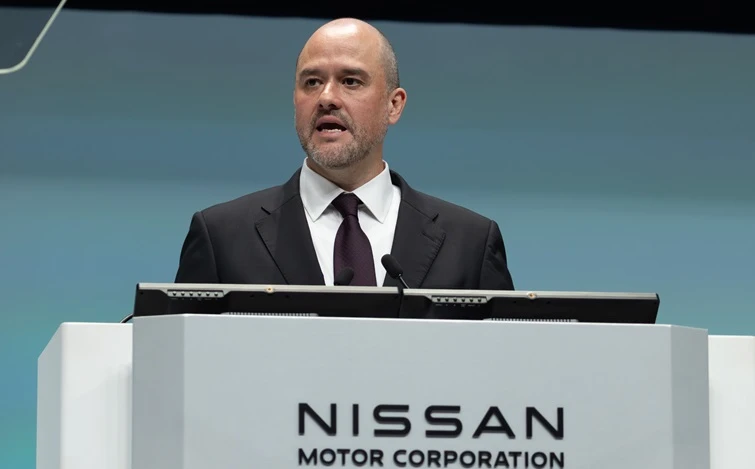
Commenting on the company’s performance, Nissan President and Chief Executive Officer, Ivan Espinosa, said the operating environment remained difficult, especially in China and the Middle East, but stressed that the company remained firmly committed to executing its recovery strategy.
He said Nissan was responding quickly to market disruptions while capitalising on opportunities in regions showing stronger demand.
Espinosa noted that the company continues to enhance product competitiveness, improve operational efficiency and strengthen its cost structure as part of efforts to become a more agile and resilient organisation.
He added that Nissan’s long-term priorities remain focused on delivering greater value to customers, improving profitability and free cash flow, and building a stronger company capable of sustaining growth despite an increasingly challenging global business environment.