
Fidelity Bank Deepens Export Capacity Drive, Trains Entrepreneurs on AfCFTA Opportunities
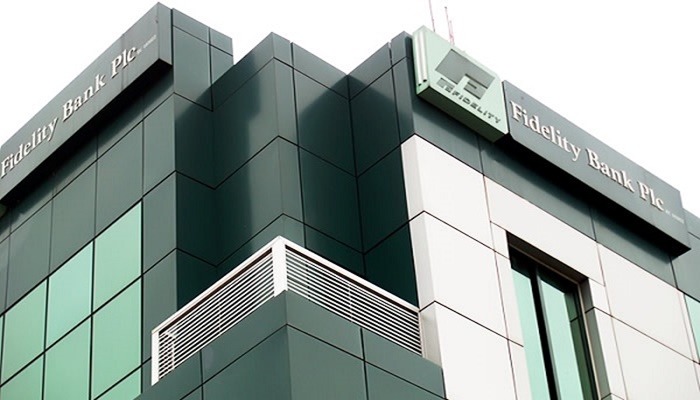
Fidelity Bank Plc has reinforced its commitment to Nigeria’s economic diversification and non-oil export growth agenda with the successful hosting of the 19th edition of its Export Management Programme (EMP), a flagship initiative designed to equip businesses and professionals with the skills required to compete effectively in international markets.
The programme, tagged EMP 19, was recently held at the Lagos Business School (LBS), Ajah, Lagos, and brought together entrepreneurs, aspiring exporters, regulators, industry professionals and key stakeholders in the export value chain for an intensive hands-on training workshop.
Organised through a strategic partnership involving Fidelity Bank, Lagos Business School and the Nigerian Export Promotion Council (NEPC), the programme focused on strengthening participants’ understanding of export management, market access, trade regulations, business development and opportunities available under the African Continental Free Trade Area (AfCFTA).
Speaking at the closing ceremony, the Divisional Head, Export and Agriculture at Fidelity Bank Plc, Isaiah Ndukwe, reiterated the bank’s determination to support Nigerian businesses in taking advantage of emerging trade opportunities across Africa and beyond.
According to him, building the capacity of exporters remains one of the most effective ways to unlock the country’s vast export potential and reduce dependence on crude oil revenues.
“At Fidelity Bank, we recognise that capacity building is critical to unlocking Nigeria’s export potential. Through the Export Management Programme, we are equipping businesses with practical knowledge, market intelligence and strategic insights required to compete successfully in regional and global markets,” Ndukwe stated.
He noted that the implementation of AfCFTA presents unprecedented opportunities for Nigerian businesses seeking to expand into new markets across the continent, stressing that the bank is committed to ensuring local exporters are adequately prepared to maximise the benefits of the landmark trade agreement.
“As AfCFTA continues to open new frontiers for trade across Africa, our goal is to ensure that Nigerian exporters are adequately prepared to seize these opportunities and contribute meaningfully to the country’s economic diversification agenda,” he added.
Ndukwe further emphasised that Fidelity Bank would continue to support exporters through tailored financial solutions, strategic partnerships and advisory services aimed at helping businesses scale operations and expand beyond Nigeria’s borders.
Also speaking at the event, the Director of the Export Management Programme at Lagos Business School, Professor Frank Ojadi, underscored the importance of continuous learning and adaptation in the ever-changing global trade environment.
He observed that international trade dynamics are constantly evolving due to policy changes, process improvements and increasing participation by businesses, making capacity development essential for sustainable success in export markets.
“The export market is always evolving. There are changes in policies, improvements in processes and increasing interest from businesses. These developments make it necessary to build the capabilities of our people to compete effectively in export markets,” Ojadi said.
He revealed that a major focus of this year’s programme was the African Continental Free Trade Area, with participants receiving practical training on how to leverage the continental market access framework for business expansion.
According to him, many businesses are still in the process of understanding how best to take advantage of AfCFTA, making programmes such as EMP crucial for bridging knowledge gaps and facilitating market entry.
“Many businesses are still learning how to take advantage of AfCFTA. Through this programme, participants gained practical insights that will help them navigate opportunities across African markets and beyond,” Ojadi added.
The programme also featured sessions on negotiation, dispute resolution and arbitration in international business transactions.
Delivering his remarks, Senior Fellow and Head of the Department of Organisational Behaviour and Human Resources Management at Lagos Business School, Dr Uche Attoh, highlighted the critical role of negotiation and conflict resolution mechanisms in global trade.
According to him, successful business relationships are often built on effective negotiations, while arbitration serves as an important tool for resolving disputes that may arise during commercial engagements.
“It is negotiation that enables businesses to establish deals, while arbitration helps resolve disputes when they arise. Once participants understand the principles, they can apply them in any business environment, whether in Africa, Europe or America,” Attoh explained.
Participants described the programme as highly beneficial and transformative.
Among them was Obinna Oforum, an Assistant Director at the Nigerian Shippers’ Council, who said the training further strengthened his determination to become what he described as an “export champion”.
Similarly, Chief Superintendent of Customs Orji Samuel commended Fidelity Bank and Lagos Business School for making the programme accessible through subsidised participation costs and for providing a practical platform for learning.
He noted that the knowledge acquired during the training would help participants overcome export-related challenges, improve compliance and identify new business opportunities in both regional and international markets.
The Export Management Programme remains Fidelity Bank’s flagship capacity-building initiative aimed at producing export-ready entrepreneurs and professionals capable of driving Nigeria’s non-oil export expansion.
Through the initiative and other targeted interventions, the bank continues to position itself as a key partner in Nigeria’s trade facilitation efforts, supporting businesses, promoting export development and contributing to sustainable economic growth.
Fidelity Bank currently serves more than 10 million customers through its digital banking platforms, 255 business offices across Nigeria and its United Kingdom subsidiary, FidBank UK Limited.
The bank has also garnered several local and international accolades, including the 2025 Development Bank of Nigeria Innovation Award for MSME Support, the Best Retail and SME Bank Award by Independent Newspapers, Best Bank for Export and Trade Finance as well as Most Innovative Bank of the Year at the 2025 BusinessDay Banks and Financial Institutions Awards.
It was also recognised as Nigeria’s Best Private Bank at the 2025 Euromoney Awards, among several other honours acknowledging its contributions to financial innovation, trade development and community empowerment.